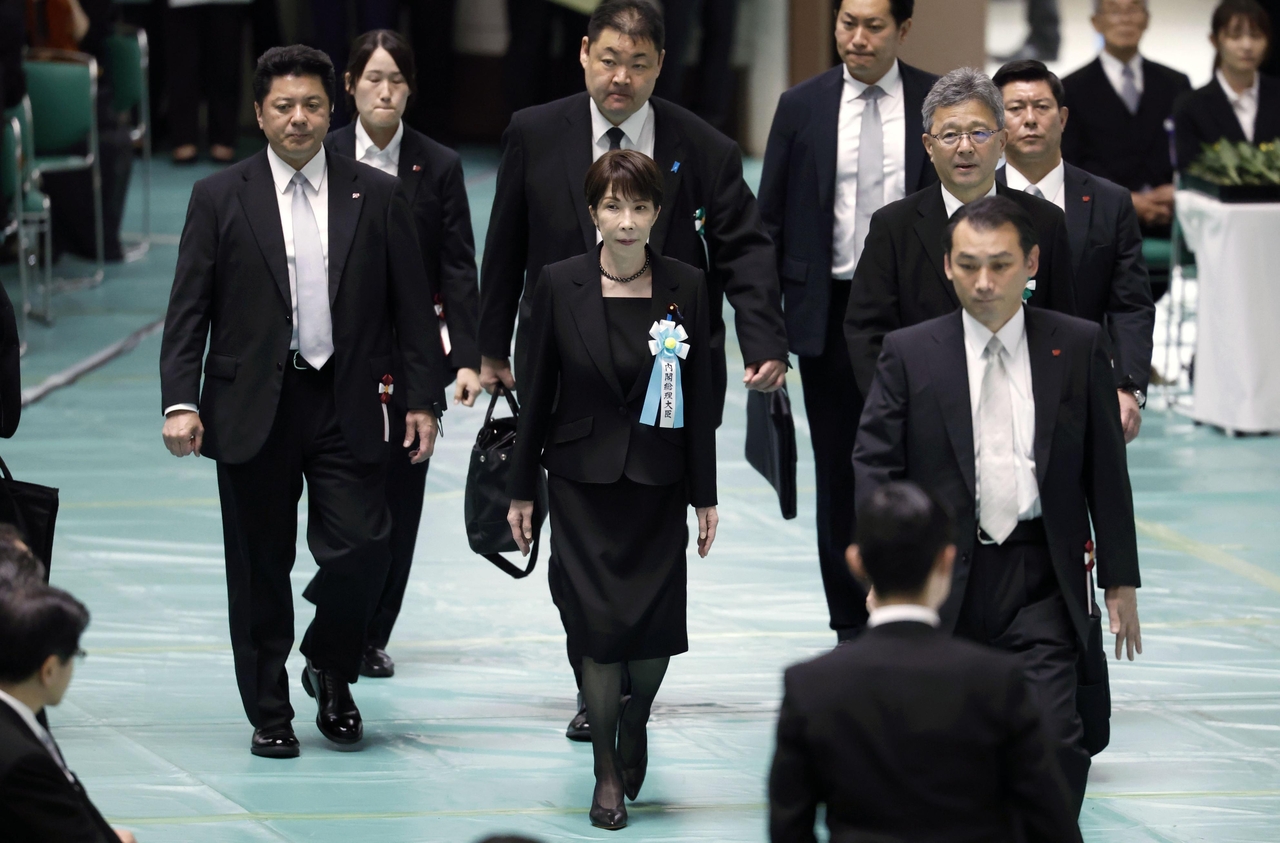
Japanese Prime Minister Takaichi Sanae made no mention of remorse for Japan's wartime aggression on Saturday, which marks both Korea's Liberation Day and Japan's defeat in World War II. By again dropping the word "remorse" — a term that acknowledges Japan's responsibility toward Asian nations it harmed — analysts say she has reverted to the approach of former Prime Minister Abe Shinzo.
In her address at the National Memorial Service for War Dead held at the Nippon Budokan in Tokyo, Takaichi omitted both "remorse" and a "pledge never to wage war again." Former Prime Minister Ishiba Shigeru had included both expressions last year for the first time in 13 years, but Takaichi reversed course.
Instead, Takaichi focused on security themes, saying Japan could become "a shining lighthouse in the Indo-Pacific that other nations rely on" and that "Japan can play an important role in resolving the challenges each country faces." She added that she would "build a Japan where people can have hope and a society where they can live safely and with peace of mind."
Takaichi also altered a phrase used by previous prime ministers, including Abe, vowing never to "repeat" the horrors of war — changing the standard wording in a way that subtly shifted its meaning. She likewise made no reference to "aggression" or "perpetration," expressions that have traditionally accompanied mentions of remorse.
Japanese prime ministers had long expressed remorse on the anniversary of Japan's defeat, but that practice ended in 2013 after Abe returned to power in 2012. His successors, former Prime Ministers Suga Yoshihide and Kishida Fumio, continued the same approach.
Emperor Naruhito, by contrast, again expressed "deep remorse" at the memorial service, repeating remarks he first made last year about reflecting on the hardships endured during and after the war.
Earlier that morning, Takaichi made a personal monetary offering to Yasukuni Shrine — a ritual known as tamagushi — in her capacity as LDP leader, according to reports.
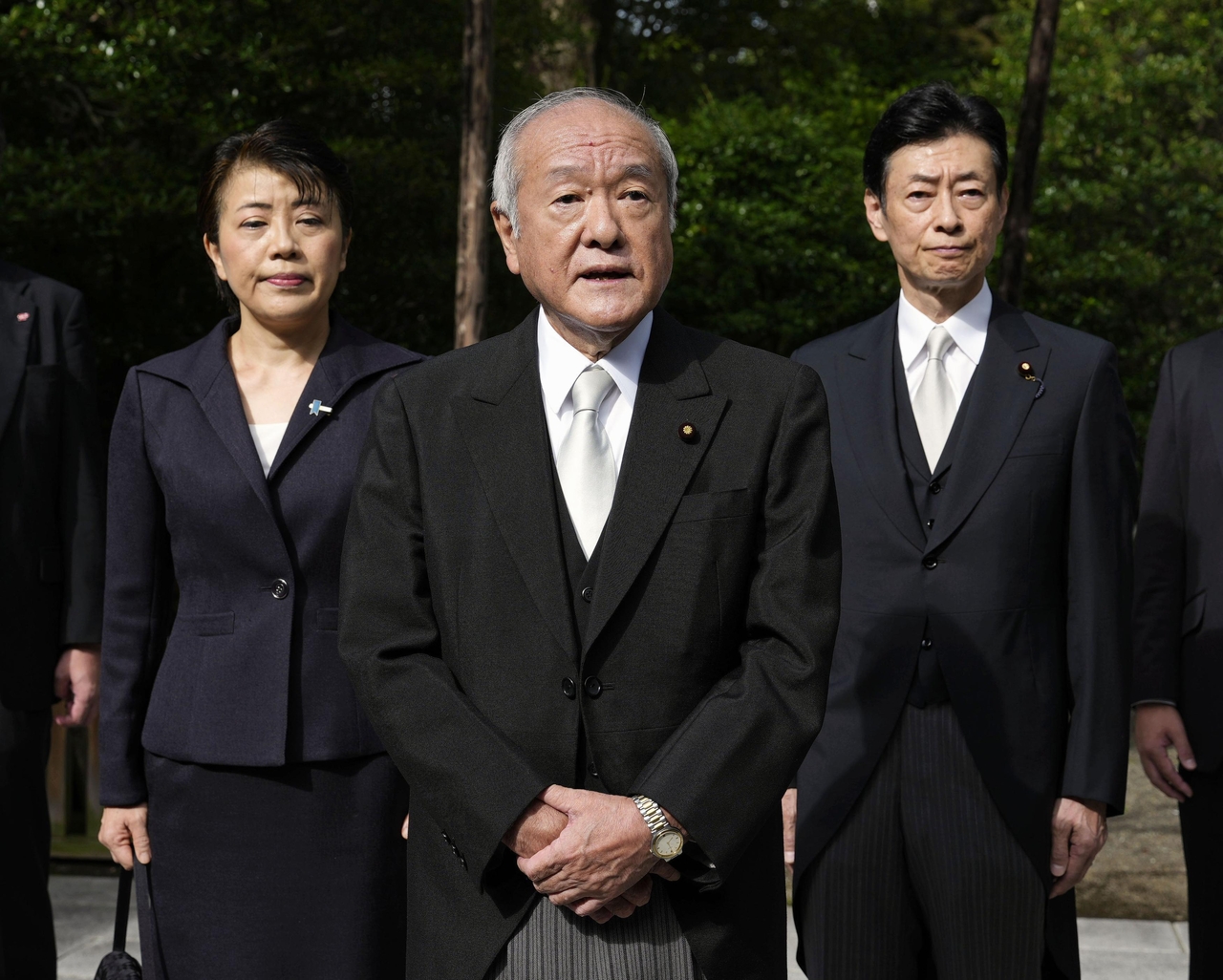
LDP Secretary-General Suzuki Ichi, General Council Chairwoman Arimura Haruko and Election Strategy Committee Chairman Nishimura Yasutoshi made an unusually high-profile group visit to the shrine, rare for senior party officials. Four sitting cabinet ministers also visited: Defense Minister Koizumi Shinjiro, Minister for Okinawa and Northern Territories Affairs Kikawada Hitoshi, Minister for Economic Security Onoda Kimi and Minister for Economic and Fiscal Policy Kiuchi Minoru. Saturday marked the seventh consecutive year that sitting cabinet ministers visited Yasukuni on the anniversary of Japan's defeat.
Lawmakers from the cross-party "Association of Parliamentarians Who Together Visit Yasukuni Shrine" and members of the LDP's "Conservative Unity Group" also paid their respects. Kamiya Sohei, leader of the right-wing Sanseito party, and Hyakuta Naoki, leader of the Japan Conservative Party, likewise visited.
Yasukuni Shrine commemorates approximately 2,466,000 people who died in civil conflicts around the Meiji Restoration and in the wars waged by Imperial Japan. It has long drawn protests from neighboring countries, particularly because it enshrines Class-A war criminals from the Pacific War, including former Prime Minister Tojo Hideki, who was executed following the International Military Tribunal for the Far East.
Meanwhile, political circles in South Korea condemned the shrine visits by Japanese cabinet ministers and senior LDP officials. China's government issued a sharp rebuke, saying it "strongly condemns Japan's negative actions and has conveyed a solemn protest and strong criticism to Japan," calling the visits "a provocation against the postwar international order."
lucky@heraldcorp.com