Working-level talks resume but 'little progress made'
Yongsan Park use, deregulation remain unresolved
Reconstruction levy concerns add to supply worries
Seoul apartment prices rise for 91st consecutive week
Talks between the Ministry of Land, Infrastructure and Transport and the Seoul Metropolitan Government over housing supply in the capital have made little headway. While both sides agree on the need to expand supply, they remain at odds over whether to pursue a public- or private-sector-led approach. Disagreements over the use of the Yongsan Park site and deregulation of redevelopment projects have yet to be resolved, and the two sides have largely been trading blame rather than narrowing their differences.
According to the Land Ministry and the Seoul Metropolitan Government, the two agencies have reactivated a working-level channel at the director-general level — suspended for some time — to resume supply discussions. The talks are intended to iron out key sticking points before a planned meeting between Land Minister Hong Ji-sun and Seoul Mayor Oh Se-hoon.
A higher-level meeting between Land Ministry Vice Minister Kim I-tak and Seoul Deputy Mayor for Administration Kim Seong-bo has also been discussed, but the gap between the two sides has not closed. A Seoul city official said the two would likely do little more than restate their respective positions at such a meeting, adding that working-level discussions had not advanced significantly.
Supply talks suspended due to a ministerial change and the national audit have resumed, but whether they will produce meaningful results remains uncertain. The question of how to use the main Yongsan Park site — once a leading agenda item — has lost momentum, and the volume of public housing land available within Seoul is so limited that it has become difficult to treat as a substantive agenda item.
Late last month, the government announced plans to add 76,700 housing units across six new public housing sites in the greater Seoul area, all located within 5 kilometers of major transit hubs along the capital's boundary. Of the 103,900 units announced across two rounds of supply plans, only 1,000 — on the site of Yeomchang Park in Gangseo-gu — fall within Seoul proper, accounting for just 1 percent of the total.
The dispute over supply figures has continued. After Minister Hong suggested that additional housing site announcements could follow if Seoul cooperated with the ministry's requests, the city pushed back, telling the ministry not to shift the blame onto Seoul. At a Monday briefing, Seoul city spokesperson Ho Jun-seok said the ministry is the one responsible for making announcements, that Seoul had long been calling for meetings, and that it was unfortunate concrete progress had not been made. "It is not consistent with the facts to suggest that things are not moving because Seoul is not cooperating," Ho said.
The two sides are also divided over calls to ease regulations on private reconstruction and redevelopment projects. The Land Ministry says it has accepted a significant number of Seoul's 10 key reform requests. However, it stopped short of confirming that working-level talks on raising the floor-area ratio for private redevelopment projects were under way, and has made clear its opposition to easing restrictions on the transfer of union membership status.
Seoul, for its part, is pressing for swift action on both the transfer restriction and the floor-area ratio increase, and has continued to push for a higher loan-to-value ratio on relocation loans.
With President Lee Jae Myung having expressed skepticism toward private redevelopment projects, the Land Ministry faces significant political constraints in accommodating Seoul's remaining demands. During a recent visit to Jangwi District 9, Lee compared it favorably with the privately led Jangwi District 10, saying, "When the public sector takes charge, things move faster and the risk of corruption decreases — yet there are still many who want to proceed under private leadership."
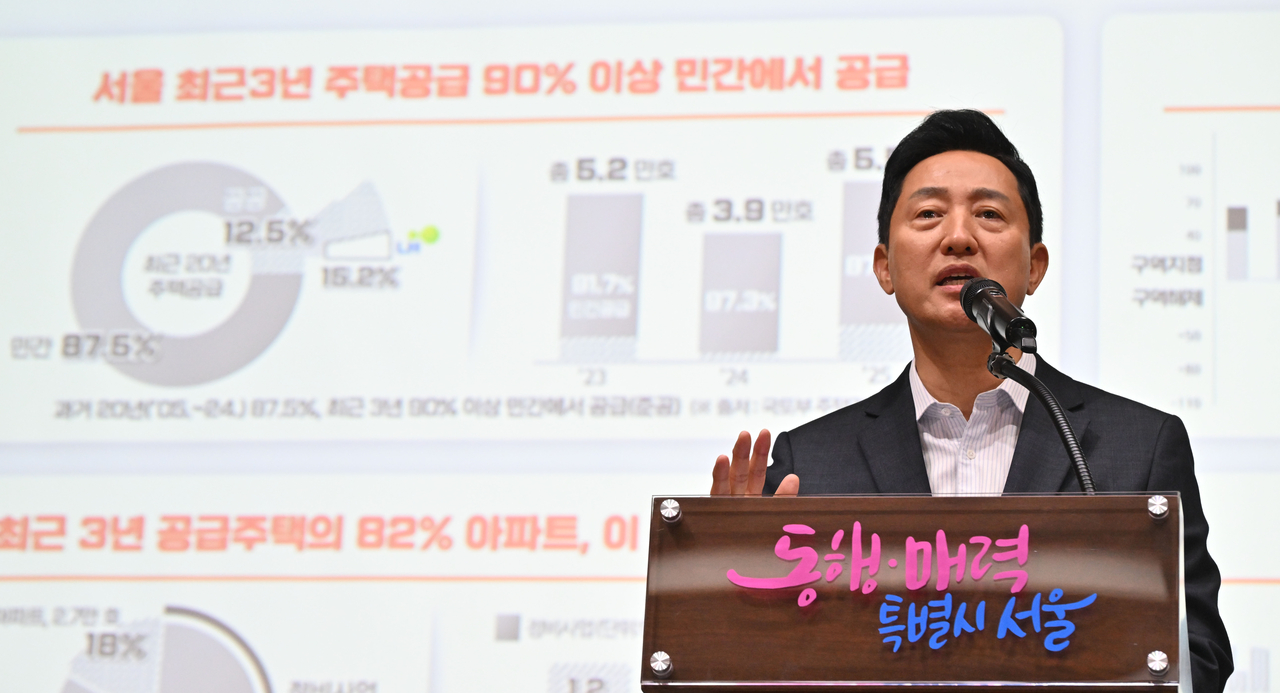
Shortly after Lee's remarks, Mayor Oh responded on social media, saying that private projects had accounted for roughly 90 percent of Seoul's housing supply over the past three years. "Ignoring the role and importance of private development is the same as ignoring the core of housing supply," Oh said.
Adding another layer of friction, the reconstruction excess profit recapture levy is becoming a reality for major complexes in Seoul, and is expected to deepen the divide between the two sides over revitalizing redevelopment activity. Discussions about abolishing the levy have faded under the current administration, and major complexes now face charges expected to run into the hundreds of millions of won per unit. According to industry sources, more than 60 complexes nationwide are expected to be assessed the levy, with 46 of them — comprising roughly 18,000 households — concentrated in Seoul.
If the levy is applied to reconstruction projects in earnest, industry observers say project delays and a contraction in housing supply will be unavoidable. The Seoul Metropolitan Government is also closely monitoring the potential fallout.
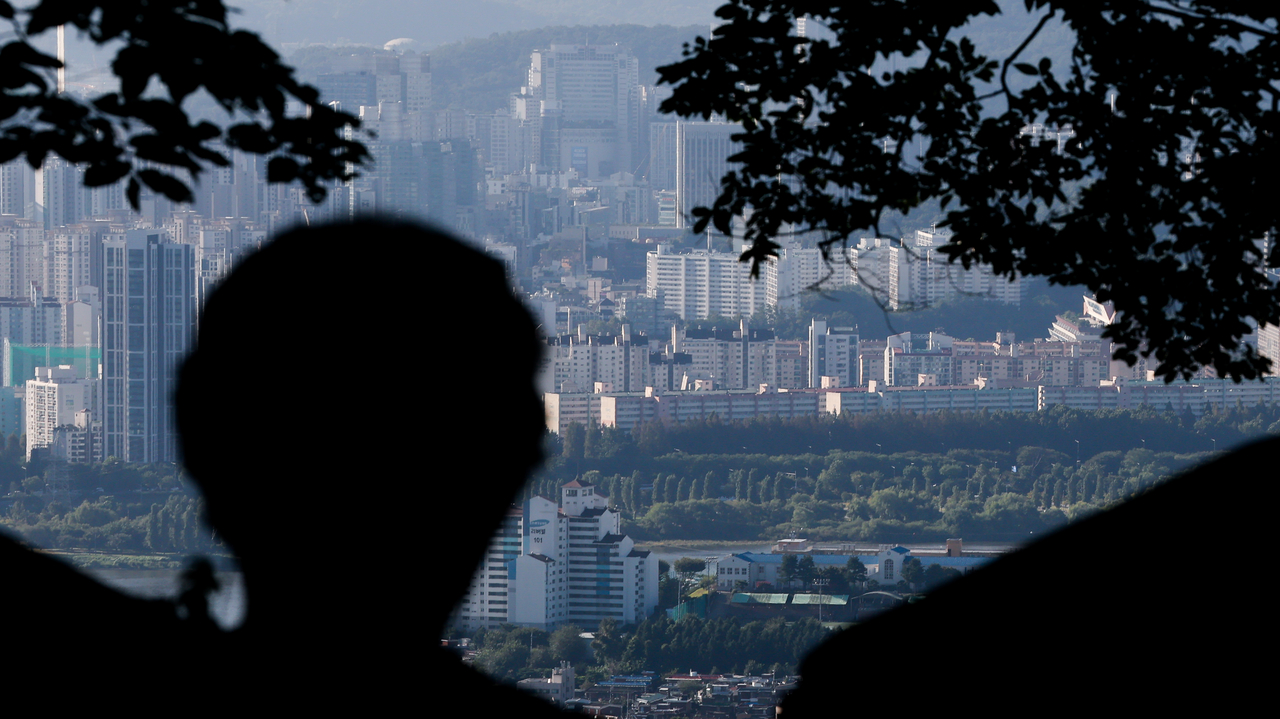
As the blame game between the Land Ministry and Seoul drags on, apartment prices in the capital continue to climb. Data released by the Korea Real Estate Board for the first week of November (as of Monday) showed Seoul apartment sale prices rose an average of 0.07 percent, extending their streak to 91 consecutive weeks of gains.
The Korea Real Estate Board noted that while some complexes saw price-adjusted listings come to market and downward transactions occur, upward contracts were being signed at large complexes and transit-oriented areas with strong demand, resulting in a mixed picture across neighborhoods but an overall increase for Seoul as a whole.
lucky@heraldcorp.com