

Financial regulators will begin in earnest next week to distribute 30 trillion won ($21.2 billion) in additional household lending capacity unlocked by doubling the sector's debt growth target. Relocation, interim construction and balance-payment loans tied to housing supply are being discussed as priority recipients, though the key question is whether the funds will also ease the borrowing difficulties facing buyers of existing apartments.
According to financial authorities, the Financial Services Commission and the Financial Supervisory Service will convene a working-level meeting with financial industry representatives on Wednesday to discuss adjusting household loan volume targets for individual institutions.
It will be the first such working meeting since the FSC unveiled a comprehensive real estate finance package on Thursday, and is expected to cover how the additional 30 trillion won in lending capacity will be allocated across institutions, as well as the specific distribution method and evaluation criteria.
Regulators raised this year's household debt growth target to 3.0% from 1.5%. The decision to revise the management target in just four months and move immediately to implementation reflects a judgment that the borrowing chaos recently seen in the financial sector — including branch open runs and pre-dawn online scrambles for mortgage slots — can no longer be left unaddressed.
Markets expect the measure to substantially ease the borrowing difficulties facing buyers of newly built apartments.
The issue of group loans came to public attention last month at a presidential policy forum on real estate, when the plight of a buyer in Suwon who could not secure a balance-payment loan for a new apartment was widely reported. Signs of easing followed, with reports that group loans had begun to be extended gradually at some new apartment complexes.
Under the new package, regulators will manage relocation loans, interim construction loans and balance-payment loans separately from individual financial institutions' total loan volume targets.

The household debt volume management target broadly comprises three components: institution-specific targets, policy loan targets and a reserve allocation managed by regulators. Placing relocation, interim construction and balance-payment loans under separate management means those loans will be counted against the regulator-controlled reserve rather than each institution's individual cap.
When a financial institution extends a group loan, the amount will be deducted from the regulatory reserve rather than the institution's own lending limit. Lenders can therefore handle housing supply-related loans without eating into their own volume management headroom.
A significant portion of the additional 30 trillion won is also expected to be channeled through this mechanism into housing supply-related lending — covering relocation, interim construction and balance-payment loans.
The critical question is whether the funds will also resolve the borrowing difficulties of buyers looking to purchase or trade up to existing apartments. This group has been identified as a key driver of the recent open-run phenomenon at bank branches.
Regulators believe that because the recent lending crunch stemmed largely from banks voluntarily tightening their own limits, raising institution-level volume targets should gradually improve borrowing conditions for existing-home buyers as well.
However, the additional lending capacity is unlikely to be distributed uniformly across institutions. How diligently each lender managed its household debt through last month is expected to factor into the allocation criteria.
"If we distribute additional lending capacity without differentiation to institutions that were lax in managing their volume targets, it would be hard to guarantee that the newly secured 30 trillion won will be properly managed," a financial authority official said.
The comment suggests that additional limits could be allocated on a tiered basis, taking into account each institution's existing loan growth, its overall volume management record and its track record in handling loans for borrowers with genuine housing needs.
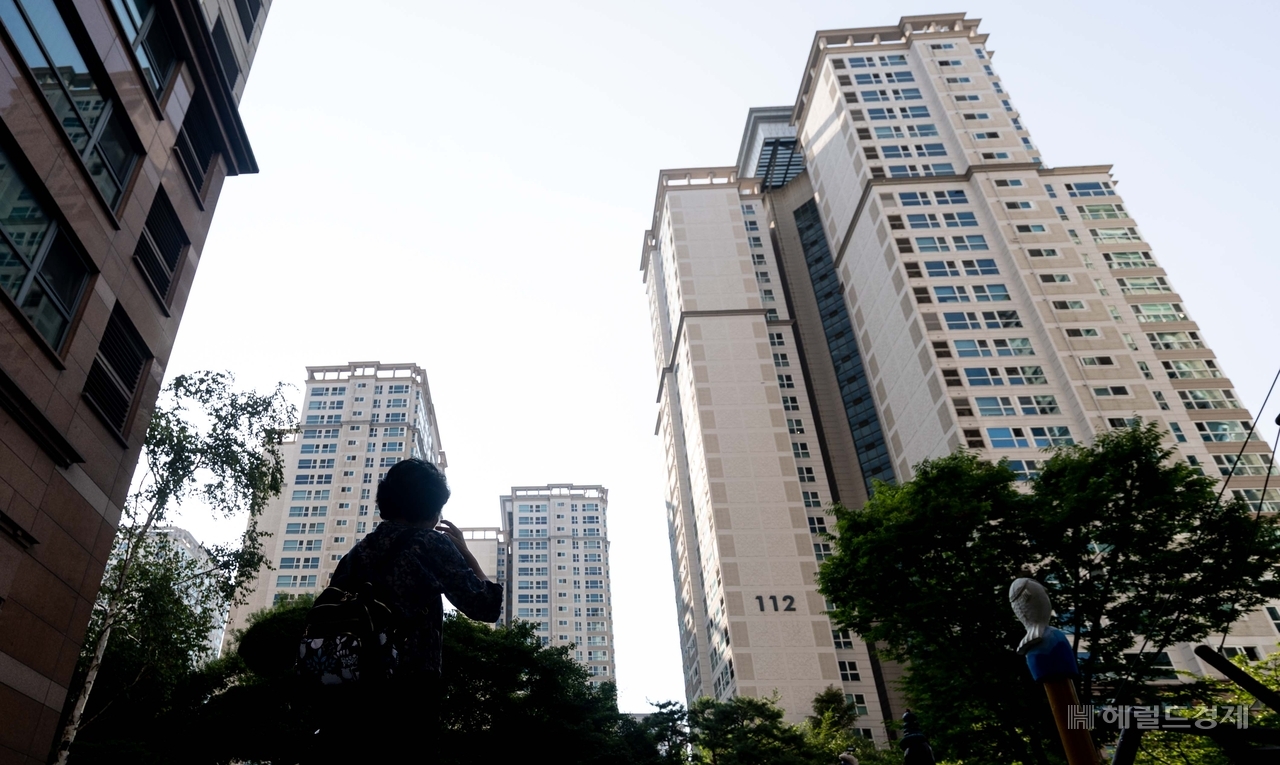
Whether 30 trillion won is enough to simultaneously address group loans, youth housing support, various policy loans and the funding shortfalls of existing-home buyers remains an open question.
Regulators believe that buyers of existing homes, having drawn up their financing plans within the current mortgage cap framework, require relatively smaller individual loan amounts compared with group loan recipients.
"Buyers of existing apartments have structured their financing within the current mortgage limits of 600 million won, 400 million won and 200 million won, so the individual loan amounts needed are not as large as those for group loans," a financial authority official said. "When repayments on existing mortgages are factored in, it should be manageable within the 30 trillion won envelope."
Regulators also plan to check whether financial institutions are ready to deploy the additional lending capacity quickly at the branch level.
FSC Chairman Lee Eok-won, at an expanded household debt review meeting held Friday, urged lenders to pay particular attention to staff training and IT system readiness in preparation for potential customer complaints during the process of adjusting volume targets.
The FSS cautioned banks that aggressive marketing by loan brokers could stoke consumer anxiety and fuel another first-come, first-served lending rush.
Once the allocation amounts and the timing of actual disbursement are finalized, the frozen lending market is expected to gradually thaw. However, if group loans and policy loans are given priority, the improvement felt by existing-home buyers may be limited — making the allocation criteria to be set at Wednesday's working meeting the focus of close market attention.
attom@heraldcorp.com





