As global tech giants pour investment into AI data centers, the semiconductor substrate businesses of Samsung Electro-Mechanics and LG Innotek are seeing sharp profitability improvements. Long overshadowed by core businesses such as multilayer ceramic capacitors and camera modules, the substrate divisions are now drawing growing attention on the back of rapid growth.
The gains are not limited to those two companies. Printed circuit board specialists focused on high-performance products also posted strong profitability in the first half of this year. Isupetasys, which makes high-layer PCBs for AI accelerators, Daeduck Electronics, which is ramping up investment in high-value FC-BGA (flip-chip ball grid array) production capacity, and Simtec, which produces PCBs for SOCAMM (low-power server DRAM modules), all recorded substantial margin improvements.
According to the Financial Supervisory Service, Samsung Electro-Mechanics' Package Solution Division posted first-half consolidated sales of 1.5 trillion won ($1.06 billion) and operating profit of 160.2 billion won — up 41 percent and 237 percent, respectively, from sales of 1.06 trillion won and operating profit of 47.5 billion won in the same period last year. The division's first-half operating profit has already surpassed its full-year figure for last year of 135.2 billion won.
LG Innotek's Package Solution Division posted a similar trajectory, recording first-half sales of 935.6 billion won and operating profit of 99.6 billion won. In the same period last year, the division reported sales of 793.1 billion won and operating profit of 51.4 billion won — gains of 18 percent and 94 percent, respectively.
As AI adoption spreads, major US tech companies are developing their own inference-optimized AI chips, and those chips are growing larger. Because HBM must be mounted alongside the chip on the substrate, the substrates themselves are also getting bigger. With customers pressing to secure supply, sales are expanding — particularly for high-value, large-area and high-layer substrates.
Samsung Electro-Mechanics and LG Innotek are not the only beneficiaries. High-performance PCB makers across the board have shown sharp profitability improvements this year.
Isupetasys, which produces high-layer PCBs for Google's TPU (tensor processing unit), is a prime example. The company posted first-half sales of 720.2 billion won and operating profit of 144.3 billion won, up 46 percent and 61 percent, respectively, from sales of 493 billion won and operating profit of 89.8 billion won in the same period last year. One customer accounted for 40 percent of first-half sales, and securities analysts identify that customer as Google.
MLB (multi-layer board) technology was developed to support ultra-high-speed interconnection between chips. By stacking substrate layers, it minimizes data loss and maintains stable power delivery. As MLB adoption expands across AI accelerators and switches, Isupetasys supplies substrates for data centers operated by Google, Nvidia, Meta, Arista and others.
As Nvidia and Google design their next-generation AI accelerators using HDI (high-density interconnect) technology, Isupetasys is planning capacity expansion in HDI as well. The technology is considered more demanding because the via holes connecting layers become finer. The company expects the shift to drive further growth in AI accelerator demand.
Daeduck Electronics is also building earnings momentum through long-term supply agreements. Its non-current advance payments stood at 54.8 billion won at the end of the first half, more than eight times the 6.8 billion won recorded at the end of last year. Non-current advance payments represent contract liabilities for obligations to be fulfilled at a specified future point, and are widely regarded as prepayments under long-term agreements.
The company already posted first-half sales of 747.3 billion won and operating profit of 121.6 billion won. That compares with sales of 461.2 billion won and an operating loss of 4.3 billion won in the same period last year, marking a return to profitability.
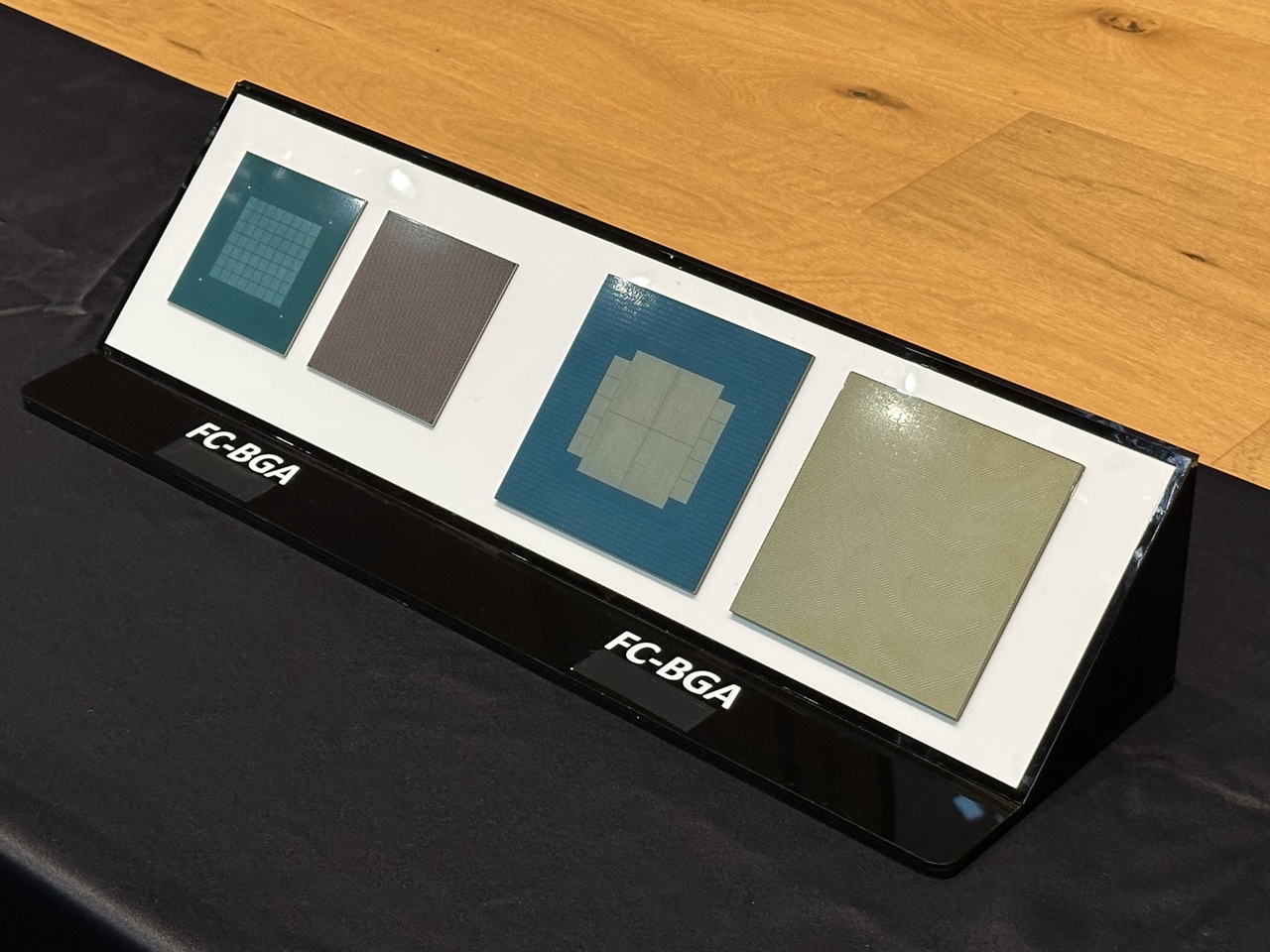
Daeduck Electronics has moved aggressively to meet market demand, announcing 710 billion won in semiconductor production equipment investment in the first half of this year. The securities industry is particularly optimistic about growth in FC-BGA for semiconductors.
"Of the recently announced capacity additions, approximately 350 billion to 400 billion won appears to be earmarked for FC-BGA investment," said Park Hee-cheol, an analyst at Kyobo Securities. "Through that expansion, the company is expected to secure quarterly FC-BGA production capacity of around 160 billion won starting in the second quarter of next year."
Simtec, which is part of Nvidia's SOCAMM supply chain, also achieved an earnings turnaround. The company posted first-half sales of 936.9 billion won and operating profit of 76.6 billion won, swinging from sales of 644.3 billion won and an operating loss of 10.8 billion won in the same period last year.
Simtec has focused on developing PCBs for memory modules since its founding, and the growth of the SOCAMM market driven by Nvidia has secured a long-term revenue stream for the company. Its current annual SOCAMM module PCB capacity stands at around 300 billion won, and line adjustments could expand that to 400 billion won.
Built on that technological foundation, Simtec counts all three of the world's top memory chipmakers — Samsung Electronics, SK hynix and Micron — as customers. Samsung Electronics accounted for 31 percent of first-half sales, followed by SK hynix at 17 percent and Micron at 14 percent, with the three companies together representing 62 percent of total sales.
jeongwan@heraldcorp.com