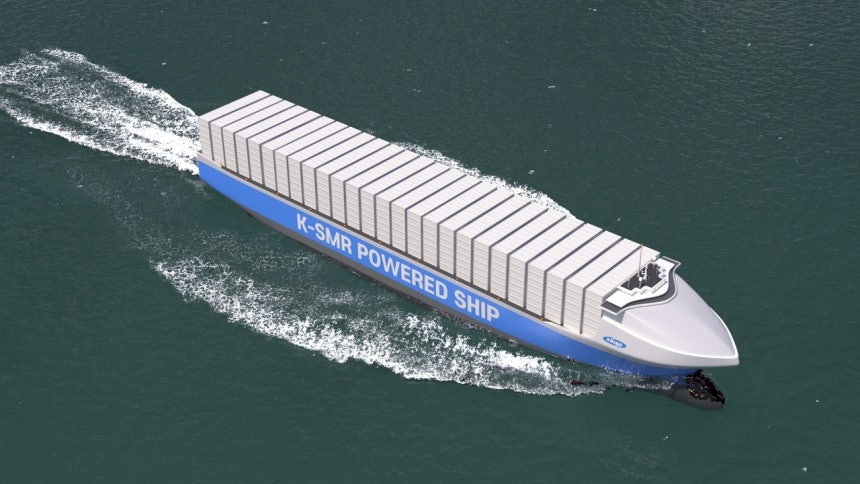
Deputy Prime Minister and Minister of Economy and Finance Koo Yun-cheol said Wednesday that energy is emerging as the first sector to be pursued under South Korea's $350 billion US investment pledge.
Koo made the remarks at a luncheon hosted by the American Chamber of Commerce in Korea (Amcham) at the Grand Hyatt Seoul in Yongsan-gu, saying, "We are in discussions about investment, and there seems to be strong interest in the energy sector."
![Deputy Prime Minister and Minister of Economy and Finance Koo Yun-cheol delivers opening remarks at an Amcham luncheon held Wednesday at the Grand Hyatt Seoul in Yongsan-gu. [Yonhap]](https://wimg.heraldcorp.com/news/cms/2026/08/19/rcv.YNA.20260819.PYH2026081909430001300_P1.jpg)
"The reason the United States is interested is that energy must be resolved for the AI era to arrive," Koo said. "If Korea's outstanding engineering capabilities are combined with American know-how, both sides can achieve a win-win outcome."
He added that shipbuilding would be "the largest area of cooperation," with $150 billion earmarked for the United States, and identified biotech, supply chains, critical minerals and AI as other key sectors.
Koo also said the government would move quickly to identify projects that deliver tangible benefits to both countries.
"Consultations with the US government are proceeding step by step in areas where both sides can win," he said. "We will prepare to move forward by selecting projects that benefit both the United States and Korea as soon as possible, without any intentional delays."
The institutional groundwork for executing the investment has already been laid. The Korea-US Investment Corporation (KUIC) officially launched in June, and Koo said it was important for the private sectors of both countries to jointly identify projects with commercial viability and mutual benefit.
The luncheon served as a follow-up policy dialogue to a special report on Korea's financial hub strategy that Amcham submitted to the Korean government in April. Key agenda items included implementation of the Korea-US strategic investment, AI cooperation and the role of US companies in strengthening Korea's economic competitiveness.
James Kim, chairman and CEO of Amcham Korea, said the growth of Samsung Electronics and SK Hynix "clearly illustrates the transformation the Korean economy has achieved," adding that "now is the right time for Korea to leap forward as a global financial and business hub leading investment and innovation."
Kim said Amcham's recently concluded "Washington Door Knock" had reinforced a consistent message: that the next phase of Korea-US economic cooperation must be built on substantive investment in strategic industries, close technology collaboration and, particularly, regulatory harmonization in the digital economy.
Koo also outlined Korea's medium- to long-term growth strategy and plans to reform the financial and foreign exchange markets. He presented the "3-4-5 Vision" — targeting potential growth of 3 percent, a top-four ranking in global exports and per capita income of $50,000 — and described steps to develop the capital market as a core growth platform. Amendments to the Commercial Act and phased inclusion in the World Government Bond Index were cited as representative examples.
The government also plans follow-up measures to improve foreign exchange market access. Building on the won internationalization roadmap announced in July and a shift to 24-hour foreign exchange market operations, authorities plan to launch an offshore won settlement system in January next year and significantly ease foreign exchange regulations.
Some recommendations from Amcham's special report on Korea's financial hub strategy will also be incorporated into policy. The government decided to raise the reporting threshold for foreign currency borrowings by foreign bank branches and the cash pooling limit from the current $50 million to at least $100 million.
Koo also called on US companies to increase investment in Korean venture firms. "I ask US companies to pay attention to Korean startups," he said. "If US asset managers and others invest in Korean venture companies on this occasion, the future returns on that investment will be exceptionally high."
On AI, Koo highlighted Korea's industrial ecosystem as a key strength. "Korea's ecosystem is better prepared than any other country, so the AI era is a reason to pay close attention to Korea," he said. "The government will do its utmost to create the perception that the later you enter Korea, the more you stand to lose."
"Korea is a land of opportunity and does not discriminate against foreign companies," he added. "A foreign company that invests in Korea is a Korean company."
y2k@heraldcorp.com