
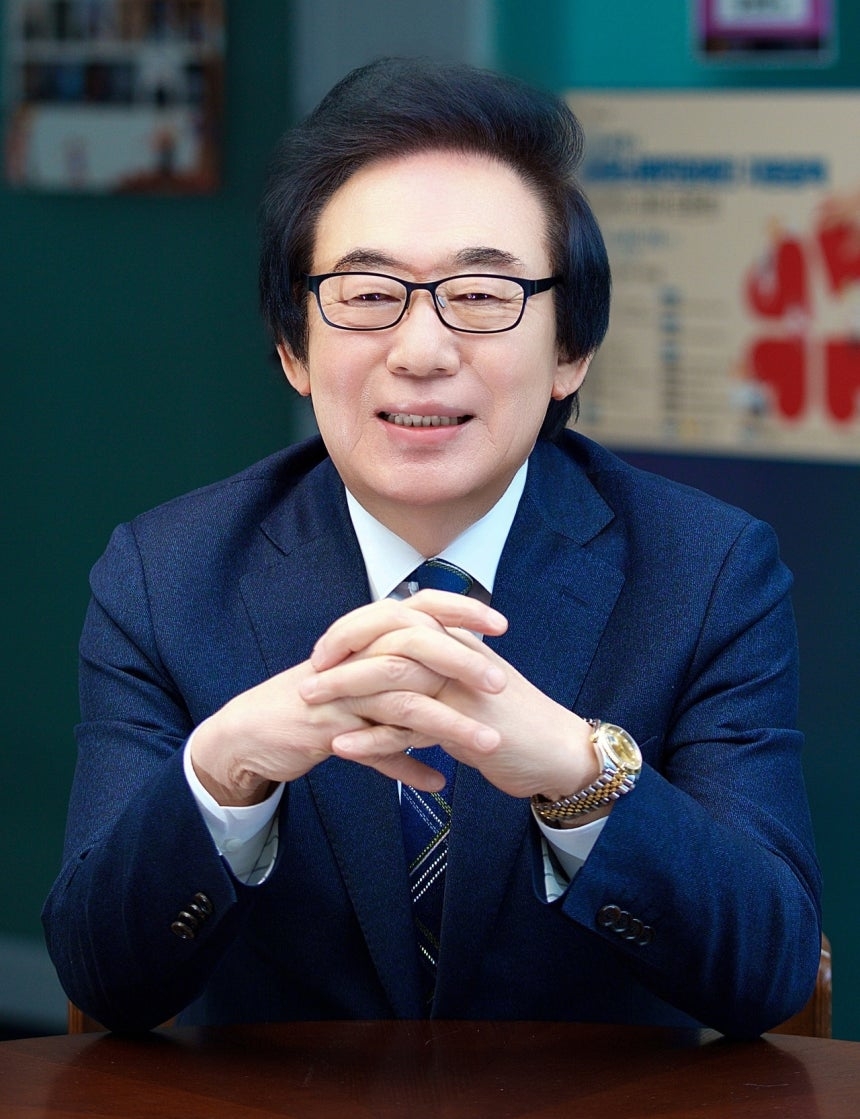
The political journey of Kim Ki-deok, a Seoul Metropolitan Council member representing Mapo District 4 for the Democratic Party of Korea, has tracked the transformation of Mapo for nearly three decades. First elected to the 5th Seoul Metropolitan Council, he went on to win seats in the 8th, 10th and 11th terms before securing election to the current 12th Council — becoming the first Democratic Party lawmaker to serve five terms on the Seoul Metropolitan Council.
His political career has not been without setbacks. He left the council after losing an election but returned when voters chose him again. Through victories and defeats alike, Mapo and its residents have always remained at the center of his political life.
The nicknames residents gave him — the "World Cup council member," the "subway council member," the "shopping mall council member" and the "incinerator council member" — speak to a career spent finding solutions at the heart of each major local issue.
For Kim, five terms represent not a glittering résumé but a weighty obligation to translate the trust residents have placed in him into concrete results. He said he intends to spend the remainder of his term getting the long-stalled Sangam DMC development project back on track and focusing his legislative energy on resolving the everyday inconveniences residents face.
Parliamentarism and pragmatism: 'We must change citizens' lives'
Two pillars run through Kim's philosophy as a council member: parliamentarism and pragmatism. He believes the council must stay true to its core duty of checking and overseeing the executive branch, while the ultimate goal of politics must be the tangible improvement of citizens' lives.
"We must be faithful to the council's role of checking and overseeing the executive, while also delivering practical results that improve citizens' lives," Kim said. "Over five terms, I have come to realize that parliamentarism and pragmatism are not values in conflict — when they work in harmony, that is when politics truly serves the people."
As the most senior member of the 12th Seoul Metropolitan Council, he said that even when political positions differ, solutions to policies citizens need and urgent local challenges must be forged through communication and consultation.
In his view, local politics means speaking out firmly when Seoul's city administration needs correcting, and cooperating across party lines when it serves the public interest. Oversight, he said, should not be an end in itself but a means of producing better policy and results that citizens can feel.
DMC Image Complex revival: A blueprint for northwestern Seoul's future
The priority Kim has set for this term is expanding Mapo's cultural and urban infrastructure. At the center of that effort is a plan to revive the DMC Image Complex, a concept previously pursued around the Culture Tank Seoul site.
His vision is to push the DMC Image Complex forward again and establish it as a leading film and cultural hub for northwestern Seoul. During the 11th Seoul Metropolitan Council, Kim repeatedly pressed the Seoul Metropolitan Government — through council questioning sessions — to restart the project and make more effective use of the Culture Tank Seoul site.
"This is not simply a matter of putting up one building," he said. "It is about creating a core cultural anchor for northwestern Seoul that can stand alongside Seoul Arts Center and Sejong Center for the Performing Arts."
Kim is also focused on the Sangam DMC mixed-use shopping complex, the DMC landmark development and the redevelopment of the western driver's license examination center site. These projects are considered pivotal to reshaping Sangam's urban structure and determining the area's future competitiveness.
Kim said it is crucial to move beyond drawing up development plans and connect them to actual projects so residents can feel the change. Now that long-stalled initiatives have begun to move again, he said transportation, residential, cultural and commercial functions must be arranged in an integrated way to strengthen Sangam's urban competitiveness.
"The key is how we bring these plans to life and return that space to citizens," he said. "I will clearly call out what is wrong and see the right direction through to the end. That is how I repay the residents who chose me as a five-term council member."
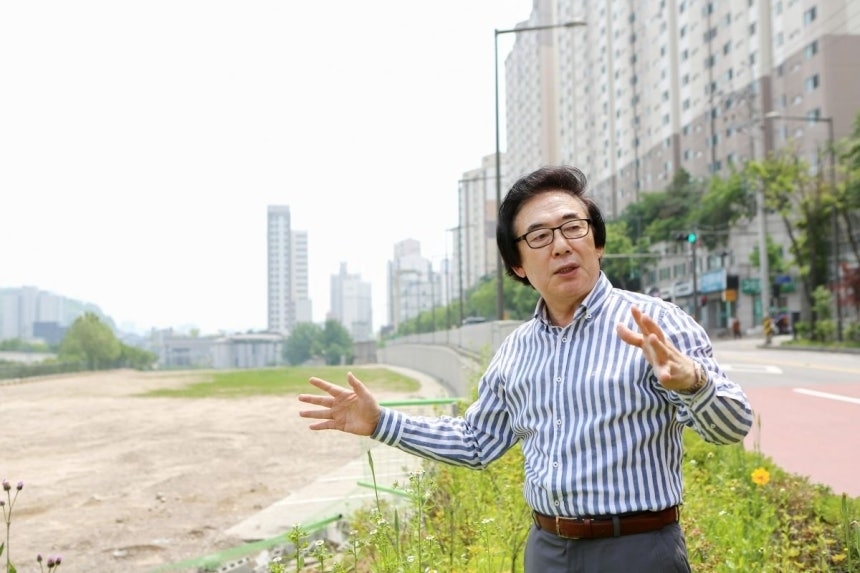
Major development and everyday complaints together: 'The answer lies in the field'
Another principle running through Kim's council work is the primacy of the field. He says resolving the everyday inconveniences that touch residents' lives is just as important a duty for a local council member as advancing large-scale development projects.
Focusing only on big projects, he argues, risks overlooking the pedestrian difficulties, traffic problems and lack of rest spaces that citizens encounter every day. That is why Kim walks through neighborhoods himself and listens directly to residents.
"We must press hard to resolve major issues, but we also need to look carefully at the complaints directly tied to residents' daily lives," he said. "Policy is only complete as an achievement when residents feel the change in their everyday lives."
His field-centered approach has translated into improvements to parks, walking trails, pedestrian paths and transportation facilities. Notable examples include the creation of a nature ecology family park on Sungmisan, installation of a riverside access point at Hongjechen Mangwon, the purchase of the Saeteo Mountain site for a family park in Sungsan 2-dong, renovation of Maebongsan and Sangamsan parks, and the establishment of reading rest spaces.
In transportation and pedestrian infrastructure, he pursued widened sidewalks on Yeonnam Bridge and Jungdong Bridge, installation of a canopy at World Cup Stadium Station and improvements to the surrounding pedestrian environment. He also contributed to expanding recreational and leisure facilities, including the development of World Cup Nanji Sports Park and improved access to Sky Park.
Tackling large projects that will shape the city's future while simultaneously addressing the small inconveniences residents face every day — that is what Kim calls "field politics."
Raising local council expertise: 'More policy support staff needed'
Kim's attention extends beyond Mapo's local issues to decentralization and reform of the local council system. He believes that for local councils to properly check the executive branch and produce high-quality policy, the institutional foundation must be strengthened — including through the enactment of a local council act and an increase in professional policy support staff.
In particular, he said the number of professional policy support staff — currently capped at half the total number of council members — should be expanded to one staff member per council member. Given that the Seoul Metropolitan Council reviews a large budget and complex policies while overseeing city administration, he said sufficient professional staff are needed to support ordinance legislation, budget deliberation and administrative audits.
"The National Assembly and the central government must actively pursue institutional reform so that local councils can properly fulfill their core duties," Kim said. "We need to transfer authority concentrated at the center to local governments and build a form of local autonomy that genuinely contributes to residents' lives."
He added that expanding policy support staff is an essential task that goes beyond easing individual council members' workloads — it is about raising the quality of legislation and strengthening oversight of budgets and administration.
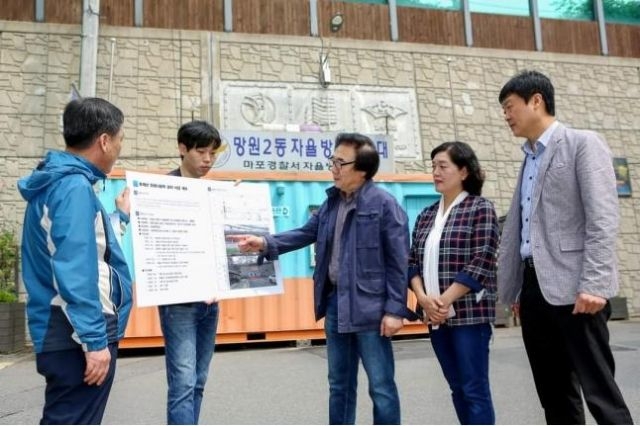
'I will serve to the very end of my fifth term with the heart of a beginner'
The maxim Kim has carried throughout his long political life is "hang chosim, bang hasim, sun cheonmyeong" — keep the beginner's heart, empty the mind and follow the will of heaven.
He also reflects on the teaching of "gunju minsu" — the idea that the people, like water, can float a boat or capsize it. Having experienced both victory and defeat across multiple elections, he regards public sentiment as both the starting point and the destination of politics.
After nearly three decades rooted in Mapo, Kim places greater weight on what he can complete in his remaining term than on the record of five terms itself. Resolving the long-running Sangam DMC issues, expanding cultural infrastructure in northwestern Seoul, addressing residents' everyday complaints and strengthening the local council system are the main tasks he aims to finish during the 12th Seoul Metropolitan Council.
"What matters more than the number of terms or records is the results that residents can feel," he said. "I will stay in the field with the same heart I had when I first entered politics, and keep working to bring change to Mapo and Seoul until the very end."
7toy7@heraldcorp.com





