
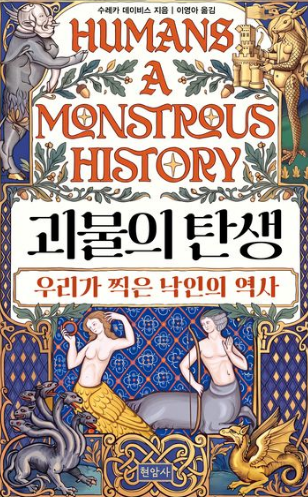
"The Birth of the Monster" (written by Surekha Davies, translated by Lee Young-a) — Frankenstein, werewolves, centaurs, zombies: the creatures we call monsters typically represent something inhuman, abnormal or frightening. Their very existence, paradoxically, reinforces human notions of what is normal. The historian argues that throughout history, humanity has defined borderline beings as monsters to draw a line between "us" and "them," taking comfort in the belief that we are the normal ones. This othering and stigmatization, she contends, manifested as a way of dehumanizing real people. Humanity both reviled and consumed monsters with intense fascination — confining an African girl with hypertrichosis to a zoo, displaying a boy with vitiligo at a fair. Delving deep into the history of anthropology, imperialism and collecting from the 15th through the 19th centuries, the author argues that "a monster is ultimately a reflection of our fear of the other, and a mirror revealing another side of humanity." She then poses a pointed question: was the standard of "human" we so firmly constructed ever truly justified?
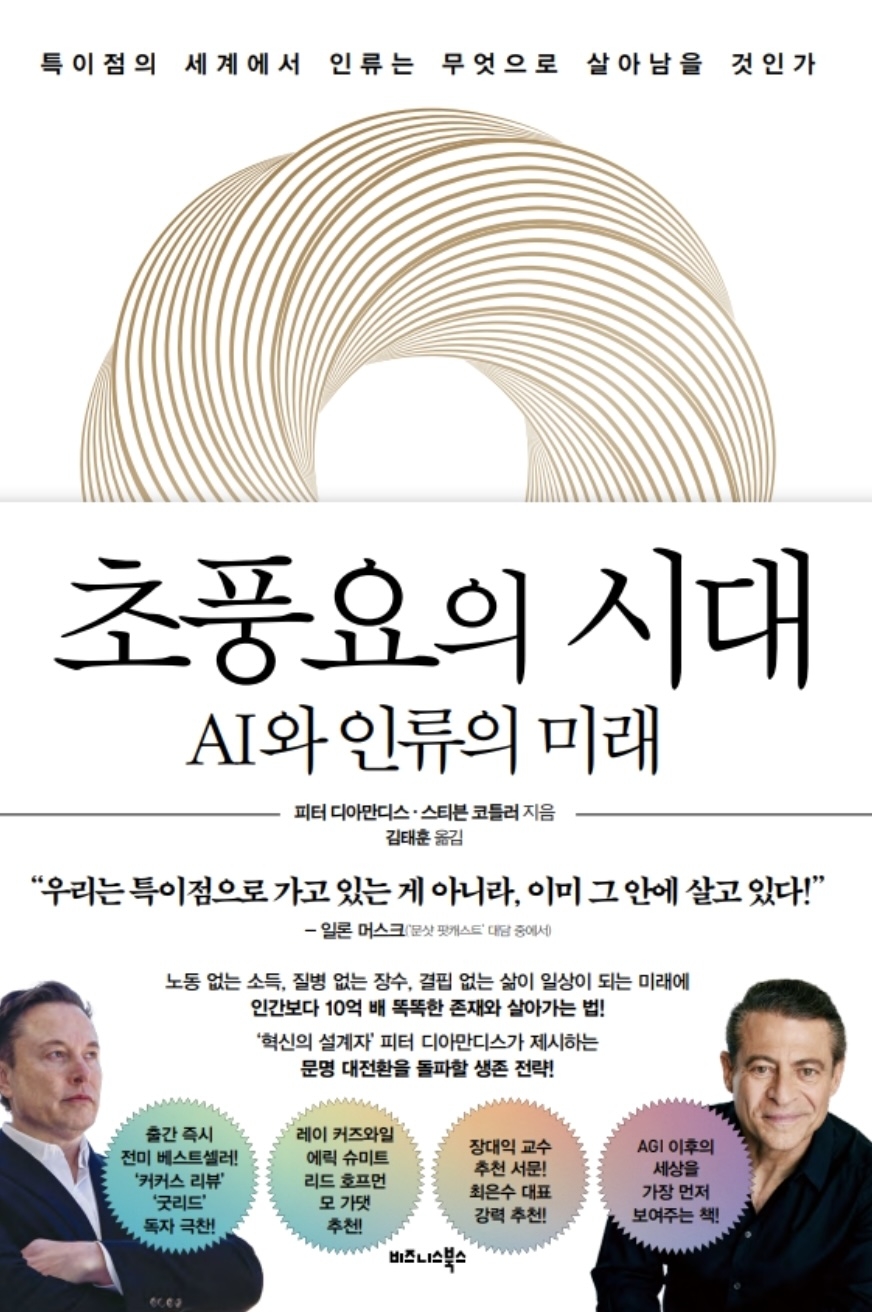
"Abundance" (written by Peter Diamandis and Steven Kotler, translated by Kim Tae-hun, Business Books) — "A great age of abundance is coming. A future without poverty is coming." Elon Musk recently predicted in an interview that he would usher in an era of "super-abundance." Futurist and entrepreneur Peter Diamandis uses the book to explore the transformation toward that era — driven by technology — and what it means for humanity's future. "Super-abundance," as he defines it, is not merely a surplus of material goods, but a society in which advances in AI, robotics and biotechnology sharply reduce the cost of goods and production, making essential resources such as information, education, healthcare and energy available to everyone. The author forecasts that the arrival of artificial superintelligence will accelerate these changes and mark a pivotal turning point for human civilization. What new capabilities, then, will people need to thrive in this new era? Diamandis argues that how humanity chooses to wield the power of technology will remain a human responsibility, and that creativity, a sense of purpose and the power of deep focus will only grow more important. "When humans collaborate with AI in a state of flow, something new emerges," he writes. "That is the true story of the future of work."
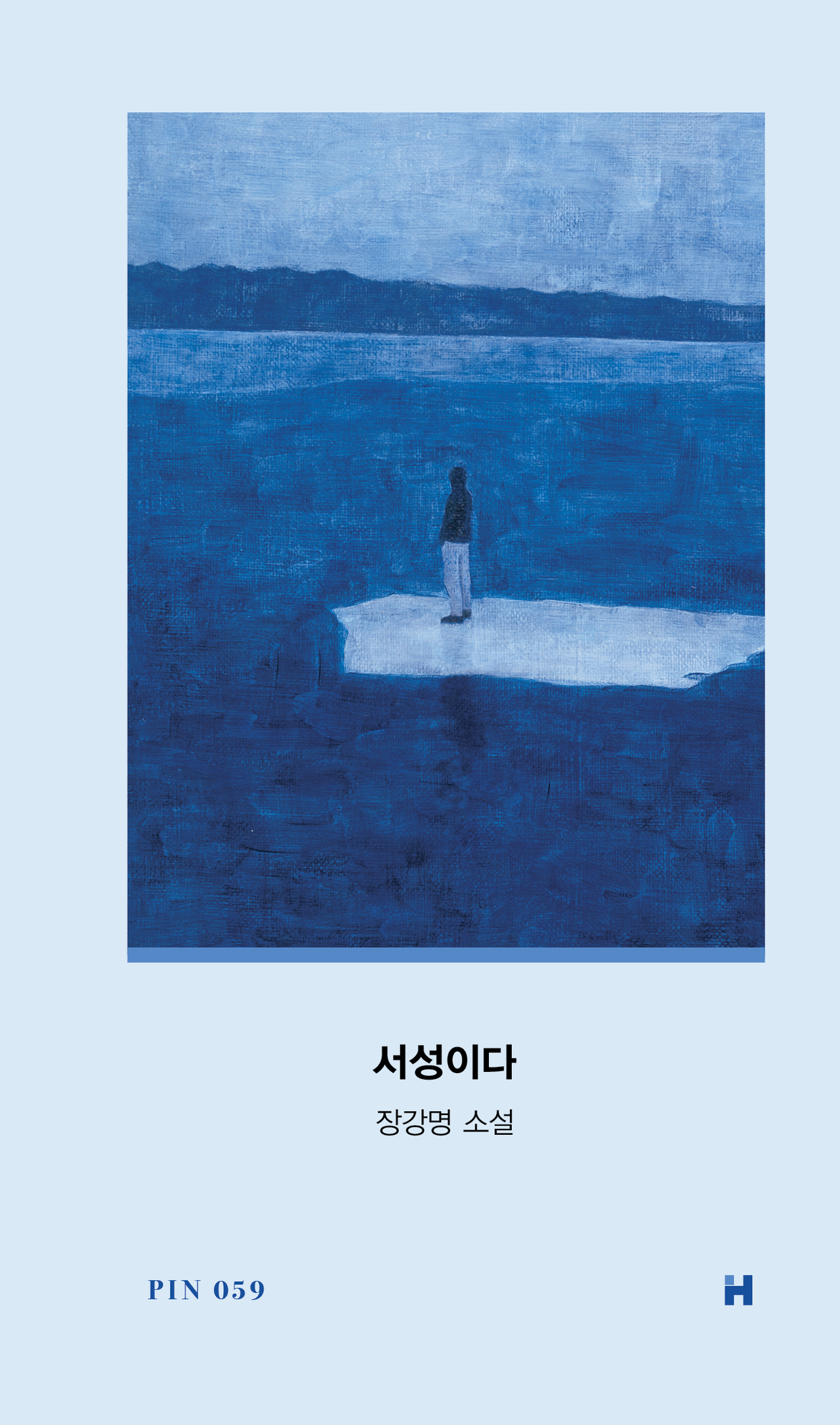
"Hovering" (written by Jang Kang-myoung, Hyundai Munhak) — "What truly binds people together is suffering." One day, without warning, the person closest to him — his wife — collapses. What he assumes is the flu turns out, after testing, to be a brain tumor (glioma). Confronted with his wife teetering between life and death, the husband is consumed by regret for not having noticed sooner, and by guilt over years of pressuring and pushing her, wondering whether that contributed to her illness. Already overwhelmed by emotional anguish, he must also manage a relentless stream of practical demands: 20-minute daily hospital visits, consultations with her doctor, communication with his mother-in-law and sister-in-law, a real estate closing payment, a loan and tracking down the password to his wife's bank account. While searching through documents, he discovers a notebook in which she had quietly recorded the vast responsibilities she had shouldered and the principles by which she had lived — and realizes he never truly knew the life of the person he loved. He can only hover nearby, offering a belated apology and a heartfelt declaration of love. The fact that this is the author's autobiographical novel makes the story all the more urgent. It is a book that moves readers to hope that those enduring their own senseless pain will find the strength to rise again.
carrier@heraldcorp.com
pink@heraldcorp.com





