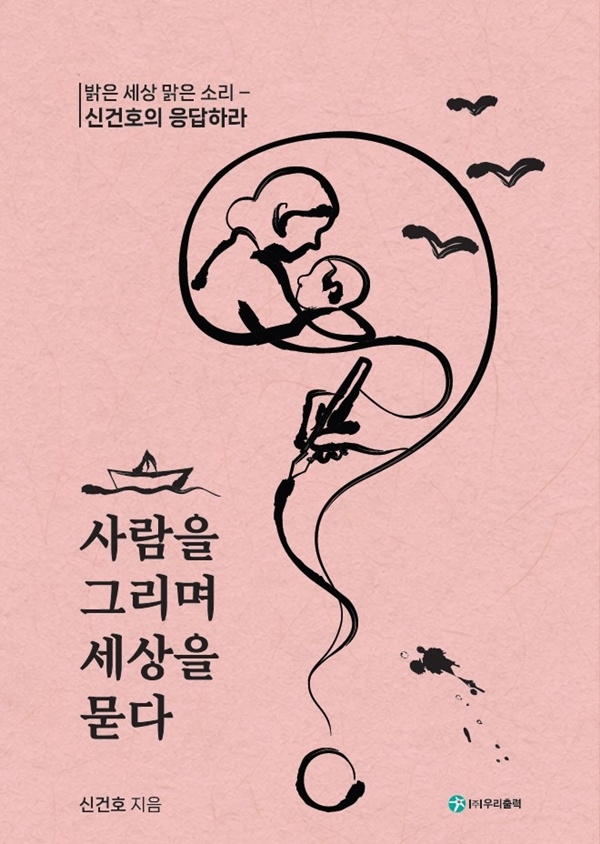
Author uses mother's struggle with dementia to pose questions about the world
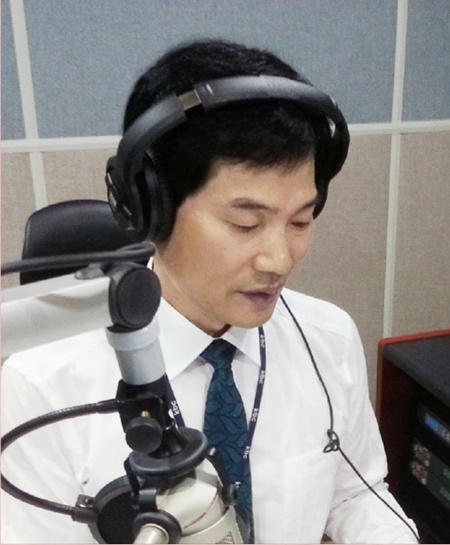
Shin Geon-ho, a journalist and doctor of law who has left a lasting mark on South Korean broadcast journalism, has published a new essay collection titled "Drawing People, Questioning the World" (Woori Publishing). Shin previously served as news director of KBC Gwangju Broadcasting, head of Gwangju English Broadcasting, and executive director of Namdo Ilbo.
The book goes beyond a personal memoir. Using his mother as a "searchlight," Shin illuminates a dark era and relentlessly questions the world through that light — an honest record of a life spent in pursuit of truth.
In the preface, Shin explains his intent: "To search a person's life is to read the era they stood in," he writes. "To draw the way people live — with a pen instead of a brush — is not simply to describe appearances. It is to listen to the sound a person makes as they collide with the world."
The book is divided into five chapters, weaving together the warmth of love Shin learned within his family and the glories and tragedies of modern Korean history he witnessed firsthand over four decades on the front lines of journalism.
Chapter 1, "The Narrative of Motherhood — Family Love, the Warmth of Life" (21 pieces), gathers diary-style writings composed while watching his mother live with dementia.
Through memories of his mother selling dried anchovies, his father's "Pygmalion effect," and childhood scenes tied to red-bean porridge and the sound of cowbells, the chapter revisits family devotion and the warmth of everyday life.
Chapter 2, "Sewol Columns — Unforgettable Pain, Steps Toward Hope" (6 pieces), contains columns in which Shin confesses the shame and guilt he felt as an adult in the face of the Sewol ferry disaster.
Pieces such as "I Am Ashamed," "Mother," and "Dedicated to the Souls of the Sewol" use short but weighty sentences to revisit the responsibilities of the state and society.
Chapter 3, "Radio Columns — Gathering Hearts for a Better Tomorrow" (24 pieces), collects social commentary columns from Shin's time hosting a program on KBC Gwangju Broadcasting's myFM.
The chapter captures the concerns of the era shared with listeners, through pieces including "How Shall We Live," "Hunger and Im Chun-ae's Ramyun," and "Do You Know the Law Against Unfilial Children?"
Chapter 4, "Principled Journalism — Reflections on the Age, Asking About Justice" (20 pieces), publishes for the first time 20 sharp critiques never reported by any other media outlet. The chapter confronts head-on the unvarnished face of power and the press as witnessed from the scene.
Chapter 5, "Answer, Cry of the Age — Searchlight, Answer" (49 pieces), brings together 49 columns from Shin's serialized column "Shin Geon-ho's Searchlight — Answer" in Namdo Ilbo, covering recent political and social issues.
Shin, who holds a doctorate in law, was born in Goheung, South Jeolla Province, and has devoted his life to the democratization of broadcasting and the pursuit of journalistic justice.
He has served as news director of KBC Gwangju Broadcasting, head of Gwangju English Broadcasting, standing vice chairman of the National Union of Media Workers, vice chairman of the Korea Journalists Association, chairman of the Gwangju-South Jeolla Journalists Association, and executive director of Namdo Ilbo. He currently serves as co-representative of Citizens' Voice.
His career runs parallel to some of the defining moments in modern Korean journalism history.
In 1988, he broke a landmark story exposing the concealment of furnishings at the South Jeolla governor's official residence, a scoop that forced the sitting governor to resign. His documentaries on the May 18 Gwangju Democratization Movement — including "Ah, Gwangju," "The Yoke," and "350 Years of Struggle on Haui Island" — earned him the Korea Journalist Award and the grand prize for Journalist of the Year.
As standing vice chairman of the media workers' union, he led the campaign to amend Article 78 of the Broadcasting Act, laying a cornerstone for press democratization. As head of Gwangju English Broadcasting, he established the country's first Vietnamese-language radio service, contributing to communication in a multicultural society.
parkds@heraldcorp.com