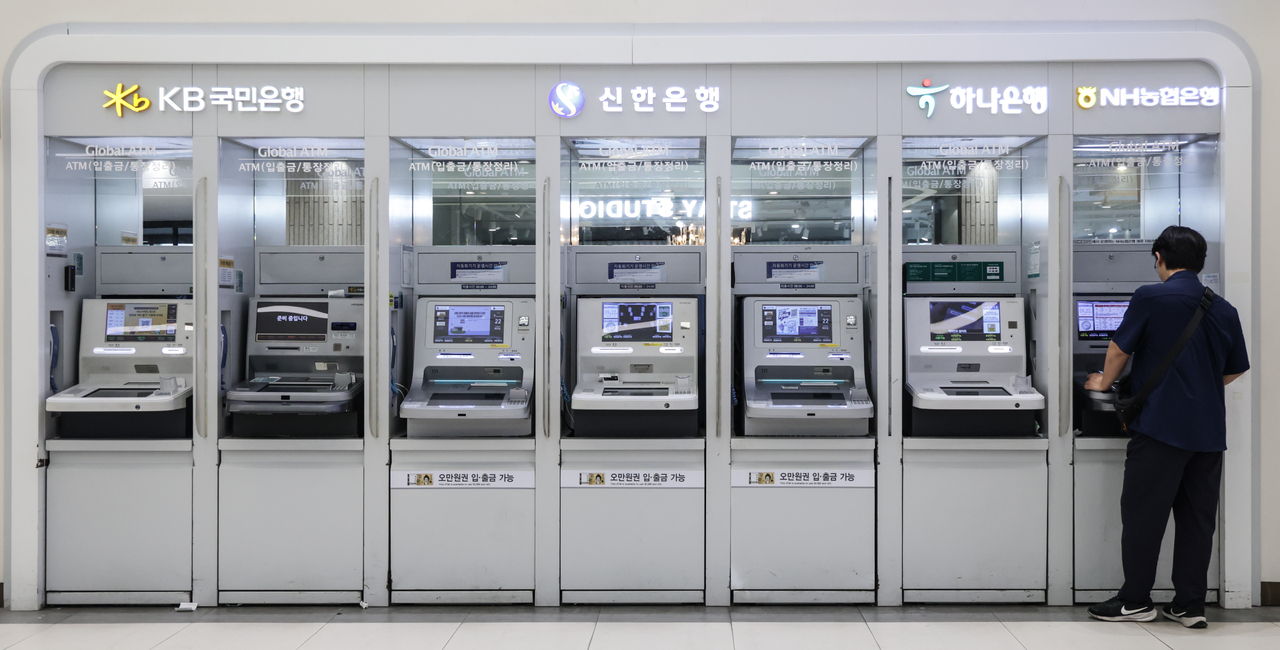
![The Ministry of Trade, Industry and Energy announced Friday that it would freeze the ninth-round petroleum price caps at their eighth-round levels for four weeks beginning Saturday at midnight. [Yonhap]](https://wimg.heraldcorp.com/news/cms/2026/08/21/rcv.YNA.20260821.PYH2026082109230001300_P1.jpg)
The government has frozen the ninth-round petroleum price caps amid prolonged uncertainty over the Middle East situation. The move extends the petroleum price cap regime — first introduced on March 13 — past the six-month mark.
The Ministry of Trade, Industry and Energy announced Friday that it would freeze the ninth-round petroleum price caps at their eighth-round levels for four weeks beginning Saturday at midnight.
Under the freeze, gasoline will remain capped at 1,784 won per liter, diesel at 1,773 won and kerosene at 1,380 won. After international oil prices fell following the US-Iran ceasefire agreement, the government cut the seventh-round cap by 150 won per liter on June 26, and has held prices at that level through the eighth and now ninth rounds.
The ministry said it decided to freeze the caps after weighing global oil price trends and the financial burden on ordinary households. Even after the 60-day deadline on the US-Iran ceasefire MOU expired, tensions between the two countries persisted, pushing crude prices back up from the $70-per-barrel range seen earlier this month to $93.8 per barrel for Brent crude and $95.6 for Dubai crude as of Thursday.
The ministry acknowledged the possibility of further price increases but said it gave top priority to easing the cost-of-living burden on low-income households — already strained by extreme heat and heavy rainfall — noting that current oil prices are similar to levels seen when the eighth-round caps were set. Domestic pump prices have continued to fall since June 27, standing at 1,862 won per liter for gasoline and 1,845 won for diesel as of Thursday.
The government had originally planned to phase out the price cap regime in line with stabilizing conditions in the Middle East and the normalization of shipping through the Strait of Hormuz. It had set aside a contingency reserve of 4.2 trillion won ($3.02 billion) to cover refinery losses over the assumed six-month lifespan of the system.
Renewed geopolitical risk in the Middle East, however, has pushed back any exit timeline. The price cap regime is expected to remain in place for now until the regional situation stabilizes.
President Lee Jae-myung had also directed officials at a senior secretaries meeting late last month to "continue the petroleum price cap system until fuel price instability is clearly resolved, and maintain all available policy tools — including fuel tax cuts — to the fullest extent possible."
"We will monitor domestic and international oil prices and supply conditions in real time, and operate the system with agility while comprehensively considering the impact on prices and the burden on people's livelihoods," a ministry official said. On concerns about the contingency reserve running dry, the official added: "Settlement is still under way, so it is difficult to say definitively, but so far the costs have been manageable within the reserve secured in advance."
hwshin@heraldcorp.com