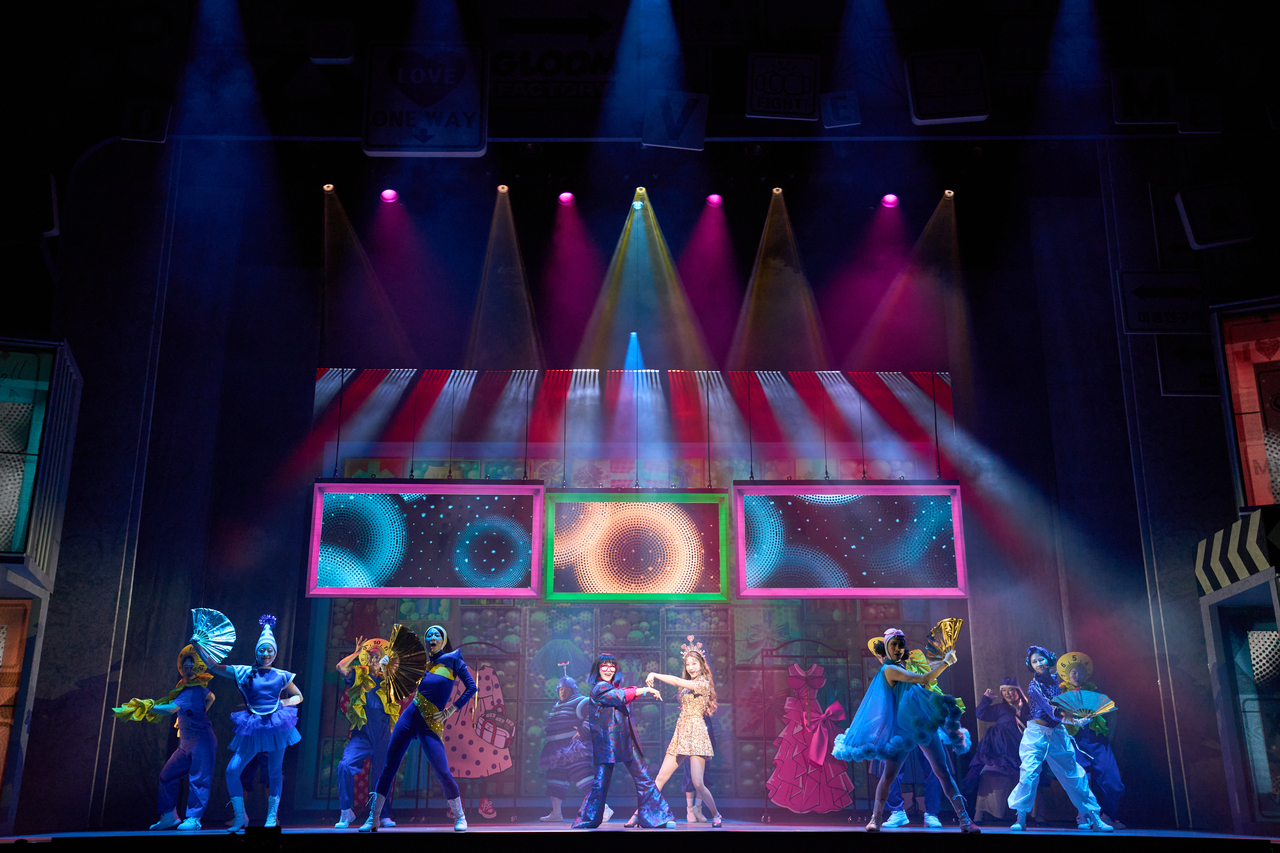
The Reason Cell stands with hands on hips, eyes bright and alert. The Emotion Cell pouts beside its twin. The Diet Cell spins a hula hoop without pause, while the Hunger Cell agonizes over today's menu — "I want tteokbokki" — and the Miser Cell frantically tries to shut off the spending tap. The cells have shed their skintight tights and leapt onto the stage.
When love and work are both going smoothly, a cheerful Cell Village appears. Yumi's mind turns like interlocking gears — a mysterious little cosmos. Each cell moves along its own path, living its own life in service of Yumi's happiness.
"Yumi's Cells," a super IP that racked up 3.4 billion views as a Naver mega-hit webtoon and went on to conquer a drama series and a 3D animated film, has now stepped into three-dimensional space and time. Bringing that vast inner world — one that unspooled across an infinite scroll — onto a stage was no simple task. Giving full expression to the staggering complexity of one human being's universe took five years of labor.
"Let's just cut Yumi out entirely!"
The early stages of mounting the musical "Yumi's Cells" (running through Sunday at Seoul Arts Center) were defined by one radical decision after another. Though the show bore the protagonist's name, the creative team fixed their attention not on Yumi herself but on her cells — and drastically scaled back her presence.
"After we decided to build the work from the cells' point of view, we ran countless experiments about who should be the protagonist," said writer Kim Ga-ram. "Ideas came up about making the Love Cell the lead, or the Writer Cell — Yumi's dream. We even considered removing human Yumi from the stage altogether. (Laughs)"
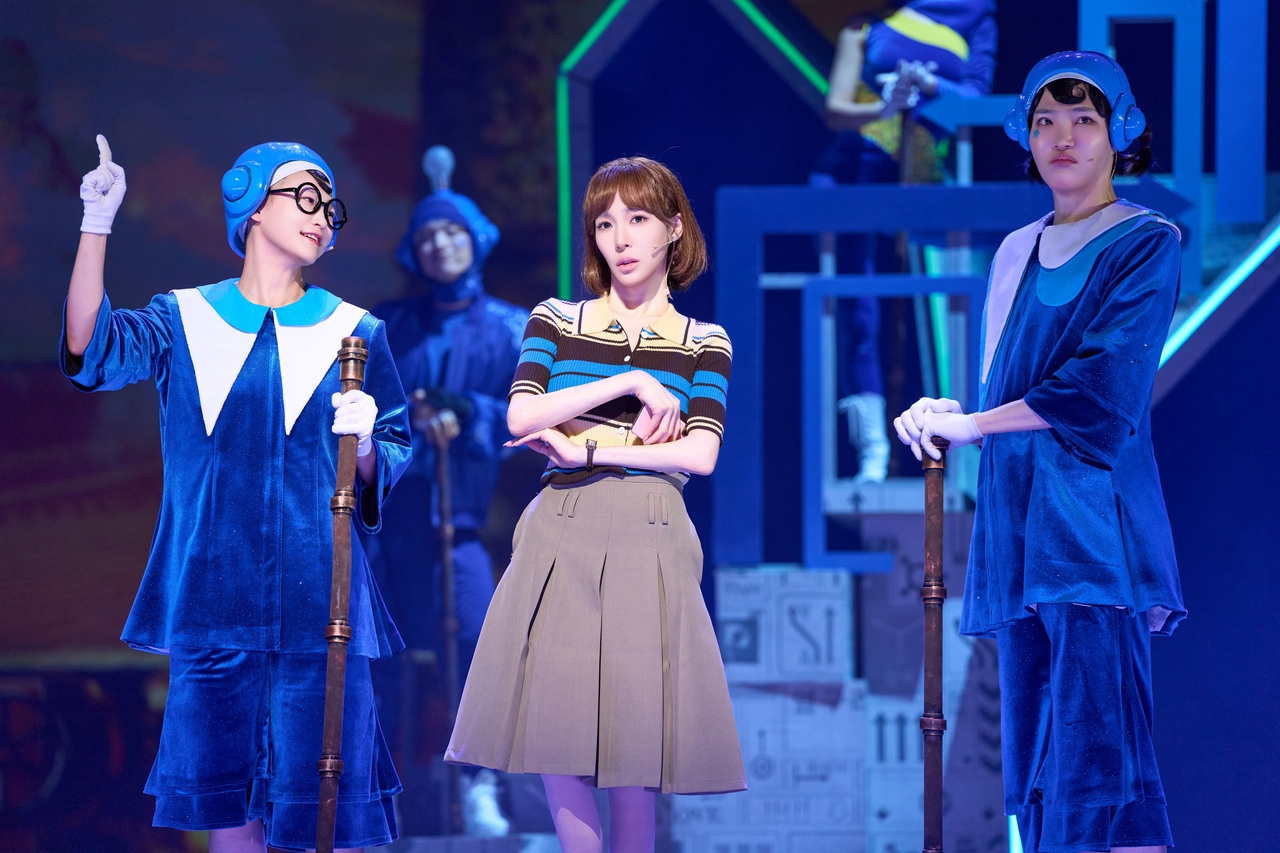
Trying to follow Yumi's romantic history and workplace struggles left the cells' world feeling cramped. That pressure gave rise to the idea of "Yumi's Cells" without Yumi — a full-blown adventure story centered on the cells alone. But new obstacles appeared. "Once Yumi, the gravitational center, disappeared completely, the audience had nowhere to drop their emotional anchor," Kim recalled. "We ultimately arrived at the hard truth that without Yumi in 'Yumi's Cells,' it was nearly impossible to carry the narrative forward."
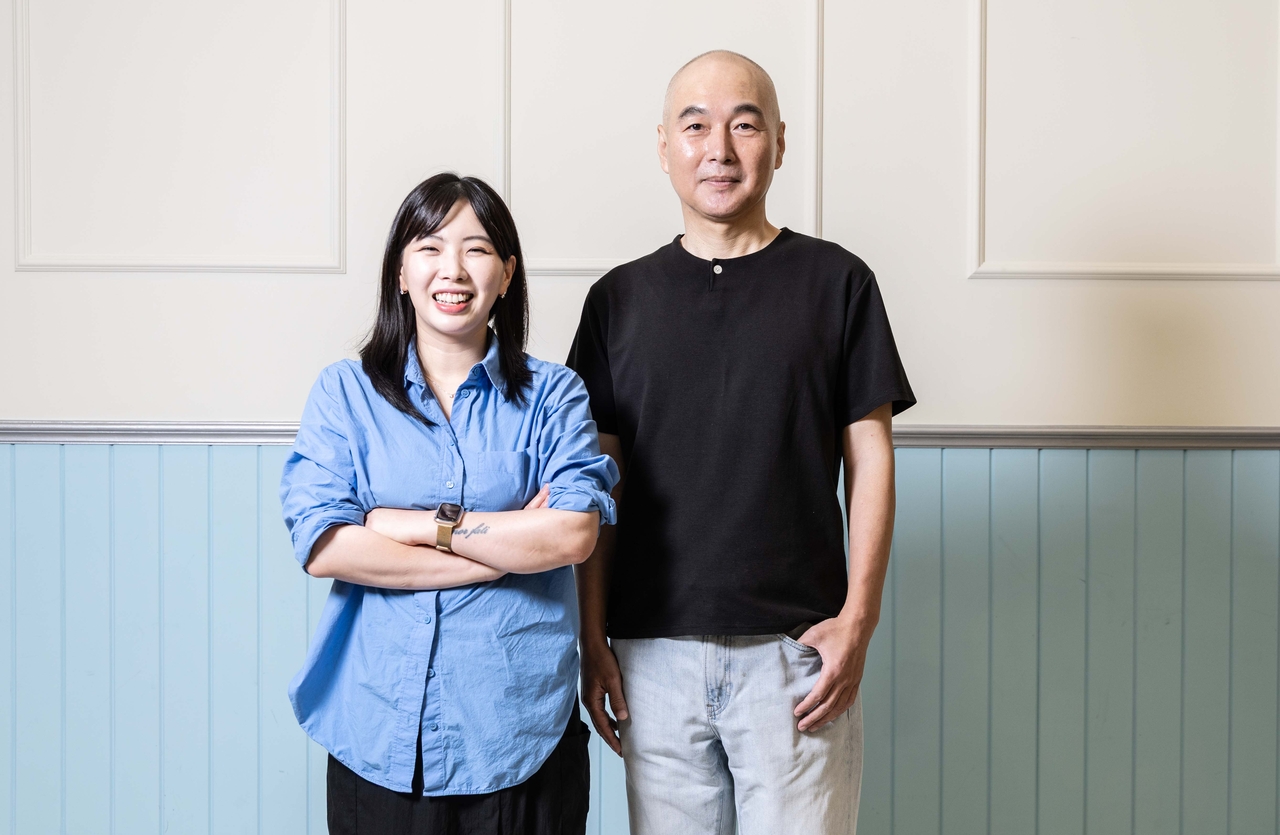
Writer Kim Ga-ram, who had demonstrated sharp storytelling instincts on the Daehangno stage with works including "Arangga," and composer Choi Jae-gwang, who had worked on "42nd Street" and "Saturday Night Fever," joined forces roughly five years ago. Since taking their first steps in a Jangandong studio in the winter of 2021, they have gone through thousands of pages of discarded and rewritten scores and scripts. "If you gathered every scene and piece of music that got cut, you'd have enough for two or three separate musicals," Choi said.
Out of that long trial and error came a set of decisive choices that shaped the final musical — deliberate devices the creative team planted throughout the show, each with its own reason for being.
Why did the musical invent '109' — a cell that doesn't exist in the webtoon?
The protagonist of the finished musical turned out to be neither Yumi nor her "prime cell," the Love Cell. In the five to ten minutes after the curtain rises and Cell Village comes into view, a single cell appears — one not dressed in blue. It announces the true beginning of "Yumi's Cells" and drives the narrative forward. It is a stranger found in no panel of the original work, an apprentice cell with no name of its own: Cell 109.
"The source material is such a mega-text that no matter how many meetings we held, we couldn't find a central axis," Kim said. "When we decided to turn the cells' story into a musical, the obvious first choice was the Love Cell. But the moment Love became the protagonist, I thought it would just turn into a run-of-the-mill romantic comedy. I didn't want to repeat the familiar story of falling in love and hurting from a breakup."
After marathon meetings left the entire creative team spent, Kim backed herself into a corner and began writing new ideas on a blank page. Nothing had come to her in a flash, but she declared at a planning meeting that she would "bring something by next week." That day, faint but unmistakable, a lightbulb began to flicker in Kim's mind — the Intuition Cell. It was the moment a cell that had never existed in the original was born.
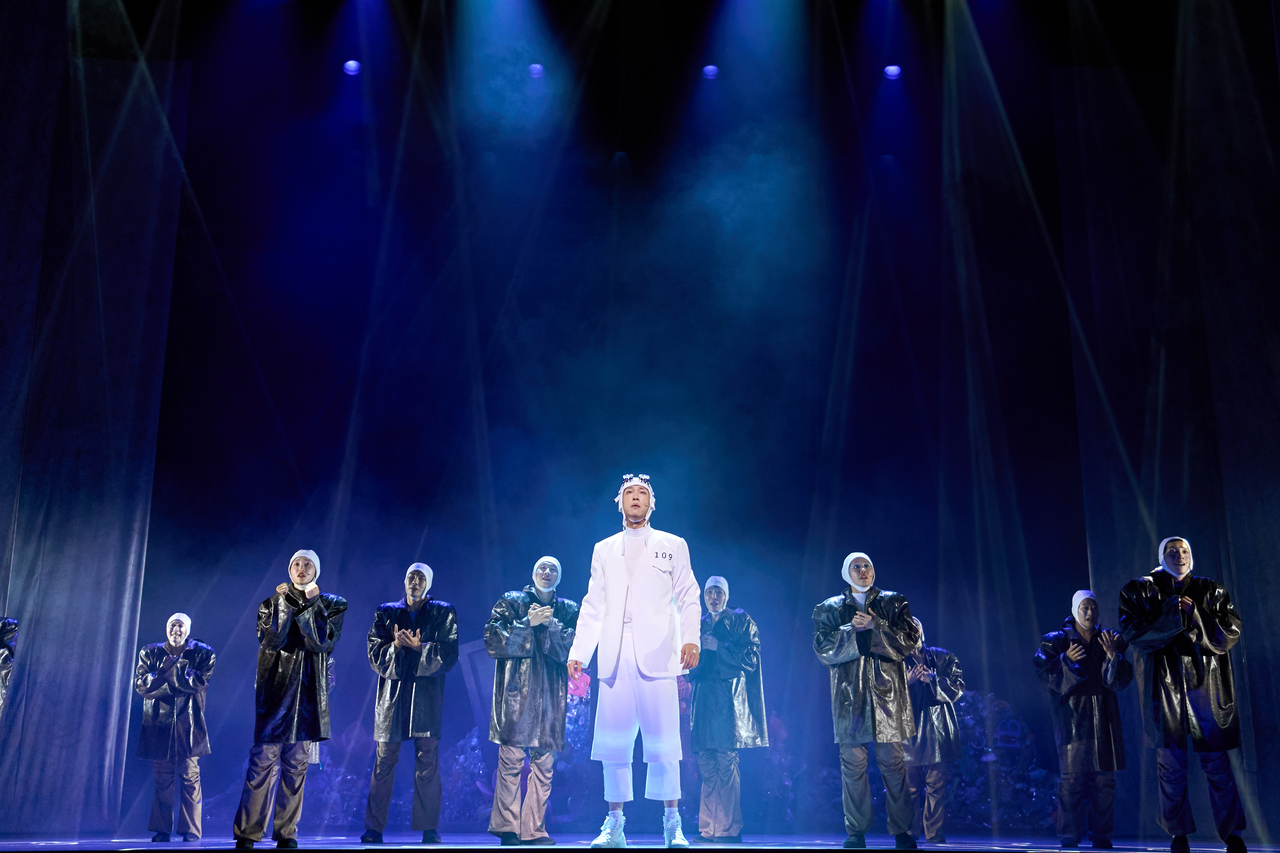
Kim conceived of "a nameless cell that wanders the outskirts of Cell Village, not knowing its own name — a coming-of-age story." The cell was named 109 after Yumi's birthday, Jan. 9. Set up as an apprentice cell, 109 was the "archetype of self-worth" that a world-weary Yumi had pushed deep into her unconscious.
For composer Choi, the arrival of 109 was the decisive moment — a ray of light inside a score that had been drifting without direction. "A musical must have a genuine originality that sets it clearly apart from other media and performances," Choi said. "The instant the character of 109 appeared in the script, I felt absolute certainty: 'This is it. Every problem is now solved.'"
Choi composed 109's signature number, "One Universe," first — a song meant to carry the cell's distinct identity. His top priority was weaving "a unique key and rhythm unlike a pop song and unlike the clichés of conventional musical theater." He said "'One Universe' became the spine from which every cell's theme and Yumi's solo numbers branched out." Through the birth of Cell 109, the musical "Yumi's Cells" built a complete musical universe of its own.
When cells move, Yumi changes — the plot's cause and effect, reversed
In the musical, Yumi is the protagonist and yet not quite the protagonist. Unlike in the webtoon or the drama series, she recedes to one side. "Compared to the early drafts, Yumi's share of the stage has grown enormously," Kim said.
Introducing the new character 109 gave the narrative room to breathe, but deciding what to keep and what to cut from a source spanning more than 500 episodes remained daunting. Laying out workplace life, romantic history and the small incidents of daily routine one by one would inevitably reduce the cells' inner world to a narrow chorus.
After much deliberation, the creative team's bold gamble was a radical reversal of conventional logic: "If this is a musical where the cells are the true protagonists, let's erase Yumi from the stage entirely."
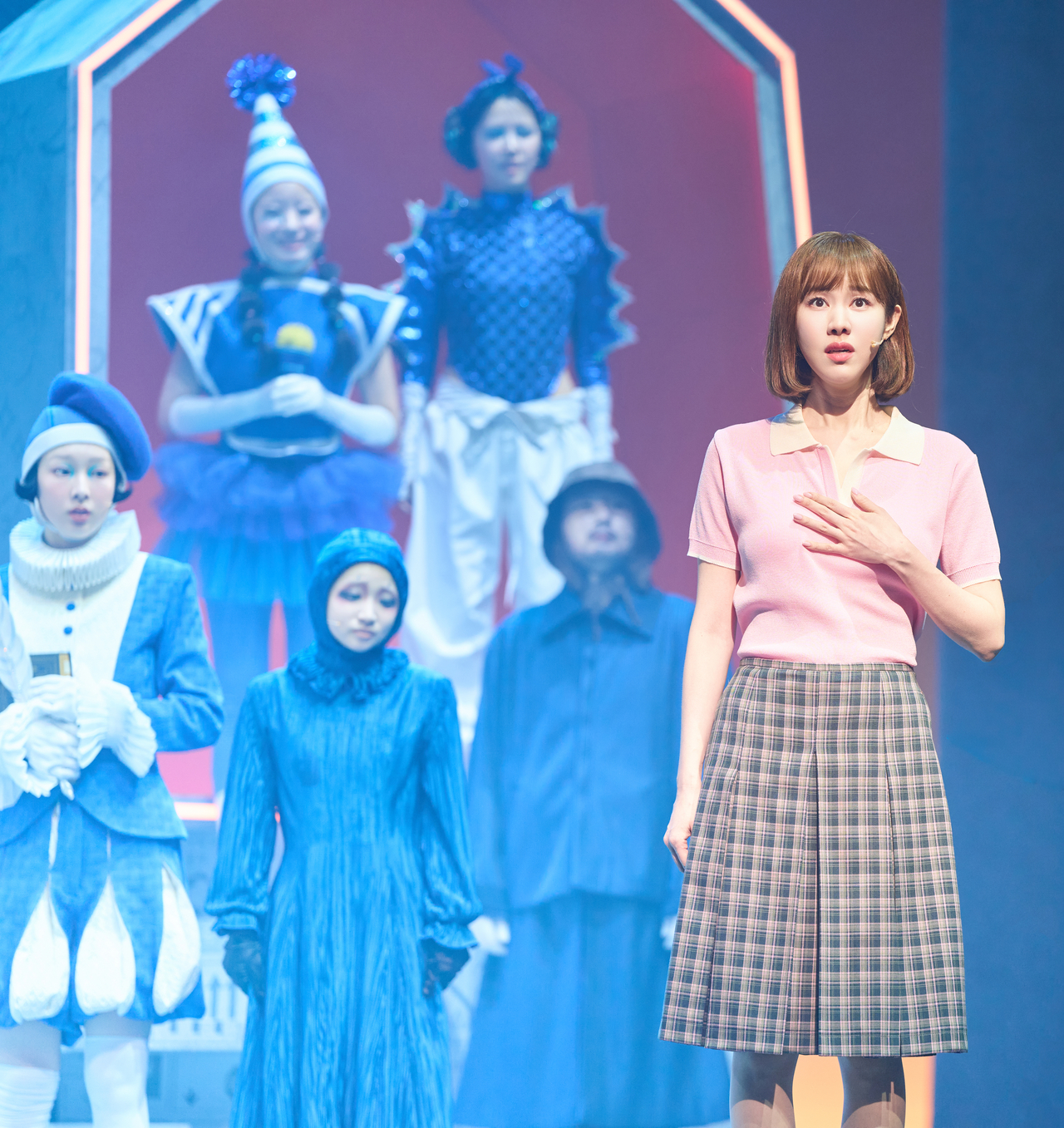
The result was a painful failure. Once Yumi vanished from the real world, the cells' struggles on stage floated in a void, and the team hit a fatal wall: without Yumi in "Yumi's Cells," there was no center of gravity to drive the story.
But failure proved to be the mother of invention. That setback became the catalyst for discovering a narrative originality unique to the musical. The creative team turned head-on against the long-established logic of the source text. Kim, a devoted fan of the webtoon long before she began working on the adaptation, described the original structure: "In the source, whenever something happens to Yumi, the cells react in a flurry."
The musical flipped that cause-and-effect relationship entirely. The new framework holds that the cells act on their own initiative, and the changes in real-world Yumi flow from the collisions and transformations within. Apprentice Cell 109 encounters the minor cells pushed to the margins of Cell Village and undergoes its own growing pains. The fierce inner turbulence of 109 tending to the wounds of the outcast cells and recovering their self-worth draws Yumi's own growth forward.
"I redesigned the script by inverting the original's causality — so that Yumi changes in response to what the cells do," Kim said. "I tied the process of 109 transforming as it meets the cells to the process of Yumi affirming herself in the real world, binding the two into a single thread."
What gave the creative team confidence in that bold structural shift was the scene in which Yumi and a cell meet. Composer Choi still vividly remembers the spring of 2024, when he first read the "encounter scene" Kim had written. "The moment I saw that scene, I told the directing team: 'We're there,'" he recalled. "I was certain that with just this one scene, every structural problem in the work would be solved at once."
For Choi, the moment Yumi steps into Cell Village and locks eyes with 109 means more than the meeting of reality and fantasy. "There are times, as we live through a difficult world, when we look back at ourselves and peer inward — moments of painful self-reflection, moments when we need deep comfort, moments when we steel ourselves for a new resolve," he said. "Yumi meeting 109 in Cell Village is the moment a human being comes face to face with the inner self they had lost."
The scene in which Yumi takes 109's hand — 109 being the symbol of her forgotten self-worth — shows a person embracing their own deficiencies and wounds and recovering the substance of their self-esteem. "The moment that pivotal scene was born, the entire skeletal structure of the work and its musical through-line finally came into clear view," Choi said. The creative team's experiment of erasing Yumi from the stage entirely had been, in the end, a necessary detour on the way to using Yumi herself to render one person's inner landscape in three dimensions.
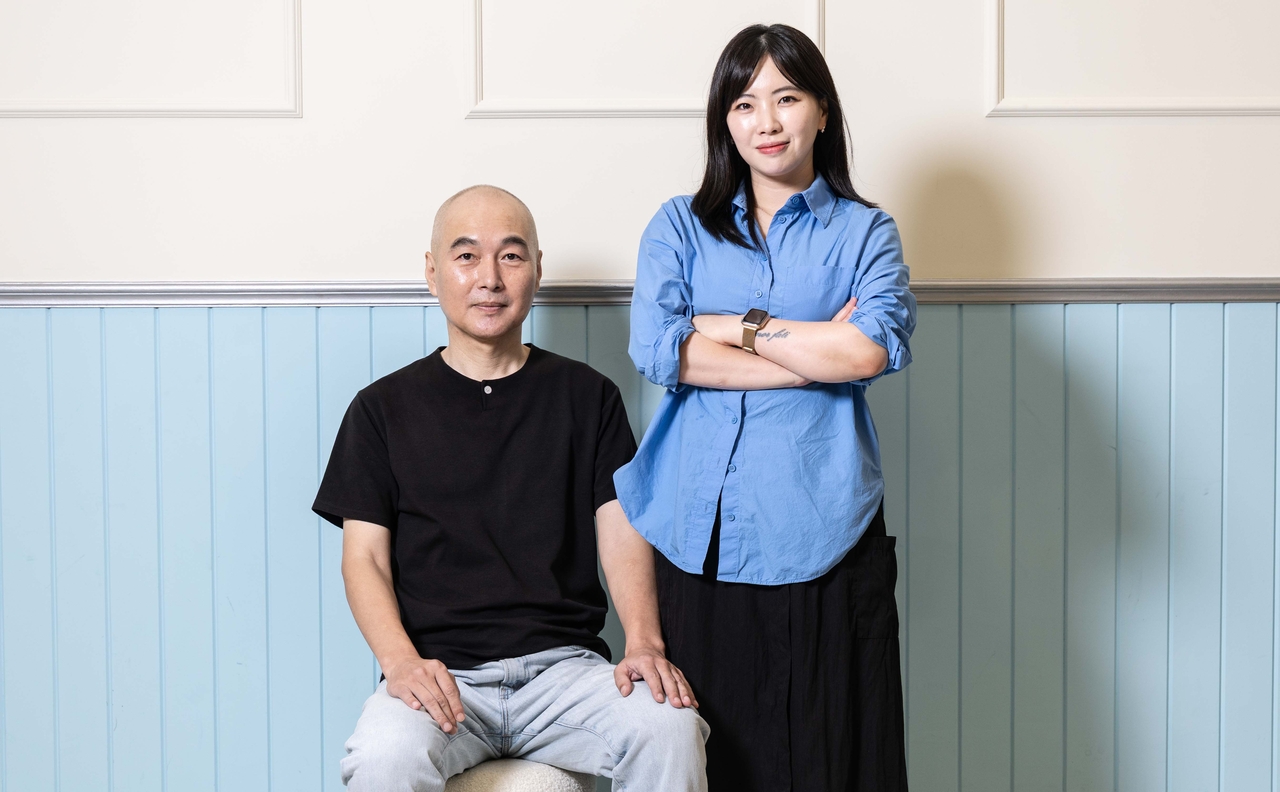
A class system among the cells — absent from the original. Why?
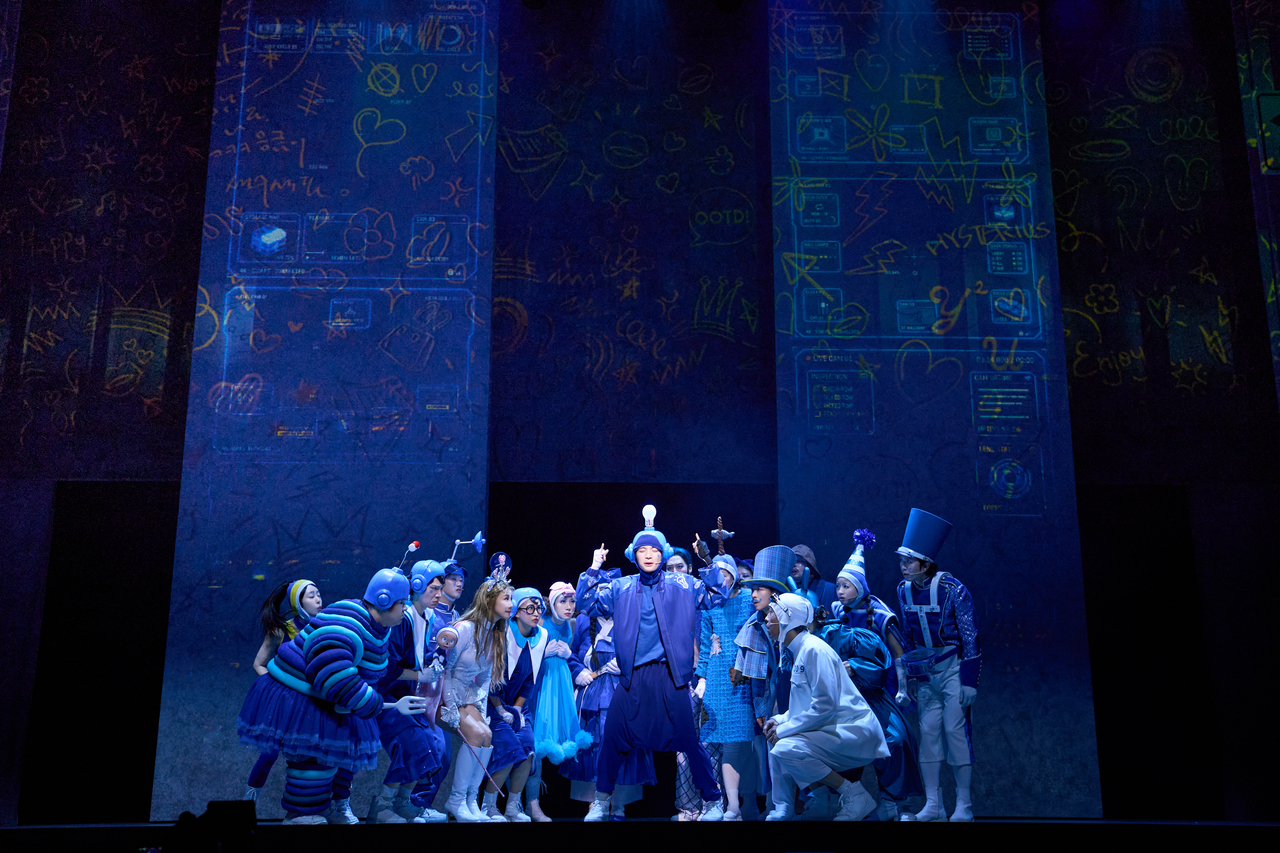
Cell Village always seemed a warm, harmonious little community. Look closer, and it is unmistakably human society. The village runs on a rigid class hierarchy, with "major cells" and "minor cells" locked in fierce opposition. The minor cells in particular are consigned to the periphery, prone to drawing the major cells' cold stares whenever they act without reading the room.
This rather radical setup was a dramatic device created to translate the grammar of a two-dimensional webtoon into three-dimensional performance art. "The original webtoon, by nature of its weekly serialization, is built around episodic, fragmented storytelling — with the cells reacting to Yumi's impulsive behavior at the center," Kim said. Transplanting that structure onto a stage would flatten the conflicts between characters and drain the dramatic tension.
What Kim looked toward instead was "the shadow within." "Everyone has a version of themselves they want to show the world with confidence — rational, cool, with a flair for fashion or a bold approach to love," she said. "Those are exactly the major cells, the ones who hold power in Cell Village."
The minor cells are the opposite: the Anxiety Cell that endlessly imagines worst-case scenarios, the Detective Cell that constantly jumps to the wrong conclusions, the Naughty Cell that vents shameful desires, the Clingy Cell that clings and whines, and the Writer Cell — Yumi's forgotten dream — left behind by the wall of reality. "These are the embarrassing parts of myself I want to hide," Kim explained. The emotions, dreams and desires estranged from the self take up residence as minor cells.
The musical follows apprentice Cell 109 as it moves through the spaces belonging to the minor cells banished to the outskirts of Cell Village — the Naughty Club, the Depression Processing Plant, the Unconscious — one after another.
Being a minor cell does not mean being perpetually downtrodden, and the music is not dark. "The number the Detective Cell, the Anxiety Cell and 109 sing together is actually bright and bouncy, which I love," Kim said. "I wanted to portray the minor cells — persecuted but living joyfully — as a kind of wandering troupe." That brightness is itself a piece of the self-worth that transforms both 109 and Yumi.
"True self-worth does not mean loving yourself only when you are shining and at your best," Kim said. "It means fully accepting and embracing even the deficiencies and ugly corners you most hate, feel ashamed of and want to look away from — recognizing them as entirely part of you." Cell 109's journey to redeem the minor cells and restore their self-worth is, ultimately, the psychological reconciliation through which the real-world Yumi embraces her wounds and moves toward genuine integration of the self.
A major character, Hysterious, is also gone
The most dramatic change was the removal of Hysterious — the antagonist who had served as a crucial narrative pillar all the way through the showcase stage.
The decision to cut Hysterious, who in the original embodied Yumi's hysteria and functioned as a powerful villain, was an enormous gamble even within the creative team. "At first I thought that if we took this out, it would be incredibly hard to untangle everything," Choi recalled. A villain, after all, is a shortcut — from classical works to contemporary ones, an antagonist generates direct conflict with the protagonist and drives the plot forward quickly and intuitively.
Kim, however, pushed back. "When we set up a clear villain and pushed the story toward a good-versus-evil showdown, the stage started feeling as juvenile as a children's play or a cartoon," she said. "More than anything, I kept asking myself: Hysterious is also one of the precious emotional cells that make up the human being called Yumi — so why should this one cell be despised by everyone forever?"
The writer's decision proved wise. The creative team abandoned the good-triumphs-over-evil formula of defeating an external villain and instead made the engine of conflict the inner turbulence that erupts when the emotion of "love" loses control and becomes blind obsession.
"We broke free from the Hollywood-style archetypal villain structure and arrived at a modern, sophisticated script that captures the complex and subtle emotional textures of the human interior," Choi said.
Hysterious disappeared from the script but did not vanish entirely — the character lived on inside the music. Choi took the unstable, nervy melody he had already composed for Hysterious — written in shifting time signatures of 5/4 and 6/8 — and grafted it onto the scene in which the Love Cell goes into overdrive. That is the climactic scene where the Love Cell loses its reason, consumed by obsession over the relationship with boyfriend Gu-woong. Where the good-versus-evil confrontation had been, a transformed melody now carries the emotional collision to its extreme, and the stage takes on a quality of suspense.
Wagner hiding inside 'Yumi's Cells'?
Bouncy K-pop and the bright sounds of Broadway show tunes get a spoonful of German Romanticism. To capture the Love Cell's blind fantasy and obsession, Choi wove the motif of the "Bridal Chorus" — the celebrated melody from Wagner's opera "Lohengrin" — subtly into the foundation of the Love Cell's main theme.
"The Love Cell's ultimate desire is marriage — perfect union with Gu-woong," Choi said. "To express that innocent yet dangerous longing, I transformed Wagner's wedding march melody into a ballad style."
The melody does not appear once and disappear. In Act 1, it works as a device that stirs the audience's unconscious — flowing in as the sweet, romantic flutter of the Love Cell hoping things will work out with Gu-woong. But in Act 2, as the relationship fractures, the key shifts and the theme becomes dissonant, heralding catastrophe. "Just as Wagner's opera ultimately ends in tragedy, I wanted to realize aurally the tragedy of love's illusion shattering — through a modulation of the same melody," Choi said. It is a precise borrowing of the classical opera technique of the leitmotif.
Choi scattered countless leitmotifs across the entire work like a tightly woven net.
Yumi's signature solo number weaves in the melody of 109's main theme, "One-O-Nine," along with a ticking-clock sound effect that urges time forward — so that the audience subconsciously registers, without realizing it, that 109 is breathing deep within Yumi's interior. The Detective Cell's theme and the choral number "Rewind" work the same way: the Detective Cell's signature melody — obsessively rewinding and piecing together memories from the past — expands into the central motif of the grand ensemble number "Rewind," which becomes the propulsive force of the narrative.
Traditional Korean rhythms also slip into the musical numbers — through the Intuition Cell's number, arranged in a lively, trendy contemporary pop style. The jajinmori rhythmic pattern, associated with Korean shamanic possession and prophecy, seeps in quietly. The Detective Cell, prone to wild and misguided deductions, delivers lines at every pivotal turning point that pierce straight to 109's true identity and Yumi's psychology — methodically fulfilling the role of foreshadowing payoff.
Tiffany says Yumi's number is 'too dark' — so they rewrote it
The musical "Yumi's Cells" was never a fixed text pinned to a desk. It was a living organism, evolving constantly through the breath of actors in the rehearsal room and the relentless feedback of the creative team.
Yumi's solo number went through revision after revision. The number Choi originally composed was a dark, minor-key piece dominated by a mournful, resolute emotion. But a conversation with Tiffany Young, cast as Yumi, changed the song's fate entirely.
"Tiffany listened to the music and offered a very smart, sharp insight: 'The song itself is beautiful, but it's excessively tragic and fatalistically sad — I'd love for Yumi's independent, positive vitality to come through a little more,'" Choi said. "I revised the dark minor key into a bright, confident major key and rewrote the song completely, four times in total." It was the moment an actor's intuition and a creator's receptiveness combined to lift the number to another level.
The transformation of the Intuition Cell was also a fruit of collaboration. In the early script, the Intuition Cell was a conventional shaman figure — something like Oda Mae Brown from the film "Ghost," played by Whoopi Goldberg — and the directing team worried it could come across as dated and clichéd. When Choi threw out a fresh, fizzy number for the Intuition Cell, Kim layered on witty, irreverent modern language — lines like "Tonight's snack is fried chicken" and "We're all going to die someday" — to complete the Intuition Cell as it exists today.
Distributing lines and numbers among the ensemble cells was equally "a constant process of cutting." "Within the physical constraint of not being able to give a solo number to each of the more than 20 cell actors, I wanted to give each cell a short, punchy signature phrase of two to four bars to preserve their presence," Kim said. "The reason this intricate clockwork could be completed was five years of weekly meetings — where revising the script changed the music, changing the music shifted the choreography, and watching the choreography sent us back to refine the music again."

Countless lines and songs pass through the cells' mouths, but all of them ultimately point toward Yumi. The final destination of "Yumi's Cells," rewritten from the omniscient perspective of the cells, is Yumi herself.
"Every song the cells sing on stage is, in the end, a monologue of the many-colored souls that make up the one human being called Yumi," Choi said. Throughout sketching and arranging the music, he kept at the center one question: "Can Yumi sing this song fully in her own voice?" The Fashion Cell's melody as it dresses itself in brilliant clothes for a joyful mood, the Naughty Cell's suppressed desires, Cell 109 wandering in the depths of the unconscious — all of it is, ultimately, the inner truth flowing through the bloodstream of the one human being called Yumi.
Near the end of the show, when the real-world Yumi enters Cell Village, meets Cell 109's gaze and gives it a name, Kim described that moment using the Sanskrit concept of "Brahman and Atman becoming one" — the idea that the self and the universe are identical. "When the countless cells within me collide fiercely, get wounded and stand in solidarity, each in their own place, the vast and complete universe that is 'me' is finally whole," she said.
Kim, who was pregnant while writing the Act 1 finale number, said she poured into 109's love letter to Yumi the absolute, devoted love she felt toward the small life growing inside her. Choi, who had fallen into despair during the darkness of the COVID-19 pandemic in 2020 when everything came to a standstill, said: "Filling in the notes of this work was how I finally healed a deep trauma within myself."
The stage written from that place has touched audiences in their 20s and 30s. The show holds a rating of 4.8 out of 5 on Naver and 9.8 out of 10 on Interpark's Nolticket platform. Following the 30-something protagonist Yumi, it has won over audiences in their 30s, who make up 35.4 percent of ticket buyers. Audience reviews tell a consistent story: "I went in with no expectations and ended up crying and laughing," and "It made me want to look for what I truly want." The two creators say that is exactly where the message of "Yumi's Cells" lives — a quiet word of comfort offered to the self-portrait of a generation in their 20s and 30s: dazzling in their imperfection, beautiful in their wandering.
"We do not need to force ourselves into the molds the world sets or live by others' standards," Kim and Choi said. "The most precious being we should cherish and love is ourselves, and each of us is already, just as we are, a complete and worthy 'one universe.'"
shee@heraldcorp.com