![Ahn Se-jin, executive director of Genesis Project Studio 2, presents at the Genesis GV90 Tech Brief held at the Palace of Fine Arts in San Francisco on Thursday (local time). [Genesis]](https://wimg.heraldcorp.com/news/cms/2026/08/22/news-p.v1.20260822.a3e1862e6e37458d8c9ae76156a39412_P1.jpg)
"The GV90 was the most difficult model Genesis has ever built."
Genesis held a "Tech Brief" at the Palace of Fine Arts in San Francisco on Thursday (local time), offering an in-depth look at the technologies behind the GV90 — the brand's first full-size flagship electric SUV.
The event was structured as a direct briefing by the engineers responsible for the new model's core systems. Heo Gwang-hun, executive director of Genesis development, opened the session with that assessment and said the team had kept one goal in mind throughout: "Development of the GV90 was focused on achieving a level of refinement worthy of a flagship."
![Heo Gwang-hun, executive director of Genesis development, presents at the Genesis GV90 Tech Brief. [Genesis]](https://wimg.heraldcorp.com/news/cms/2026/08/22/news-p.v1.20260822.8ace9627ef0147a7975cb5fa82252aa3_P1.jpg)
Heo said the team had gone back to first principles on virtually every element of the vehicle. "We redesigned almost everything from scratch — the platform, the battery, the power architecture, the body structure, the infotainment system, and even the factory where the car would be built," he said. "The result is the most exceptional vehicle in the brand's history."
Ahn Se-jin, executive director of Genesis Project Studio 2, then took the floor and outlined four development keywords for the new model: an effortless experience that eliminates even familiar inconveniences, customer safety as the top priority, solid fundamental performance, and a moving private lounge. "We wanted every moment a customer spends with the vehicle to be a special experience," Ahn said.
Considerable attention also fell on the engineering story behind the Neo Lun Arch Gate — the coach-door structure of the GV90 Neo Lun variant, which drew the most interest at the world premiere. To create a system in which the front and rear doors each open and close independently without a fixed B-pillar connecting the roof and floor, the development team moved the B-pillar inside the door rather than eliminating it entirely. Engineers also reinforced the body interior with a structure that reinterprets the roll-cage principle used in racing cars.
Lee Dae-hee, head of the Genesis body design division, said the standard swing-door GV90 already achieves body rigidity that surpasses rivals, but added that the GV90 Neo Lun goes 12 percent further still.
![From left: Jared Pellat, Genesis North America communications representative; Heo Gwang-hun, executive director of Genesis development; Ahn Se-jin, executive director of Genesis Project Studio 2; Manfred Harrer, president and head of R&D; Lee Dae-hee, head of the Genesis body design division; Lee Seung-mok, executive director of integrated safety development; Jeong Seong-gi, head of Genesis test division 1; Jeong Jae-heon, head of the Genesis manufacturing engineering division. [Genesis]](https://wimg.heraldcorp.com/news/cms/2026/08/22/news-p.v1.20260822.c6a196c9d61747f79350bdda7e4c6521_P1.jpg)
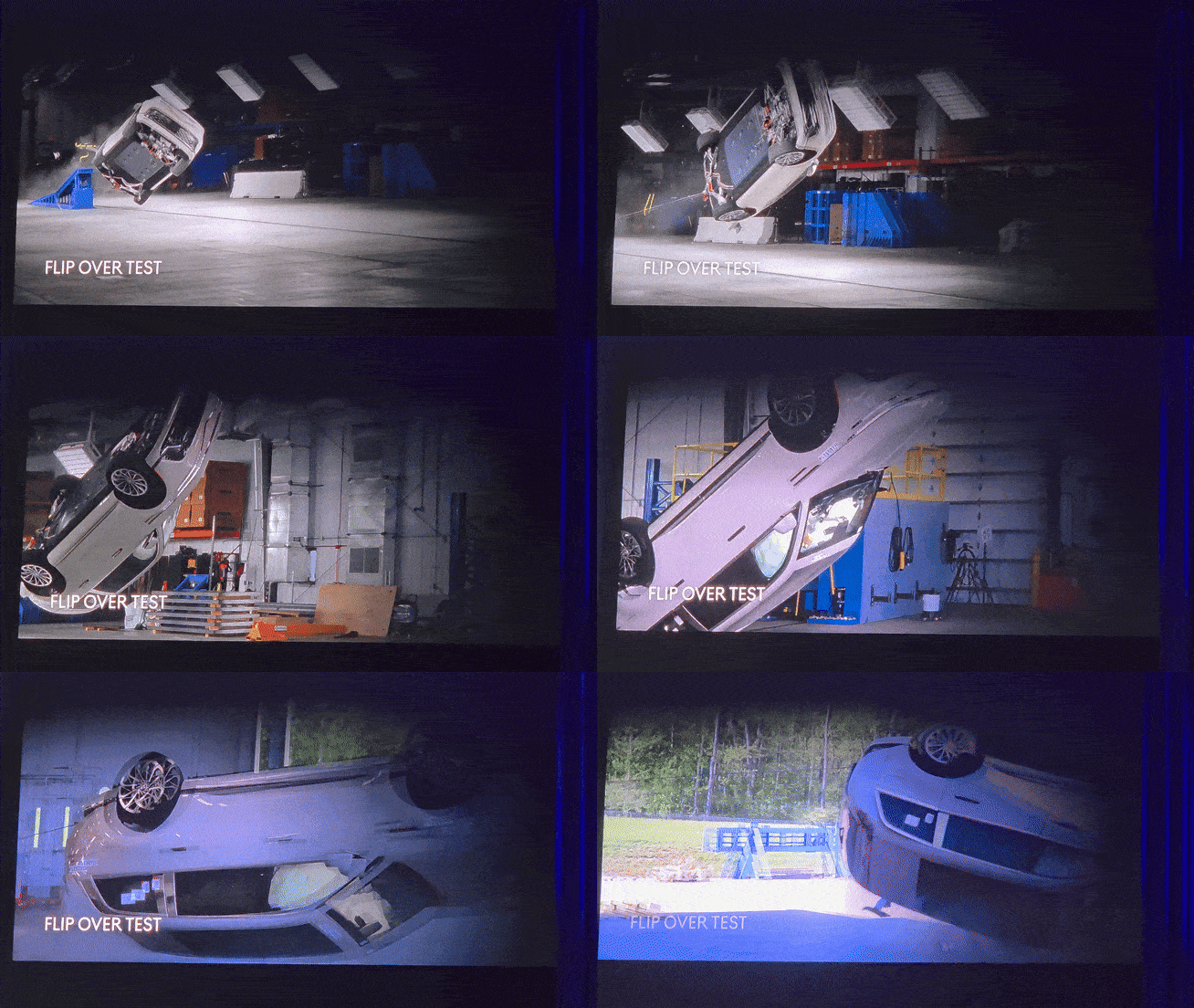
The roof airbag — a world first fitted to the GV90 — was another product of painstaking effort. Lee Seung-mok, executive director of integrated safety development, said the team went beyond simply meeting crash regulations and safety assessment standards in each market. "We examined 38 million real-world accidents," he said, "and focused on rollover crashes — low in frequency but carrying the highest risk of serious injury."
A rollover test video of an actual GV90 was screened at the event. The footage showed the vehicle traveling at 110 kilometers per hour before going over a ramp and rolling over, at which point all 12 airbags — including the roof airbag — deployed rapidly to protect the occupants.
Jeong Seong-gi, head of Genesis test division 1, described how the team pursued dynamic performance and a comfortable ride at the same time. To achieve both, engineers fitted an e-LSD (electronic limited-slip differential) — long considered the preserve of high-performance cars — to both the front and rear axles, and adopted a monotube dual-valve electronically controlled shock absorber that independently controls compression and rebound in the suspension.
"Providing a composed, unhurried drive on any road surface and in any condition is what Genesis considers true luxury," Jeong said. "We brought together the best technology available so that occupants feel comfortable throughout every journey."
Meanwhile, the event also saw the world premiere of a tech film titled "Sanctuary of Fineness," documenting how the GV90 is produced at Genesis's Ulsan EV factory.
likehyo85@heraldcorp.com