Warmth is returning to places that once fell silent at the end of an era.
At Cheongnyeongpo, time stopped for a teenage king. Along the Untan Godo, the roar of coal trucks faded away. Deep in the mines of Sabuk, the sound of pickaxes eventually went quiet. The presences may be gone, but the memories have not been erased. Through the cracks of frozen time, new life has begun to seep in.
The paradox of vitality taking root on ground marked by disappearance is playing out across Gangwon Province.
A grief reached only by crossing the river
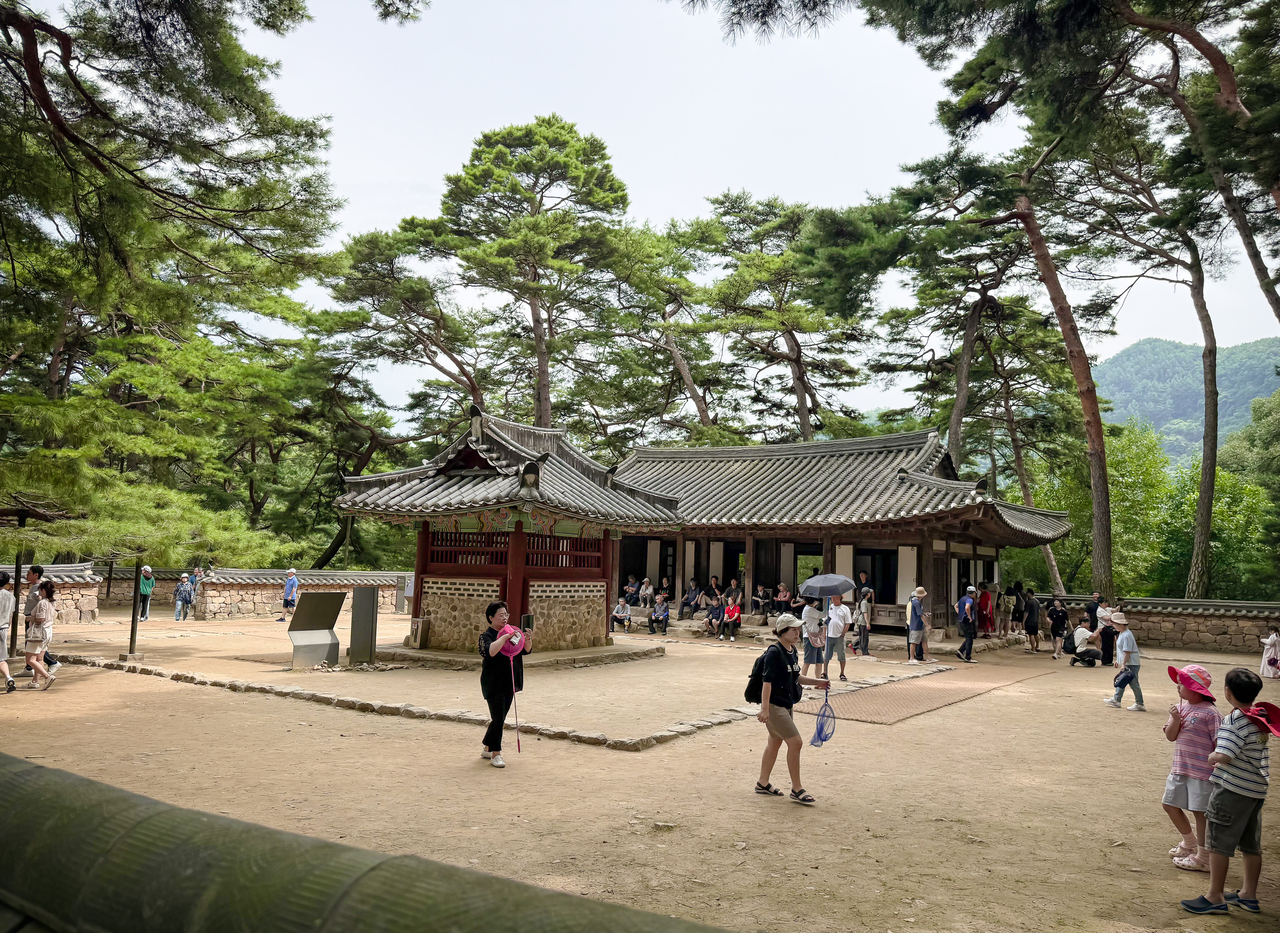
Cheongnyeongpo, the site of the tragic exile depicted in the film "The King's Warden," still draws crowds. One might have assumed the site's popularity would cool once the film left cinemas — but that assumption proved entirely wrong. A staff member at a nearby shop said visitors pour in on weekdays and weekends alike. A representative from a nearby resort added that the sight of long queues outside Yeongwol's main restaurants was something no one could have imagined before.
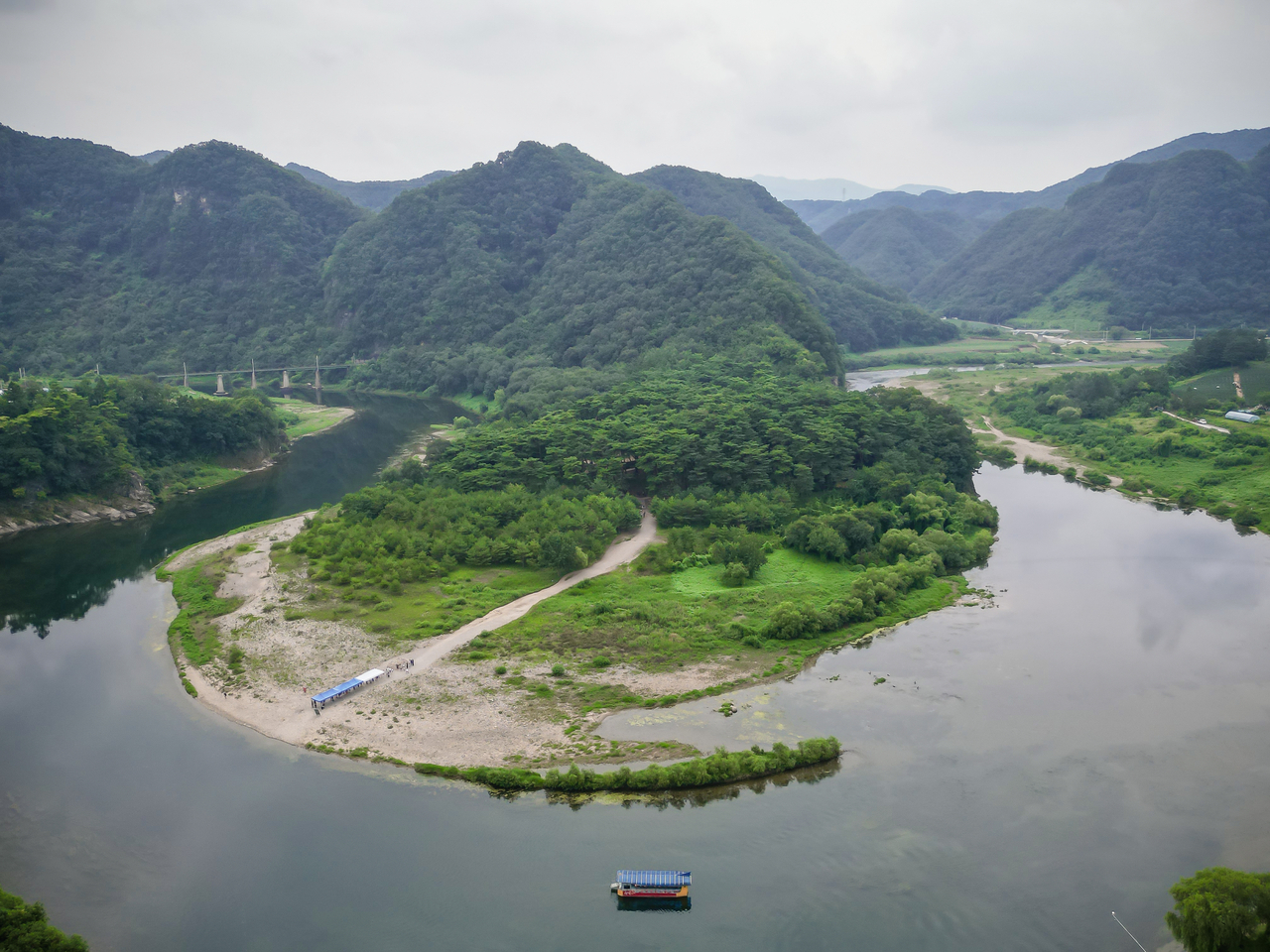
The boat ride from Cheongnyeongpo dock across the Seogang River takes barely two minutes. Stepping ashore, one enters what amounts to a natural prison — river water on three sides and the sheer cliffs of Yukyukbong on the fourth. The crushing weight of Danjong's isolation in 1457, after his uncle seized the throne, seeps through the river mist with a quiet chill.
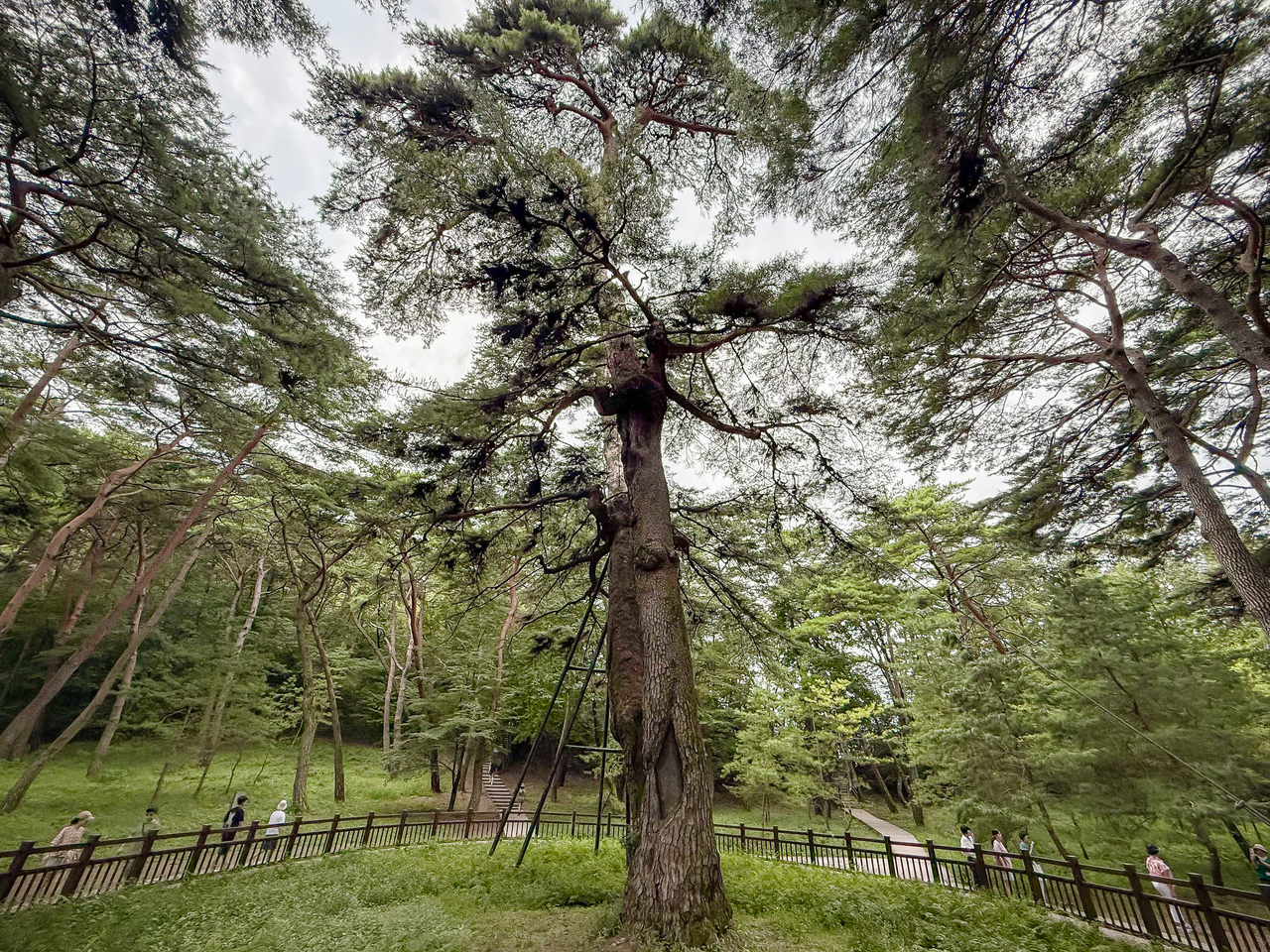
Past the dense pine forest beyond the landing, the royal quarters where the young king lived come into view, alongside the Gwaneumsong pine said to have witnessed his exile. Danjong's life — cut short in tragedy despite his unimpeachable legitimacy — has endured for centuries as an unresolved grief.
The film rekindled layers of mourning for Danjong, drawing visitors to Cheongnyeongpo in a steady stream. Even a sudden downpour did not slow their steps. What was once a place of absolute isolation is being reborn as an open space of remembrance — one that consoles a soul that never had the chance to bloom, and gathers together all those who grieve that loss.
Life stirs on a road swept clean of black dust
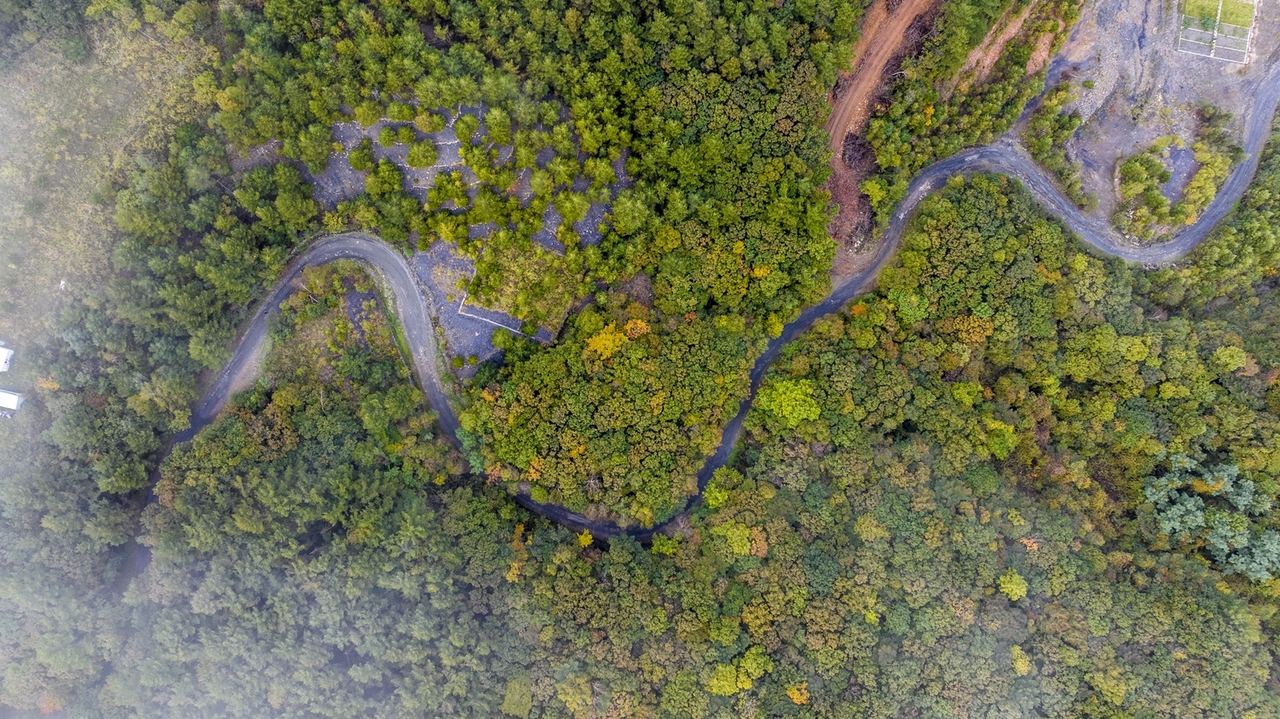
A long-distance trekking route stretching roughly 173 kilometers runs from Cheongnyeongpo in Yeongwol, Gangwon Province, through Jeongseon and Taebaek all the way to Samcheok. It is called Untan Godo 1330 — a name taken from the elevation of Manhangjae pass (1,330 meters), the route's highest point. The name itself means "the high road that carried coal."
Carved through cliffs and ridgelines in the 1950s and 1960s to haul coal from the mines, this industrial road once thundered with heavy GMC trucks trailing clouds of coal dust. After the mines closed, the road fell into long silence — until the 2020s, when it was transformed into an ecological trekking trail.
Near Hi1 Resort in Jeongseon, Gangwon Province, a section of the Untan Godo trail offers a concentrated taste of the mining era alongside sweeping views of the Baekdudaegan mountain range. The roughly 5-kilometer course runs from Hwajeollyeong pass through Dorongi Pond and the No. 1177 mine shaft to Hi1 Palace Hotel.
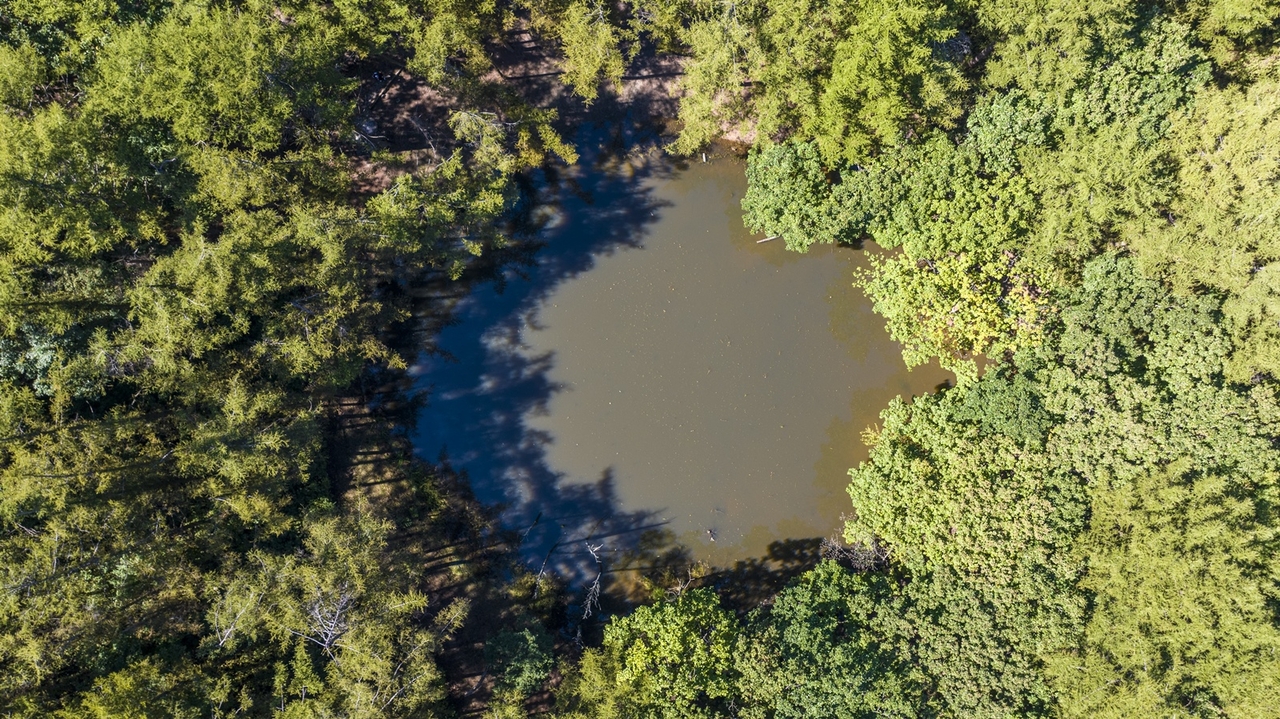
Among the trail's highlights, Dorongi Pond is a sinkhole lake that formed in the 1970s when a mine tunnel caused the ground above to collapse. Water pooled in the depression, and salamanders moved in to lay their eggs.
Directly beneath the pond ran the underground tunnels where miners once sweated. The salamanders' undisturbed survival means the pond floor has not cracked open and flooded the shafts below. For the wives who waited anxiously while their husbands descended hundreds of meters underground, the salamanders were proof of safety. Standing at the water's edge, one can almost feel the desperate prayers of mining families rippling outward — prayers for a husband to come home whole.
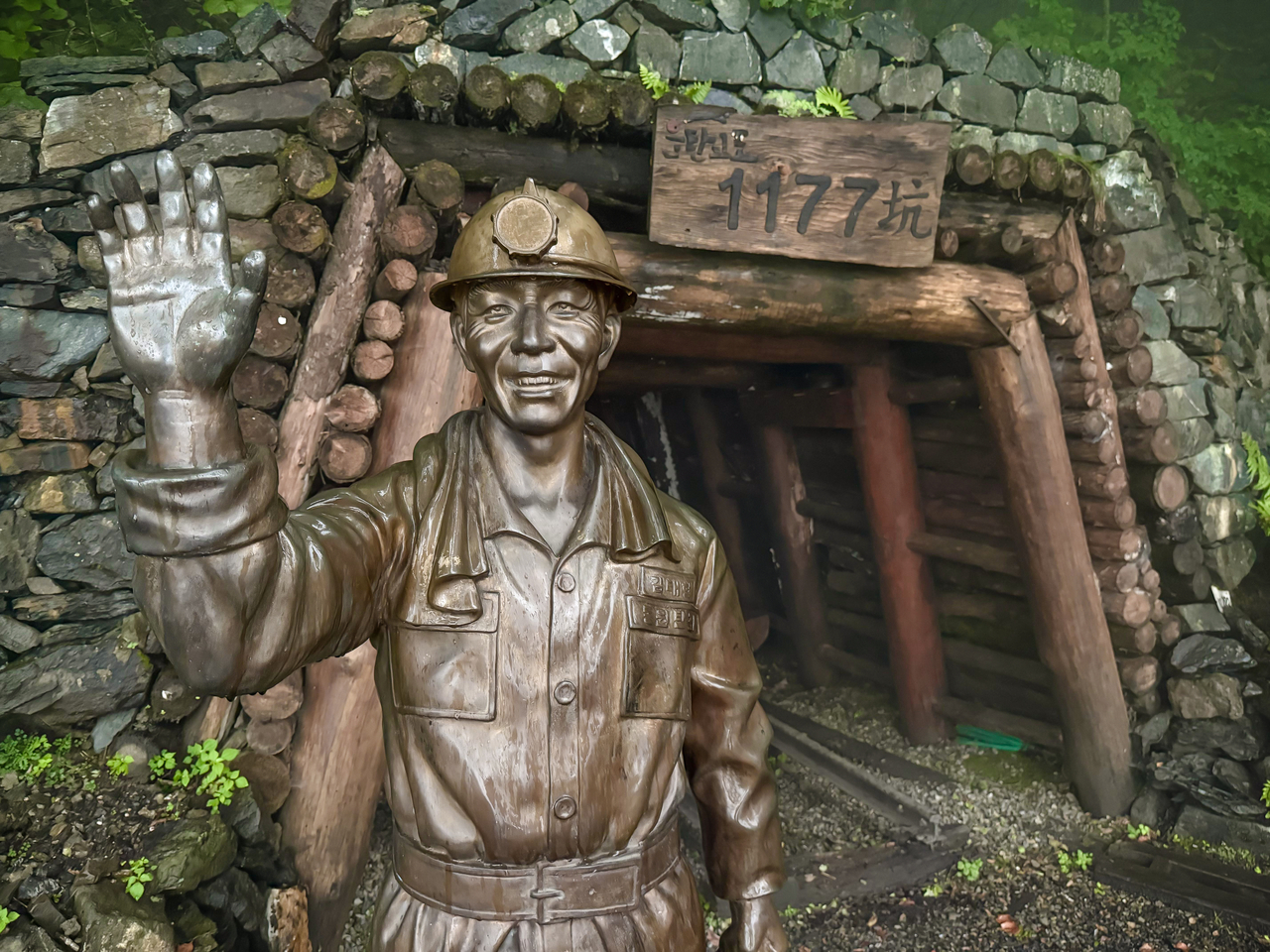
A little farther along the trail, a golden miner's statue marks the entrance to the No. 1177 mine shaft — its name taken from the elevation of the tunnel mouth. This was the first shaft developed by Dongwon Coal's Sabuk mine and the starting point of coal development across the Gohan and Sabuk area. The coal extracted here was hauled to Hambaek Station along the very road that is now the Untan Godo trail.
The statue depicts a miner heading home from a shift, dosirak in hand, smiling down at his young daughter. The relief of having made it back safely — "another day, unharmed" — is written plainly across that rough, simple smile.
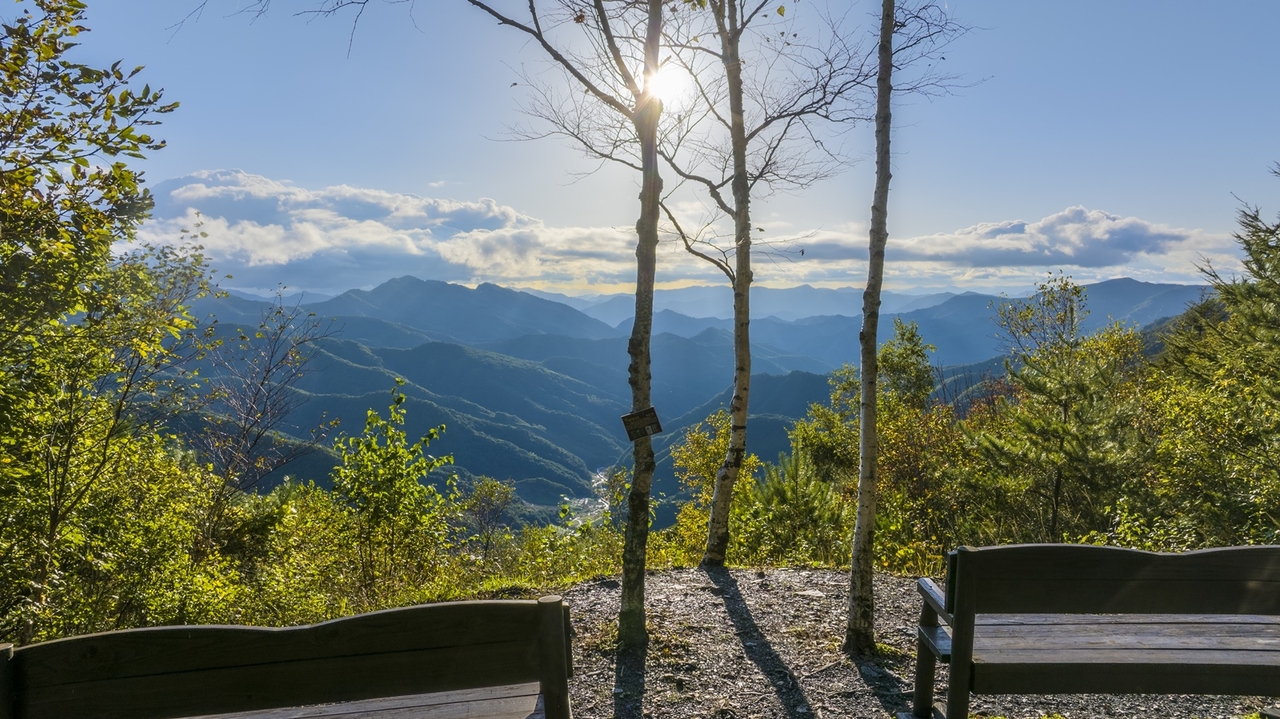
At the shaft entrance, a cool draft rushes out from a passage that seems to pull visitors into the dark. The opening is sealed off for safety, and its end is impossible to gauge. Thinking of those who labored in that narrow, unforgiving space leaves a heaviness in the chest.
Just outside the entrance, the Baekdudaegan unfolds in full splendor. The rolling green ridgelines feel like a quiet embrace — a wordless comfort for the miners who once endured the darkness to keep their families fed.
A mining town's sorrows reborn through art and food
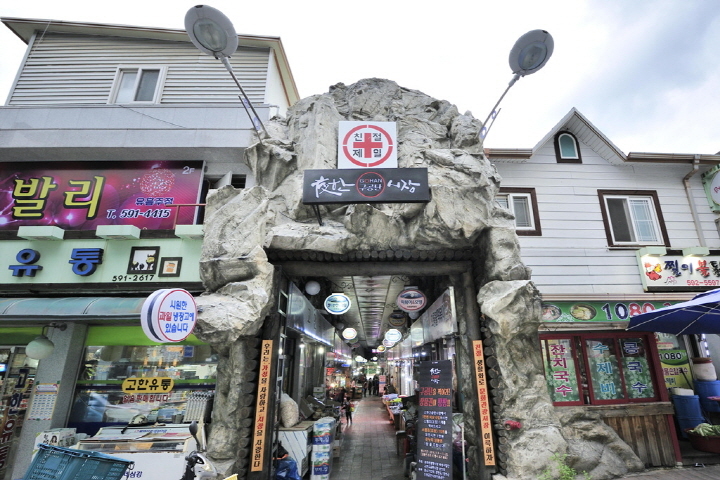
When large-scale coal mining took off in the Gohan area in the 1960s, workers flooded in from every corner of the country in search of jobs. The population once topped 40,000, and the town blazed with activity around the clock. Then, in 1989, the government's coal industry rationalization policy sent the mines shutting down one after another. A traditional market that had opened in 1967 to serve the daily needs of miners fell into decline along with the town — but half a century on, it has reinvented itself as a destination for travelers.

Gugotan Market in Gohan carries more than 50 years of history. The mining town's past has become the market's strongest identity and cultural asset. The market renamed itself after the briquettes that once heated homes through winter, and its entrance is called not "Exit 1" but "Shaft 1." An arched steel framework covers the market alley, so that stepping inside feels like walking into an actual underground tunnel. A mural street dedicated to miners adds to the atmosphere — along a 180-meter wall created in 2016, sweat-streaked miners' faces and the makgeolli that eased their weariness are rendered in three-dimensional murals and sculptures.
What completes a night at Gugotan Market is the smell of meat grilling over briquette fire. Restaurants inside the market serve galbi and samgyeopsal cooked over the same coal briquettes that once heated the town. It is a direct inheritance of the late-night eating culture of miners who came up from the depths coated in coal dust and unwound with fatty meat and a glass of soju. Unlike gas flames, briquette fire maintains a steady, penetrating heat that sears the surface of the meat instantly, sealing in the juices for a crust that is crisp outside and moist within. The shafts are closed, but the flame that once warmed miners' weary bodies now offers travelers a different kind of warmth — one measured in flavor.
Green leisure blooms where the coal boom ended
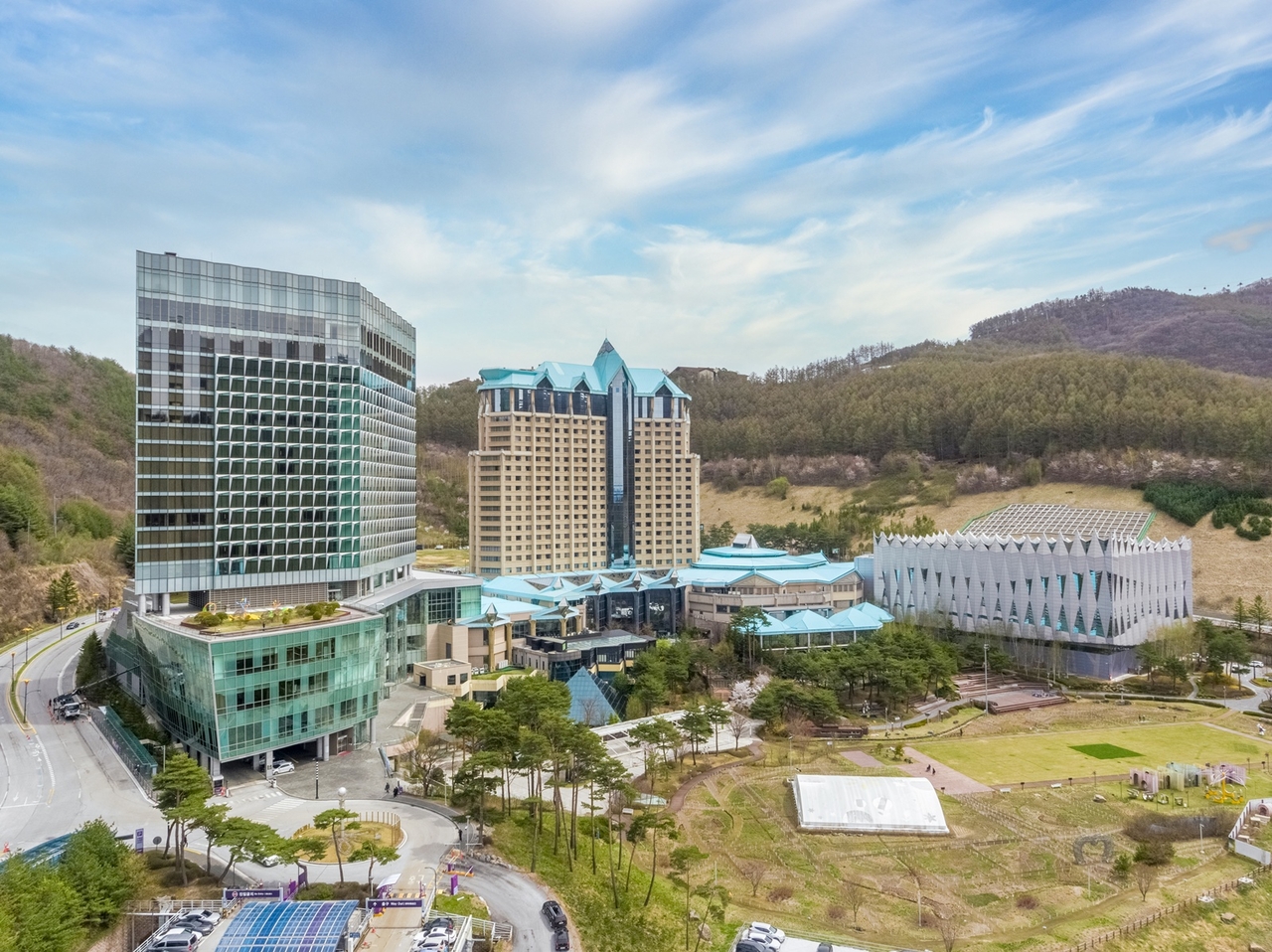
The story of regeneration rising from the ruins of the past reaches its peak at Hi1 Resort, Jeongseon's four-season leisure hub. Built to help Gangwon Province recover from the economic collapse that followed the mine closures, Hi1 Resort is the country's largest integrated resort complex, spanning the Gohan and Sabuk areas. It brings together Hi1 Grand Hotel — home to the Kangwon Land casino — Hi1 Palace Hotel adjacent to Hi1 Country Club, and the family-oriented Mountain Condo, along with the Untan Godo sky trail, a ski slope, a water park and a golf course, making it a year-round wellness destination.

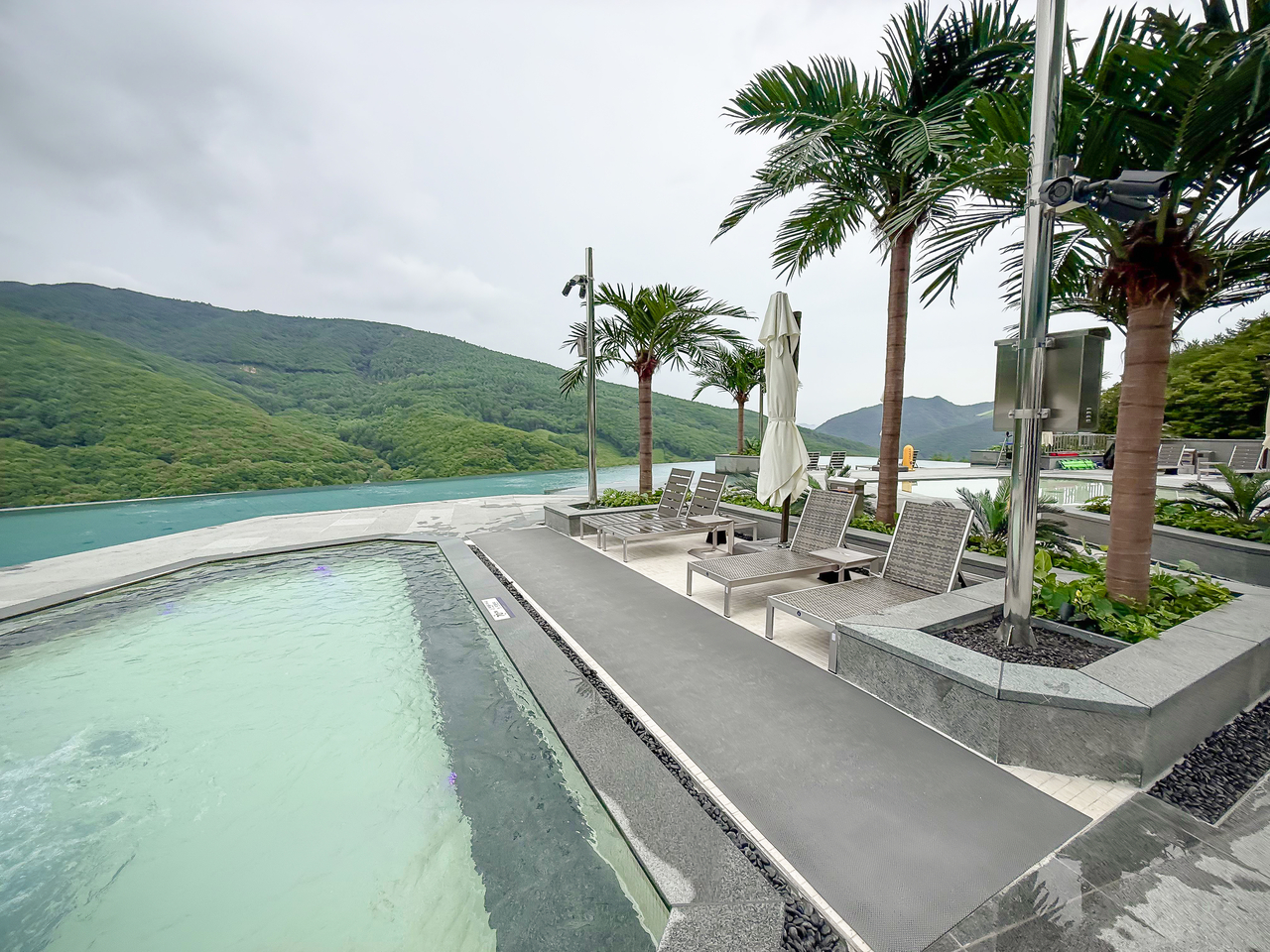
Hi1 Resort, currently undergoing a sweeping renovation, recently unveiled an ambitious new feature signaling the changes ahead. The infinity pool "Blue Sky," newly opened on the seventh floor of Hi1 Grand Hotel's convention tower, distills the resort's evolving ambitions into a single striking attraction. Building a pool of the kind normally found only at five-star hotels abroad, at an elevation of 800 meters, cost a total of 7.5 billion won ($5.38 million).
Standing in the pool, the water's edge appears to merge with the grand ridgeline of the Baekdudaegan and the open sky beyond, creating the illusion of floating in midair. The rippling surface seems almost to brush against the sweeping mountain ranges surrounding it.
The cool highland breeze grazing one's cheek and the warm water rising from below form a vivid contrast. The layered green of mountains stretching in every direction, and white clouds at eye level, offer a luxury no urban five-star pool can replicate.
Paradoxically, it is precisely through their stories of loss that these once-frozen places draw people back. Memory that refuses to disappear breathes new warmth into the spots where time once stopped, and this dramatic reversal stands as proof of the vitality that accumulated time carries within it.
The places that still bear the scars of disappearance leave a deep, lingering impression. Time that was buried in silence comes vividly back to life, guiding travelers forward, and spaces that have reclaimed their stories offer a gentle place to rest. That is the truest comfort — and the breath of recovery — that only land which has endured deep darkness can give.
terry@heraldcorp.com