TrendForce sees HBM contract prices rising up to 140% next year
Samsung Electronics and SK hynix combined operating profit could approach 1,000 trillion won in 2027
Multiple Big Tech firms exploring ways to reduce HBM capacity in AI accelerators
Scaling up production before demand destruction hits is the industry's biggest challenge
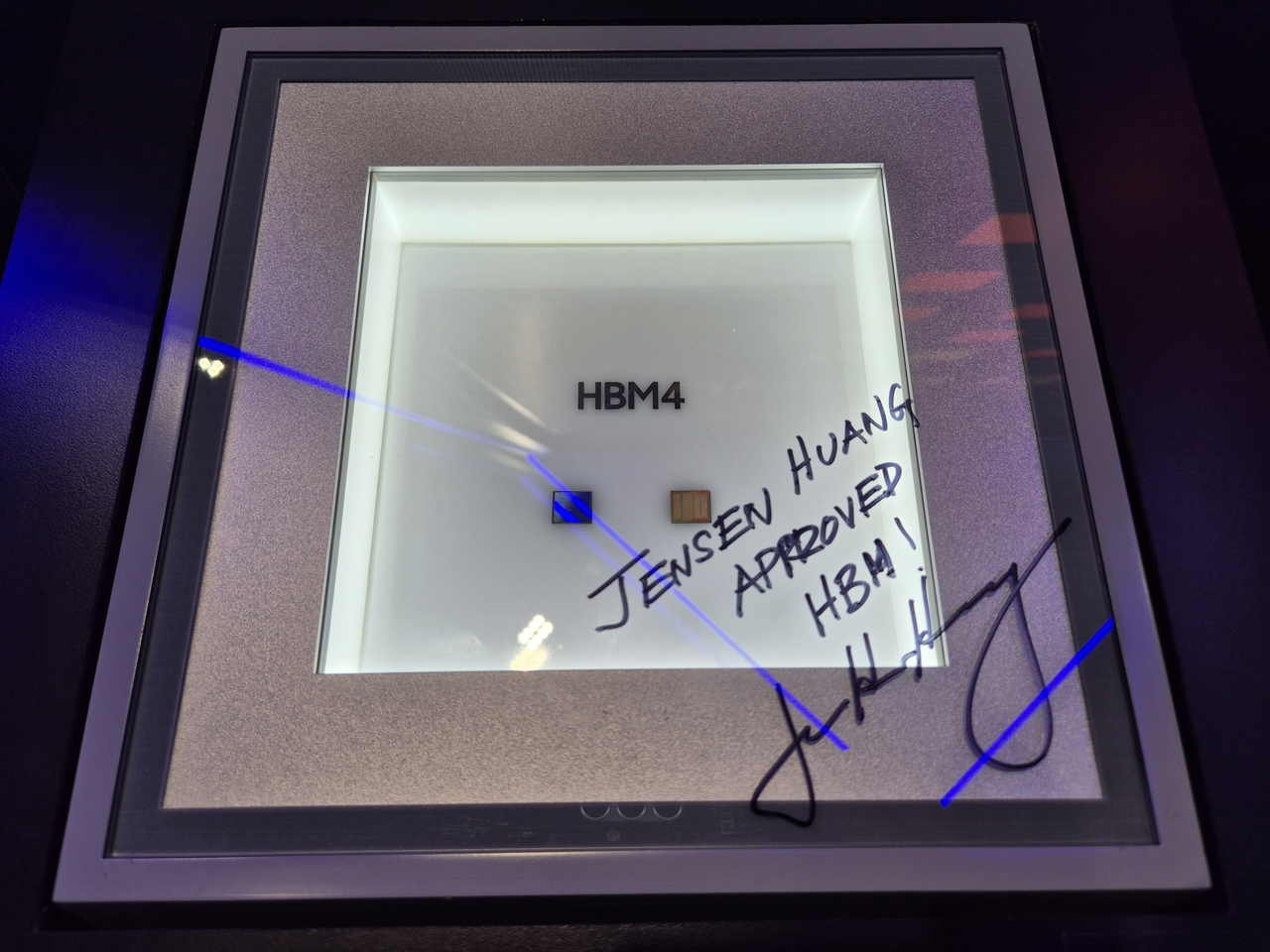
HBM prices are expected to keep climbing steeply into next year. While some long-term supply agreements (LTAs) now include price caps, contract prices for HBM could still rise as much as 140% in 2027 compared with this year. At the same time, Big Tech companies strained by the relentless price increases are beginning to explore ways to reduce the amount of HBM loaded into their AI accelerators.
Market research firm TrendForce said Wednesday that while some LTAs signed after the second quarter of 2026 include price ceilings that could limit further increases, "HBM contract prices could rise 70 to 140% in 2027."
Goldman Sachs also projected that the average selling price of HBM next year will reach $17 per gigabyte — a 44% increase from this year's level.
The price surge is rooted in a severe supply shortage. Memory supply, including HBM, is expected to remain tight next year, and SK hynix President Kwak Noh-jung has said 2027 will be "the worst year" from a supply standpoint. Against that backdrop, LTA allocations locking in HBM supply for the next three to five years are reported to have been largely distributed by the first half of this year.
Demand is outpacing supply growth by a wide margin, pushing memory prices sharply higher. As a result, memory's share of total capital expenditure among cloud service providers is forecast to expand from 47% this year to 68% next year.
The volume of HBM packed into a single AI accelerator is substantial. OpenAI's in-house AI accelerator "Jalapeño," unveiled at Hot Chips 2026, carries 216 gigabytes of HBM4 per unit — the equivalent of six 12-layer HBM4 stacks. With 128 accelerators per rack, total HBM capacity per rack exceeds 27 terabytes, requiring 768 12-layer HBM4 stacks.
The unprecedented memory boom is expected to sustain operating profits in the hundreds of trillions of won at both Samsung Electronics and SK hynix through next year. Based on securities firm consensus estimates, Samsung Electronics is projected to earn about 545 trillion won ($394 billion) in operating profit next year, while SK hynix is expected to post 392 trillion won. With operating profit forecast to rise roughly 50 percent from this year, the two companies' combined total is within reach of 1,000 trillion won.
To meet explosive memory demand, Samsung Electronics, SK hynix and Micron — the three major memory makers — are all accelerating capacity expansion. TrendForce projected that as the effects of capacity additions kick in, DRAM and HBM supply will increase 27 percent in the second half of 2027.
Rising memory prices, however, translate directly into higher production costs for makers of AI servers and accelerators. That gives companies such as Nvidia additional justification to raise their own product prices further. Nvidia is reportedly pursuing plans to increase prices by more than 15 percent on AI server systems shipping early next year.
The bigger concern is that excessive memory price increases could ultimately undermine HBM demand itself. TrendForce said multiple cloud service providers are considering reducing the amount of HBM loaded into their next-generation in-house AI ASICs.
![Nvidia CEO Jensen Huang explains the architecture of Vera Rubin at the Computex trade show in Taipei, Taiwan, on July 1. [Reuters]](https://wimg.heraldcorp.com/news/cms/2026/08/26/news-p.v1.20260708.47d0c73550bb411a93db2d56ea5c38ff_P1.jpg)
Nvidia is also reported to be testing a reduced memory specification for its next-generation AI accelerator, Rubin Ultra. While the original plan called for 12-layer HBM4E, the company is said to be evaluating prototypes using either eight-layer HBM4E — starting from the third quarter of this year — or the lower-tier HBM4. The concern is that if supply shortages and price increases persist, AI accelerator makers could respond by cutting HBM loads altogether, triggering what the industry calls "demand destruction."
For memory makers, the challenge is clear: they must expand production capacity quickly enough that customers do not reduce their HBM usage before supply catches up with demand. SK Group Chairman Chey Tae-won has previously outlined plans to double overall production capacity within five years, while also noting that meeting customer demand would ultimately require five to six times the current supply capacity.

go@heraldcorp.com