'Uisarang AI' adopted by over 800 clinics within a month of launch
Next-generation cloud EMR 'Uisarang Cloud' set for March next year
'Like having an assistant doctor,' company aims to connect outside vendors
"How have you been feeling lately? It looks like you've lost a bit of weight, and your HbA1c has dropped to 6.9 — below 7."
"I've been cutting back on late-night snacks and started walking in the mornings. But sometimes I feel dizzy when I wake up."
"It doesn't seem like hypoglycemia from the medication. It could be from exercising on an empty stomach, so it might help to drink some milk first."
As the doctor conducts the consultation, his eyes stay on the patient. He does not type a single note into the chart. About five seconds later, a summary of the entire exchange appears automatically on the monitor — the information from the conversation accurately captured and organized, with relevant diagnosis codes and prescription recommendations suggested to match.
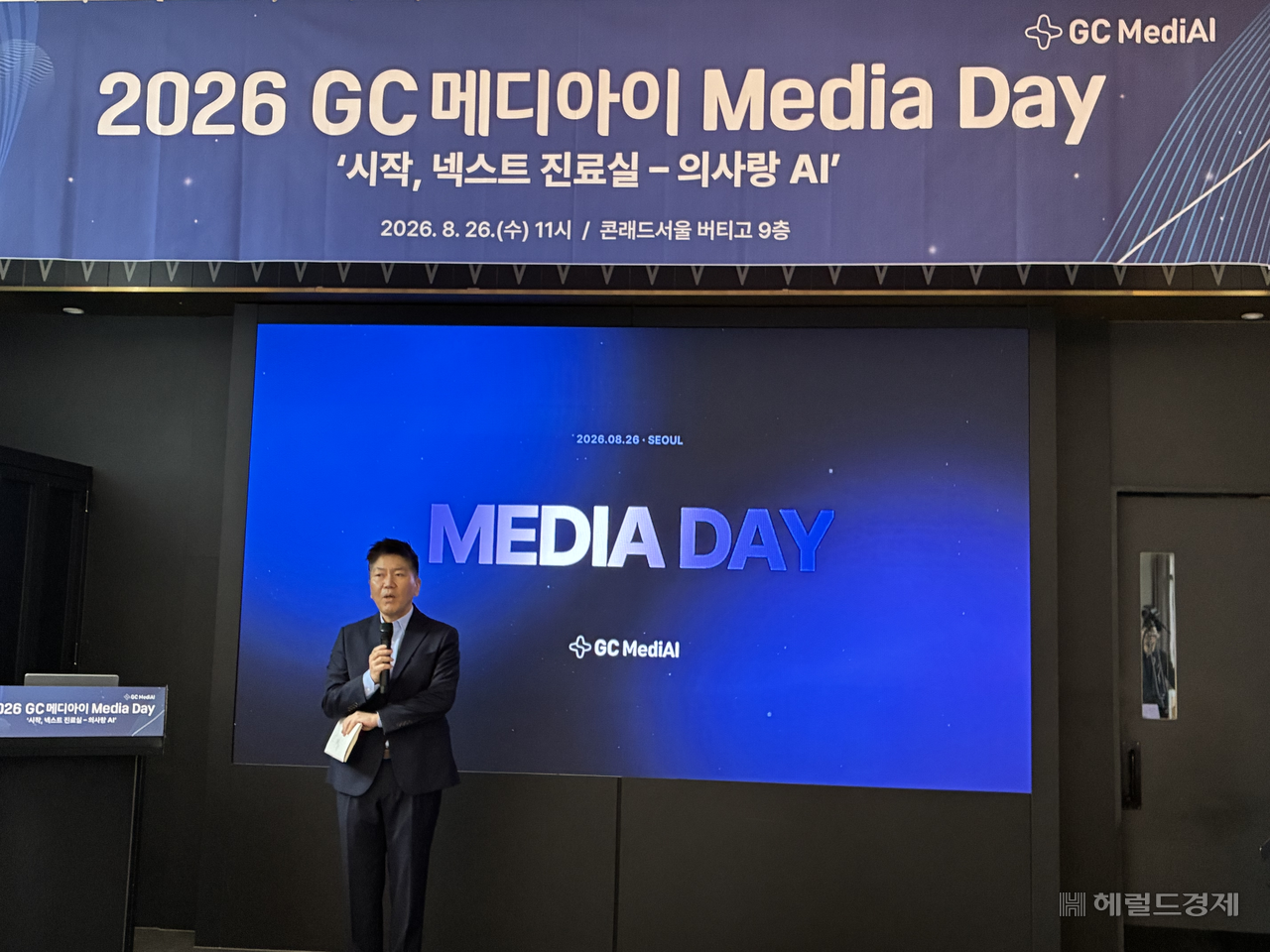
The scene was a demonstration of "Uisarang AI," an AI-powered clinical support solution unveiled by GC MediAI at Conrad Seoul in Yeouido on Wednesday.
Officially launched last month, Uisarang AI summarizes a patient's past medical records and test results before a consultation, transcribes the conversation into a chart in real time during the visit, and afterward identifies patients who need follow-up appointments — sending reminder messages and confirming whether to convert them into bookings. Clinic performance indicators such as revenue and patient volume can also be queried in plain language.
The response from clinical settings has been strong: more than 800 medical institutions began using the service within about a month of its launch. That figure includes not only clinics running GC MediAI's own electronic medical record system, Uisarang EMR, but also those using competing EMR platforms. The web-based charting feature works regardless of which EMR a clinic uses, while Uisarang EMR users can also access integrated functions for reviewing past records, managing patients and tracking business metrics.
GC MediAI is offering Uisarang AI free of charge through the end of this year to build up usage data and gather feedback from the field. After that, the service is expected to be priced at around 70,000 won ($51) per month. The company plans to decide later whether to charge separately for individual premium features — such as follow-up patient management or AI-assisted billing — or to bundle them into a single paid subscription.
The company's key differentiator from rival AI clinic services is its deep integration with EMR systems. An AI service that lacks such integration requires at least eight manual steps per patient — entering patient information, checking past records, copying results and inputting them into the chart. Uisarang AI dramatically reduces that burden by linking patient identification, record synchronization and chart entry into a seamless flow. "What sets us apart from other AI services isn't the number of features — it's how many times a human hand has to intervene during a consultation," said Kim Seok-jung, GC MediAI's chief product officer.
Lee Seung-won, director of Hanyang Internal Medicine Clinic and a 25-year user of Uisarang EMR, said after one month with Uisarang AI: "The change I've experienced in the past month feels bigger than everything I felt over the previous 25 years combined — it's like having an assistant doctor right beside me."
A particular strength is the system's specialization in medical terminology. GC MediAI said internal tests showed Uisarang AI achieved 97.1 percent accuracy on medical terms and confirmed the first sentence of a transcription in 2.16 seconds. Park Ki-ho, director of Maeumsok Internal Medicine Clinic, who uses a competing EMR, said the tool caused little inconvenience despite the different platform. "Compared with other services, it seems to recognize medical terms closer to their actual meaning," he said.
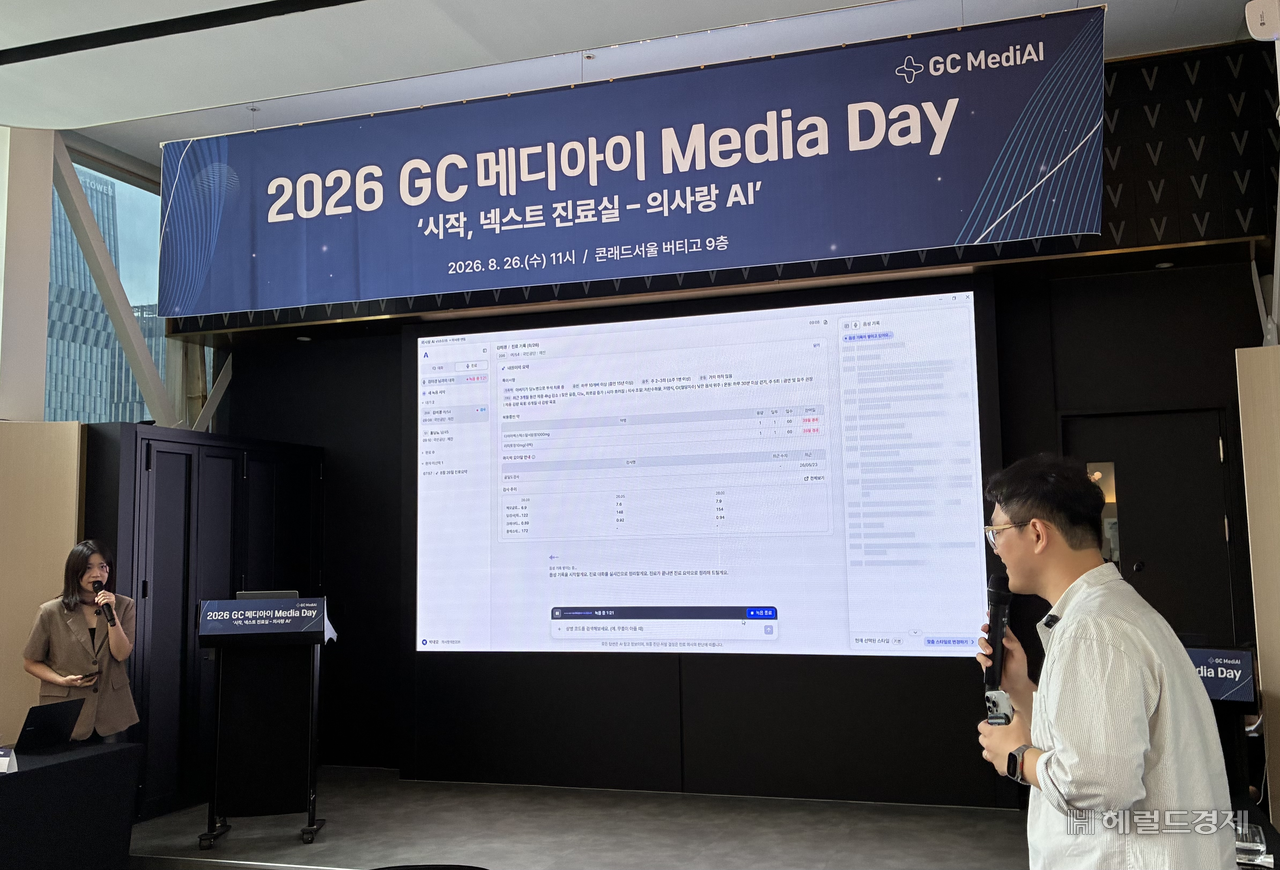
Uisarang AI is the first step in a broader business model transformation GC MediAI is pursuing. About 16,000 medical institutions currently use the installed version of Uisarang EMR. In March next year, the company plans to launch Uisarang Cloud, a next-generation cloud-based EMR with Uisarang AI built in as a standard feature. From there, GC MediAI intends to connect a range of external services needed to run a medical practice around the EMR platform. The ultimate goal is a "medical operating system" — a foundation built on Uisarang Cloud that outside vendors can plug into as well.
"We have already received inquiries from banks wanting to attach financial services for doctors to our system, and we are reviewing those," GC MediAI CEO Kim Jin-tae said. "We also expect that telemedicine solution providers will eventually be able to offer their services on top of Uisarang Cloud."
snsd@heraldcorp.com
silverpaper@heraldcorp.com