Union targets indirect departments to skirt court order; new cell-line thaw refusal floated
Court ruling narrows strike scope as replacement workers limit production impact
Internal backlash mounts over strike fund levy, with membership falling below 3,800
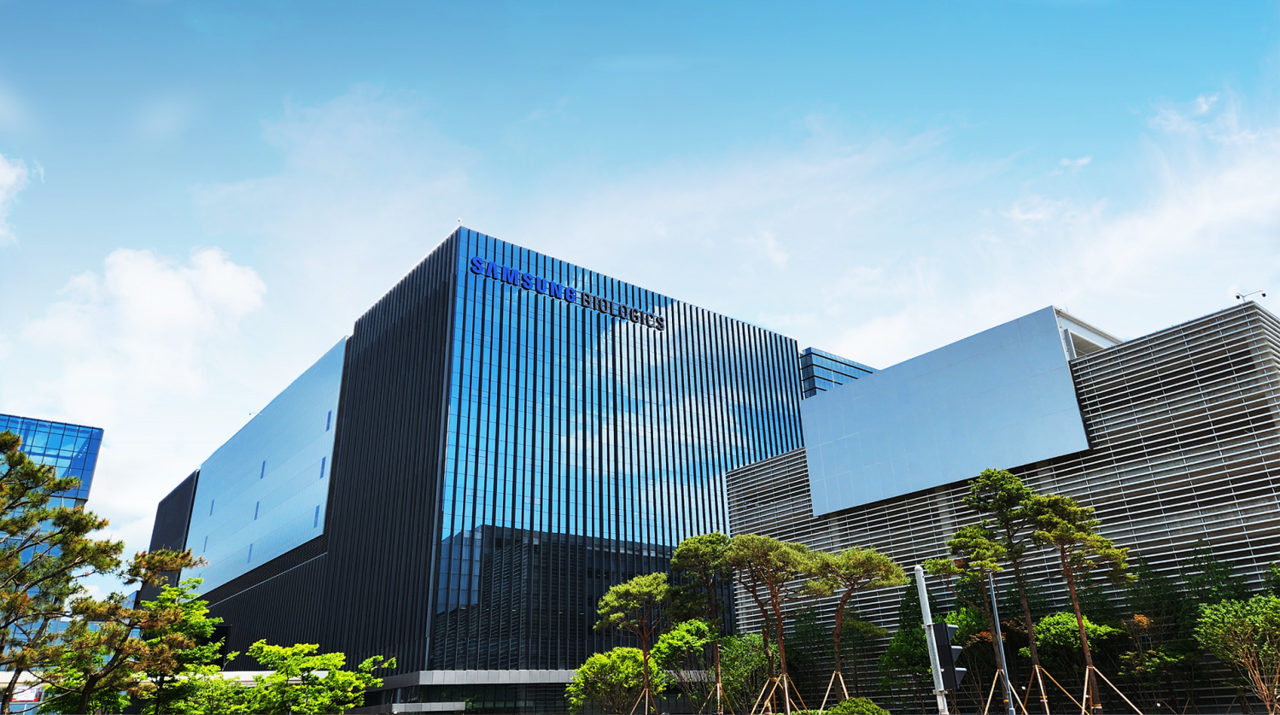
The Samsung Biologics Mutual Prosperity Labor Union has declared a second strike, six months after its first walkout in May — even before a newly arranged round of negotiations had formally begun. The union had vowed to pursue a "final bargaining session, then strike" strategy while seeking solidarity with the Federation of Korean Trade Unions.
After a court issued an injunction ordering normal staffing and operating hours across key production processes, the union shifted its focus to workers in indirect departments while leaving open the possibility of refusing to thaw new cell lines — an action the court ruling did not restrict.
Yet internal cohesion is fraying rapidly. Since the first strike, members have been resigning in growing numbers over what they see as a fruitless fight and a compulsory strike fund levy, while anonymous workplace forums have filled with criticism of union leadership.
The union announced it will stage the second strike from midnight Friday through Nov. 27 — a period of roughly three weeks.
Union leadership said it was launching the strike because "the company has not responded to our bargaining requests," adding that roughly 400 members are expected to participate. Those targeted for participation work in quality control testing, quality assurance, logistics and indirect support roles within production.
The union said it plans to "expand process-level strike action in stages while respecting the injunction ruling," and emphasized that "the door to negotiations remains open even during the dispute."
Strike declared before talks could restart — how dialogue collapsed
The second strike comes at a particularly fraught moment: the two sides had only recently arranged to resume talks after 13 rounds of negotiations between last December and March, followed by a breakdown in National Labor Relations Commission mediation.
Management and the union had agreed on Oct. 28 to resume bargaining early this month. Almost immediately after that agreement, however, the union publicly declared it would "strike after a final bargaining session next week" and signaled during preliminary talks that it intended to delegate negotiations to the Federation of Korean Trade Unions while the union itself focused on striking. That stance sharply eroded trust — though the union has not formally joined the federation.
Tensions escalated further when the union, at an in-house rally on Friday, publicly named and criticized management-side bargaining representatives. Management responded by proposing a two-week delay to allow trust to be rebuilt. The union characterized the proposal as "no response from the company" and locked in its strike schedule, sending negotiations back into disarray.
Management has repeatedly urged the union to engage in good-faith dialogue, saying it appeared "more focused on building justification for a strike than on making genuine efforts toward a settlement."
Union routes around court order via indirect departments; new cell-line refusal tactic of uncertain effect
The union's decision to cap participation at around 400 members and confine the strike to indirect departments such as quality control, quality assurance and logistics reflects a deliberate effort to work around the court's injunction.
During the first full strike, which ran from May 1 through May 5, between 2,000 and 2,500 of the union's roughly 4,000 members signaled their participation by taking annual leave. The current strike involves just 16 to 20 percent of that number.
The Seoul High Court's Incheon Division 1 Civil Panel ruled on Oct. 16, in an appeal of management's application for an injunction against strike action, that the union could not obstruct normal staffing or operating hours across nine core production processes — from cell culture through bulk filling. The court also ordered an indirect enforcement penalty of 20 million won ($14,900) per violation.
The ruling recognized an obligation to maintain security operations under Article 38, Paragraph 2 of the Trade Union Act — covering work to prevent the deterioration or spoilage of raw materials and products. It cited the fact that halting work after a cell line is thawed causes cell death or degradation, and that suspending the freezing process midway is not feasible.
However, the court excluded from its restrictions "work on cell lines newly thawed during the dispute period." On that basis, the union is considering a strategy of maintaining existing processes while refusing to thaw new cell lines, effectively cutting off the replenishment of the production pipeline.
Completing a batch from already-thawed cell lines takes several weeks or more, and cell-line thawing requires only a small number of workers — making it relatively easy for management to substitute non-union staff or technical personnel.
Still, the risk of a prolonged indirect-department strike causing production disruptions cannot be entirely dismissed. Management estimated that a partial strike by roughly 60 workers in a materials-subdivision department in late April caused losses of approximately 150 billion won.
'Pay cut, nothing gained' — strike fund backlash fuels membership exodus
The deeper problem for the union is the collapse of internal momentum. Anonymous workplace forums have been flooded with posts from employees lambasting the leadership's lack of strategy and its decision to push ahead with the strike.
One employee wrote: "If this is the result even when we had the stronger hand, we need to ask ourselves what went wrong. It's a shame that union members are paying for the leadership's efforts with their wages and opportunities." Another wrote: "A few days of striking under a no-work, no-pay rule and I lost more than 1 million won from my paycheck — we didn't win anything, and all that's left is a smaller salary and shattered trust. If you're not going to take responsibility, put down the flag." Others struck a more resigned tone: "Going on strike before Samsung Electronics in May was the fatal mistake," and "How many people actually support a second strike?"
The flashpoint has been the compulsory strike fund levy. At a member briefing on Oct. 21, the union's organizational director warned that non-payment could result in "disciplinary action or removal from the union." A mobile vote held Nov. 22 through Nov. 25 then passed a strike fund proposal setting the levy at 200,000 won per member, with a maximum of 300,000 won. The combination of that decision and the announcement of the second strike has triggered a wave of resignation requests.
The union chair is said to have recently confided: "I expected the strike fund to face some resistance, but seeing the pile of resignation requests that have built up, I feel devastated." Membership, which had exceeded 4,000, is now estimated to have fallen to the 3,800 range following the recent departures.
Management says its priority is to maintain process stability and product quality.
A Samsung Biologics spokesperson said the company "continues to keep dialogue channels open for a smooth conclusion to wage and collective bargaining negotiations, and our commitment to reaching an agreement through talks remains unchanged," but added that "it may be difficult to achieve constructive dialogue and agreement in a situation where the union continues to escalate with measures such as expanding the strike."
The spokesperson added that the company "hopes labor and management will work together to find a reasonable solution based on mutual respect and trust," and pledged to "do its utmost to maintain stable process operations and product quality so that patients and client companies are not harmed."
silverpaper@heraldcorp.com