Amazon Auto now covers 80% of US dealers by registration
78% of buyers are new Hyundai Motor customers
Online sales to expand outside the US from early next year
Existing dealer network under consideration as robot sales channel
Hyundai Capital exploring financing products for robots
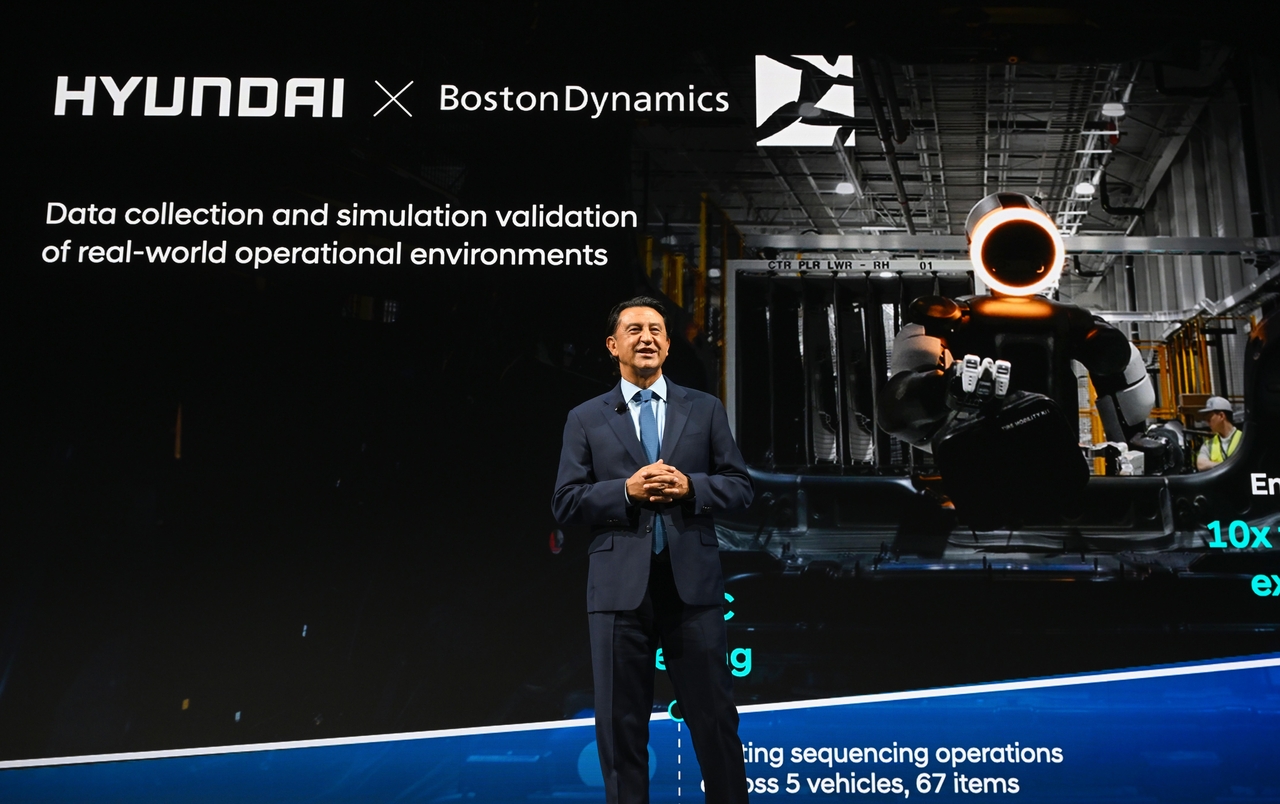
The era of buying a Hyundai Motor vehicle on Amazon — and a humanoid robot at a Hyundai dealership — appears to be drawing closer. Hyundai Motor is working to build Amazon into a major online vehicle sales channel while simultaneously exploring ways to transform its existing dealer network into a distribution hub that handles not just cars but also robot sales, financing and service.
Since signing a strategic MOU with Amazon in November 2023, Hyundai Motor has steadily broadened the scope of the partnership — from vehicle sales to in-car AI and cloud infrastructure. The company has been particularly active in leveraging Amazon Auto, which operates in the United States, as a new automotive sales channel.
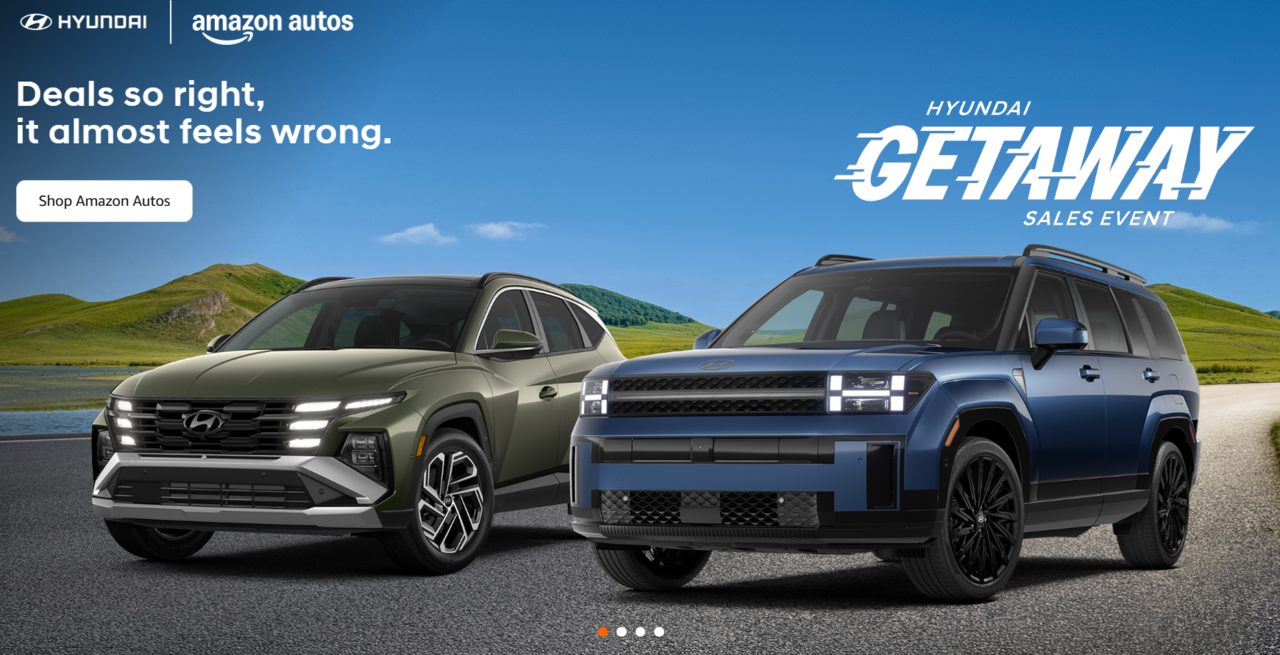
Amazon Auto is a vehicle sales platform that lets consumers search for cars on the world's largest online marketplace, check prices and inventory, and complete financing and purchase steps entirely online. It launched in 48 US cities in December 2024, with Hyundai Motor as its first brand partner. The service has since expanded to more than 130 cities, and the lineup of available brands now includes Kia, Chevrolet, Jeep, Mazda and Subaru.
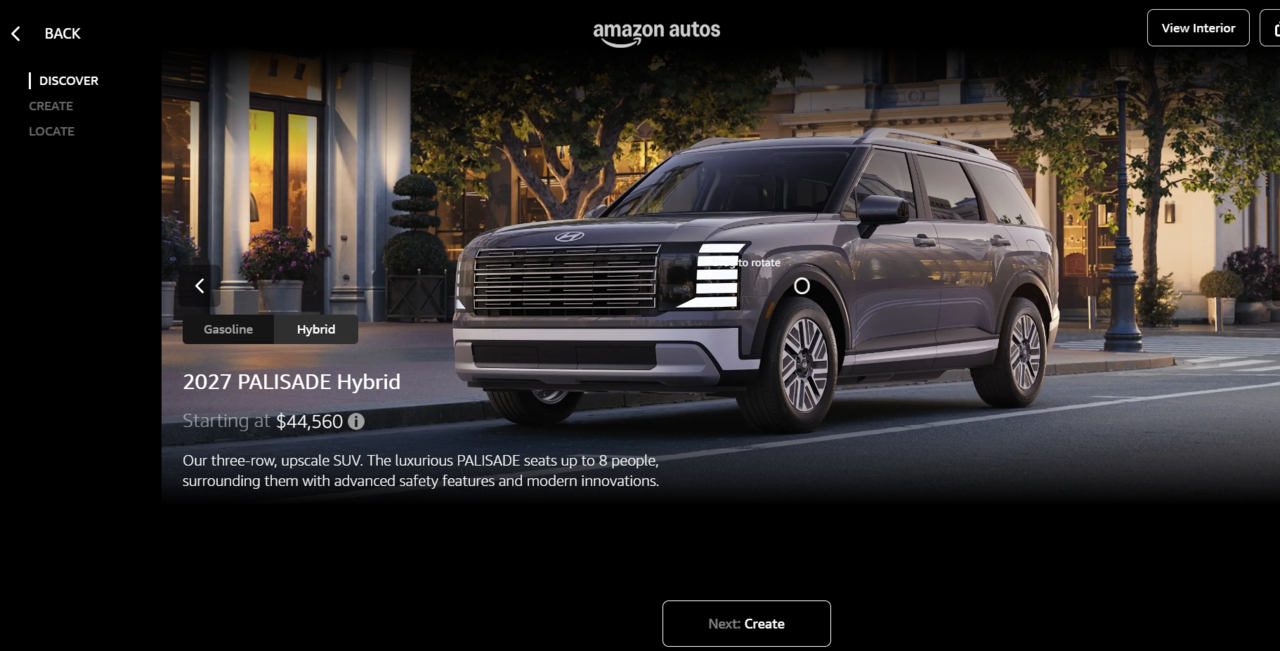
Amazon itself does not sell the vehicles directly. The actual seller remains the existing Hyundai Motor dealer, who manages inventory and pricing and handles contracts, delivery and after-sales service. Amazon serves as the online interface connecting consumers with dealers.
78% of Amazon Auto buyers are new Hyundai Motor customers
The early results point to strong new-customer acquisition. Speaking at the 2026 CEO Investor Day on Wednesday, Hyundai Motor President and CEO Jose Munoz said Amazon Auto had expanded its coverage to 80 percent of registered dealers in the United States. "Seventy-eight percent of buyers are new Hyundai Motor customers," he added.
Hyundai Motor plans to take Amazon Auto beyond the US market starting in early next year, entering its first overseas market. The platform is also moving beyond new vehicles — the company extended its scope to certified pre-owned cars last year.
However, as online sales grow, some in the industry warn that dealers could see their supplementary revenue erode, since they would have fewer opportunities to engage customers directly and sell add-on products such as financing, insurance and warranty packages.
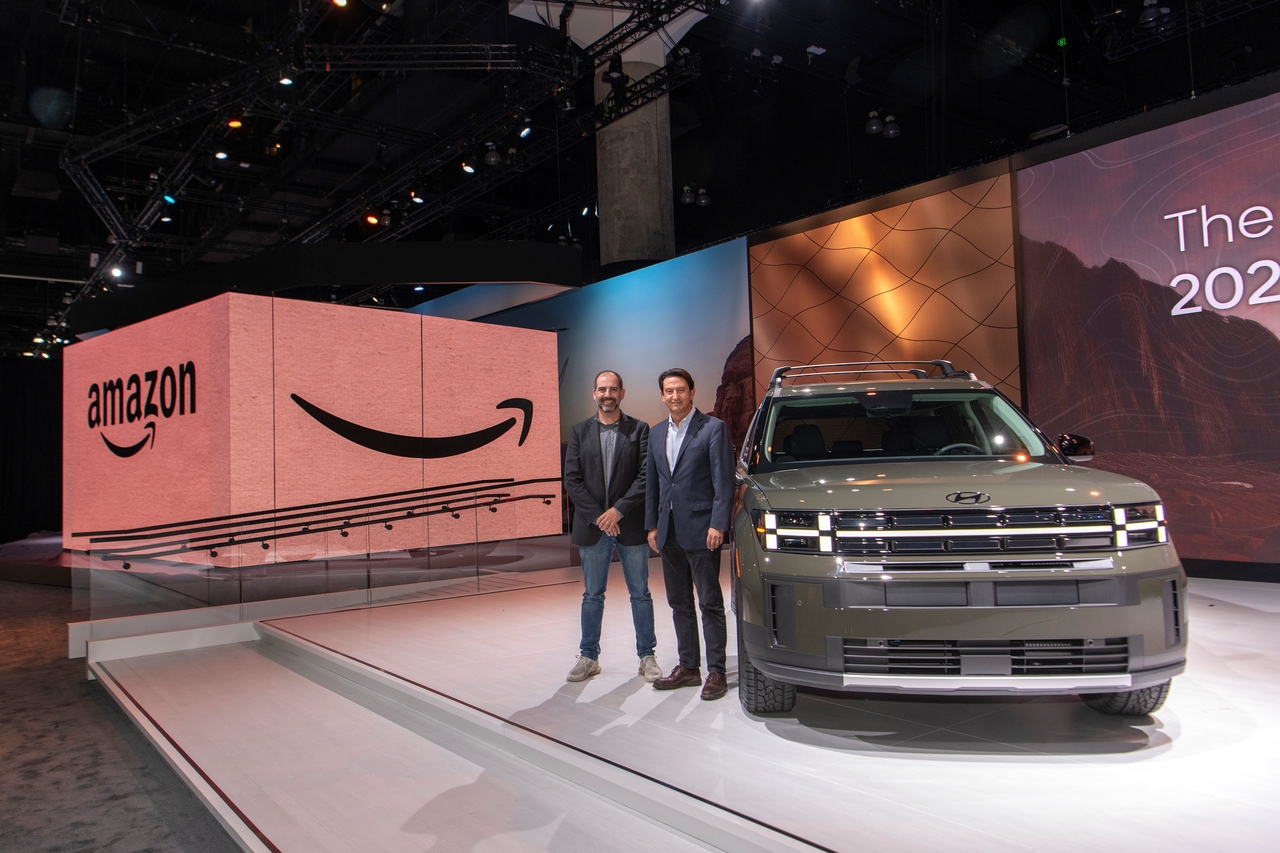
The collaboration with Amazon extends well beyond vehicle sales. The two companies are deepening ties across four main areas: the global rollout of Amazon Auto; the expansion of Amazon's Alexa Built-in voice AI across Hyundai Motor's full vehicle lineup, with a planned extension to Genesis models; the use of Amazon Web Services to strengthen Hyundai Motor's cloud and AI capabilities; and an exploration of deploying Hyundai Motor's hydrogen fuel cell vehicles in Amazon warehouse operations.
Hyundai Autoever, the Hyundai Motor Group's IT affiliate, has also consolidated more than 30 previously fragmented enterprise resource planning systems into an AWS-based environment, building a global operational foundation to support new online retail channels, in-vehicle services and AI-driven businesses.
Robots to be sold through Hyundai Motor dealers
As the center of gravity in vehicle sales shifts online, the role of the physical dealership is expected to shrink in its traditional form — only to evolve into a hub for robot sales, financing and service.
Munoz signaled that Hyundai Motor's dealer network, built around car sales, could be put to work selling robots as well. Describing Boston Dynamics' robotics business, he said the company has "a potential distribution network that can sell robots through our existing dealer partners."
The robots Hyundai Motor Group has in mind for dealer sales include Boston Dynamics' quadruped robot Spot, logistics robot Stretch and humanoid robot Atlas. The group plans to open a commercial robot production facility in the United States in 2028 with an annual capacity of 30,000 units, and has already secured initial orders for 25,000 units.
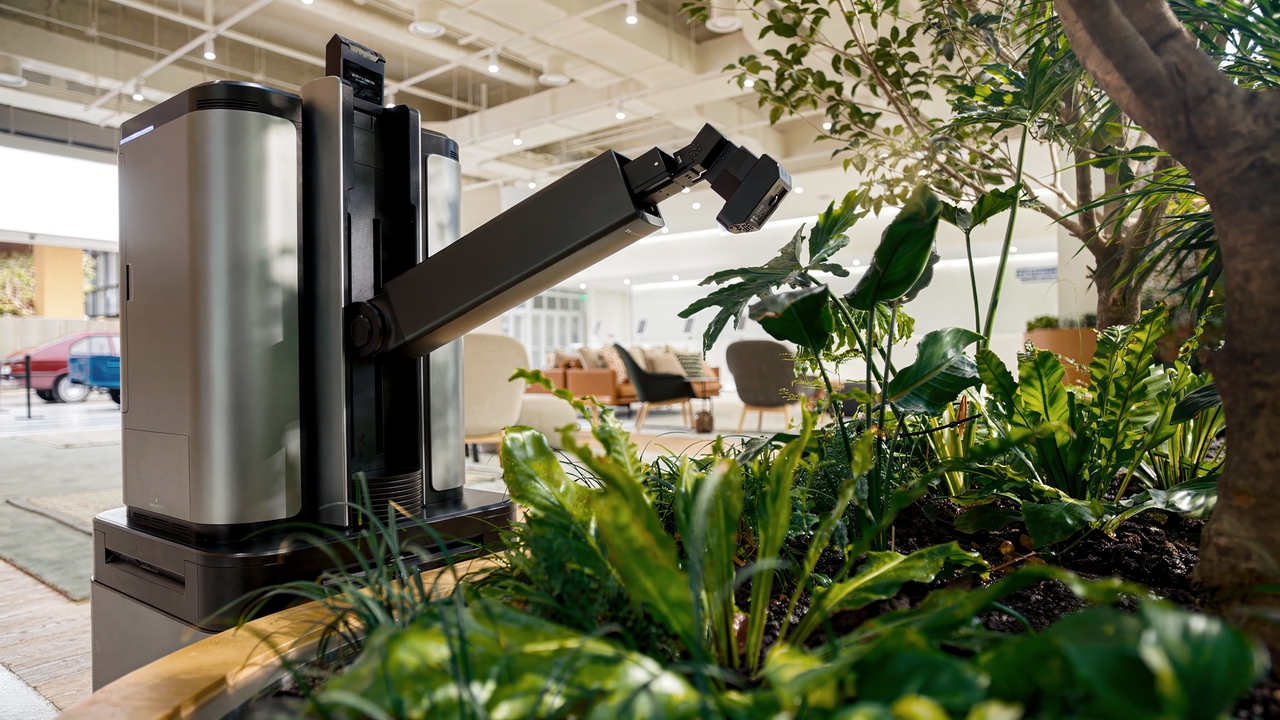
Hyundai Motor is also exploring ways to apply its automotive business model to robot financing, not just sales.
Munoz said Hyundai Capital is examining the viability of financial products for robot purchases — a structure that would allow businesses and individual customers to buy robots through installment plans or leases, mirroring how cars are financed today. "Robotics development, production, distribution, sales and financing — this is the true strength of Hyundai Motor Group," he said.
Robot mass production ramps up — sales and service network is the key
Atlas has no official price tag yet, but market observers widely expect it to land in the $300,000–$400,000 range per unit. Boston Dynamics' robots are currently deployed mainly in industrial settings such as manufacturing and logistics, but Hyundai Motor's push to connect its dealer network and financial infrastructure to the sales system is seen as leaving the door open to eventually reaching individual consumers beyond corporate buyers.
Dealer-based sales may not be limited to Boston Dynamics robots alone. Hyundai Motor Group's Robotics Lab is developing its own lineup — including Mobed, an autonomous-driving-based mobile robot platform; X-ble Shoulder, a wearable robot; DAL-e Delivery, a delivery robot; and DAL-e Gardener, a watering robot.
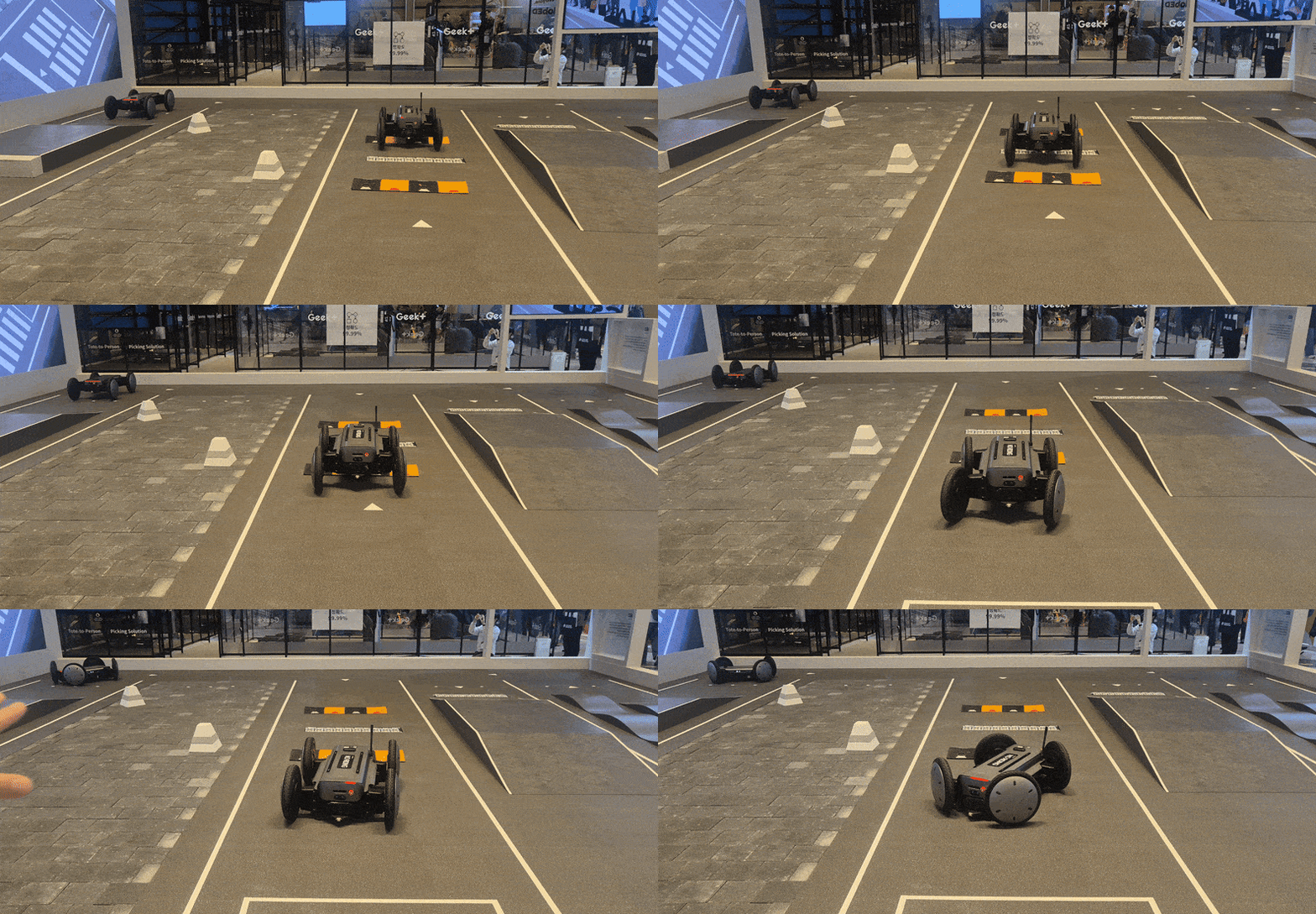
Hyundai Motor Group's portfolio also includes an industrial robot lineup held by Hyundai Wia. Under its manufacturing and logistics automation brand H-Motion, Hyundai Wia develops and supplies autonomous mobile robots, automated guided vehicles, mobile picking robots, parking robots and collaborative robots, with plans to expand the lineup to driverless forklifts and general industrial robots.
"Once robot mass production scales up in earnest and sales expand beyond industrial customers to include households and individual consumers, the sales and service footprint will need to grow substantially," one industry official said. "In that sense, the plan to use Hyundai Motor's existing dealer network as a robot distribution channel has every potential to develop into a sales infrastructure that covers not just corporate clients but ordinary consumers as well."
kwater@heraldcorp.com