Flexible working hours seen as key to future mobility R&D competitiveness
Bill includes labor exemptions for high-earning R&D workers and fixed-term contract extensions
Deregulation and investment support aimed at boosting regional industries
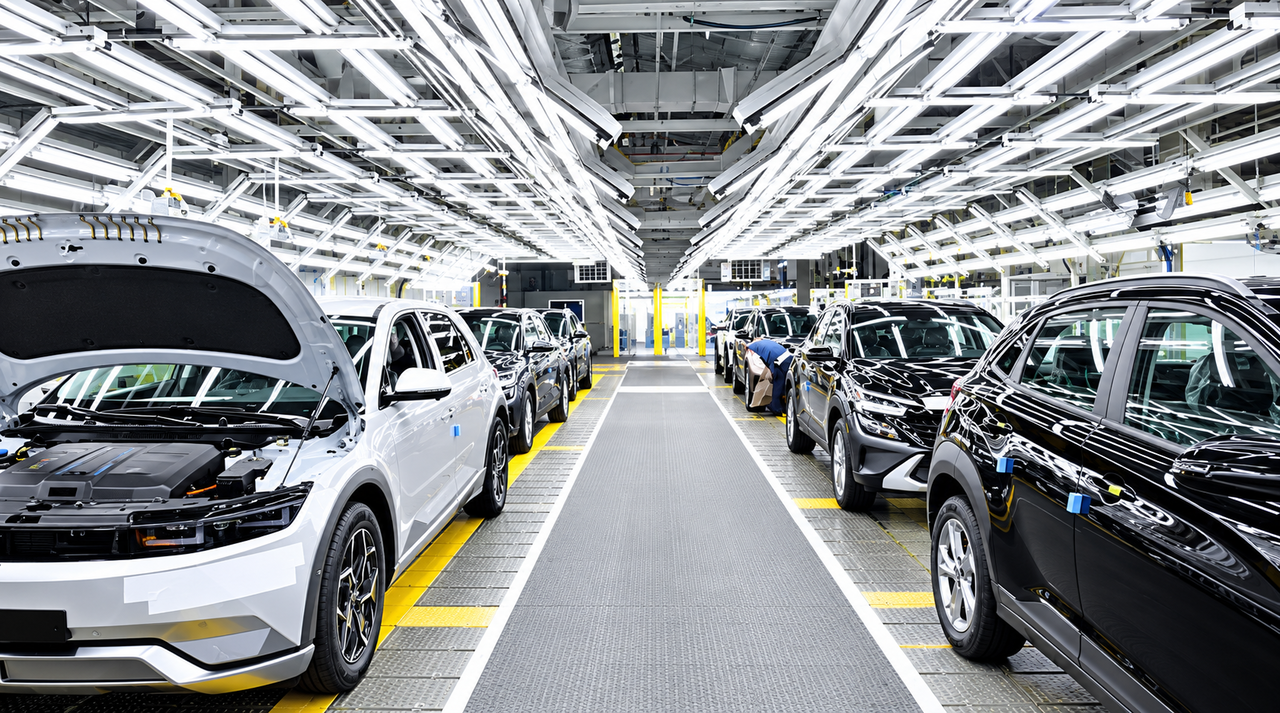
South Korea's auto industry is urging the National Assembly to swiftly pass a bill that would exempt research and development workers from the country's 52-hour weekly work limit. With global competition intensifying in autonomous driving, AI and robotics, the industry says R&D operations need the flexibility to set their own working hours.
The Korea Automobile Manufacturers Association said Monday it welcomed the inclusion of labor exemptions in a bill introduced Oct. 20 that would designate and operate strategic industry zones spanning multiple regions to drive locally led growth.
"Global competition in the automotive industry is intensifying, centered on future mobility technologies such as autonomous driving, AI and robotics," the association said. "In an environment where the speed of technological development and the ability to capture markets determine industrial competitiveness, establishing an institutional foundation that allows flexible management of working hours at R&D sites is of paramount importance."
The bill aims to redirect industry and investment away from the Greater Seoul area toward the regions by creating large-scale strategic industrial hubs that link multiple local governments. Its core provisions include designating special zones focused on advanced industries such as semiconductors, AI and future mobility, and offering companies that move in a package of deregulation along with fiscal, financial and tax support.
Unlike existing industrial complexes built around individual localities, the proposed mega-zones are designed to connect the industrial bases and infrastructure of multiple regions to attract large-scale corporate investment. The bill also calls for streamlining permit procedures for industrial facility development and supporting the supply of essential infrastructure such as power and water.
The labor exemptions are the part of the bill drawing the most attention from the auto industry. The legislation, introduced by Democratic Party of Korea lawmaker Park Sang-hyeok on Oct. 20, would allow high-earning R&D specialists who meet certain requirements to set their own working hours by agreement with their employer. The provision targets specialists in new-product and new-technology R&D within the designated zones whose earned income places them in the top 3 percent, and would permit them to work beyond the current 52-hour weekly cap.
The bill also proposes extending the settlement period for flexible working-hour arrangements to a maximum of six months. Under the flexible working-hour system, a total number of hours is set for a given period and daily or weekly hours are adjusted according to workload. The current maximum settlement period is one month for general work and three months for new-product and new-technology R&D, but the bill would extend both to six months within the special zones.
The bill additionally proposes extending the maximum employment period for fixed-term contract workers from two years to four, and easing some labor regulations for foreign-invested companies.
The association said it expects these exemptions to accelerate the development of future vehicles while also helping to expand domestic production and investment.
"We assess that the labor-hour exemptions for R&D specialists, the extended settlement period for flexible working-hour arrangements, the longer fixed-term contract period, and the special provisions for foreign-invested companies will serve as an important institutional foundation — not only for strengthening competitiveness in future vehicle technology development, but also for improving conditions for domestic production and investment," the association said.
The automotive industry is rapidly shifting from traditional internal-combustion-engine manufacturing toward a future mobility sector that integrates autonomous driving software, AI and robotics.
Hyundai Motor Group and other domestic automakers are ramping up investment in software-defined vehicles, autonomous driving and robotics. Auto parts suppliers are also expanding from their traditional mechanical-component businesses into electronics and software.
This transition is changing the nature of R&D work. Tasks such as developing autonomous driving systems and validating automotive software can see workloads spike depending on testing schedules and development phases. The association said working-hour rules need to reflect these industry-specific characteristics.
The association said, however, that worker protections must accompany any easing of working-hour regulations to ensure the changes do not lead to excessively long hours.
The debate over the labor exemptions in the mega-zone bill is also playing out in the National Assembly.
Labor groups oppose the bill, arguing that exemptions from the 52-hour cap would encourage overwork and that extending fixed-term contracts would undermine job security. Industry, by contrast, contends that flexible working hours for R&D workers are essential to keeping pace with advanced technology competition.
The Democratic Party of Korea itself submitted a separate bill on Oct. 21 — the day after Park introduced the version with labor exemptions — through lawmaker Choi Ki-sang, omitting those provisions. The Rebuilding Korea Party also introduced its own bill Wednesday, likewise excluding the 52-hour exemption and other labor special provisions.
The National Assembly voted Thursday to form a special committee to review the mega-zone bill. The panel will comprise 18 members drawn from the ruling and opposition parties and is expected to operate through the end of January next year.
Labor, management and government are also holding separate social dialogue. At a steering council meeting held Nov. 2, the parties agreed to discuss working hours, health rights, employment types and worker protections in sequence. Reaching a consensus is expected to take time, however, as the gaps between the sides over the scope of the labor exemptions and worker protection measures remain wide.
"We hope that as the National Assembly deliberates, the R&D characteristics of the automotive industry and the voices from the field will be fully reflected, and that the bill — including the labor exemptions — will be passed as soon as possible," the association said.
kwater@heraldcorp.com