Defense Ministry says it is weighing formats including policy briefings; Donald Trump announces Space Force academy
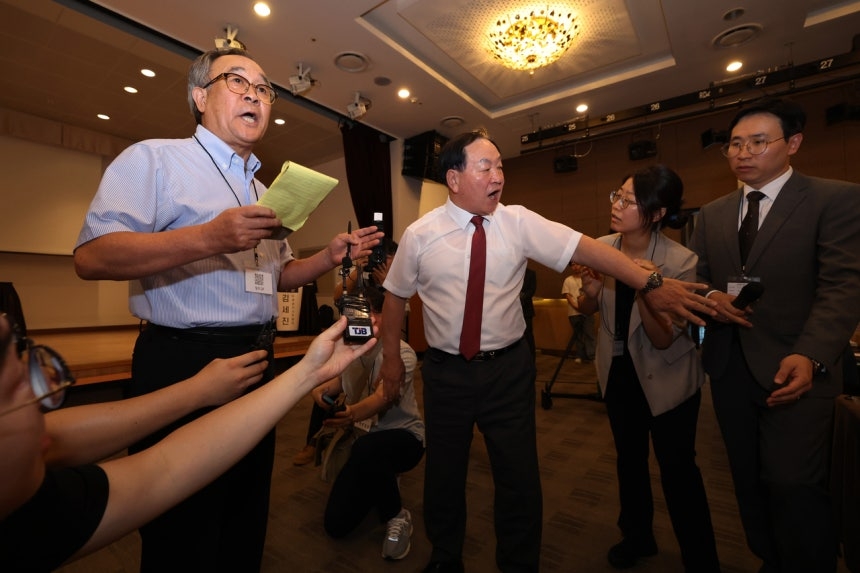
Last week's first public hearing on the proposed establishment of a unified military academy ended in a standoff, with shouting and disorder exposing an unbridgeable gap between the two sides. The Defense Ministry has signaled it will listen to a range of views while still treating the creation of a unified academy as a given, while opponents insist on preserving the existing separate service academies — a contradiction that has focused attention on whether any further hearings will be held.
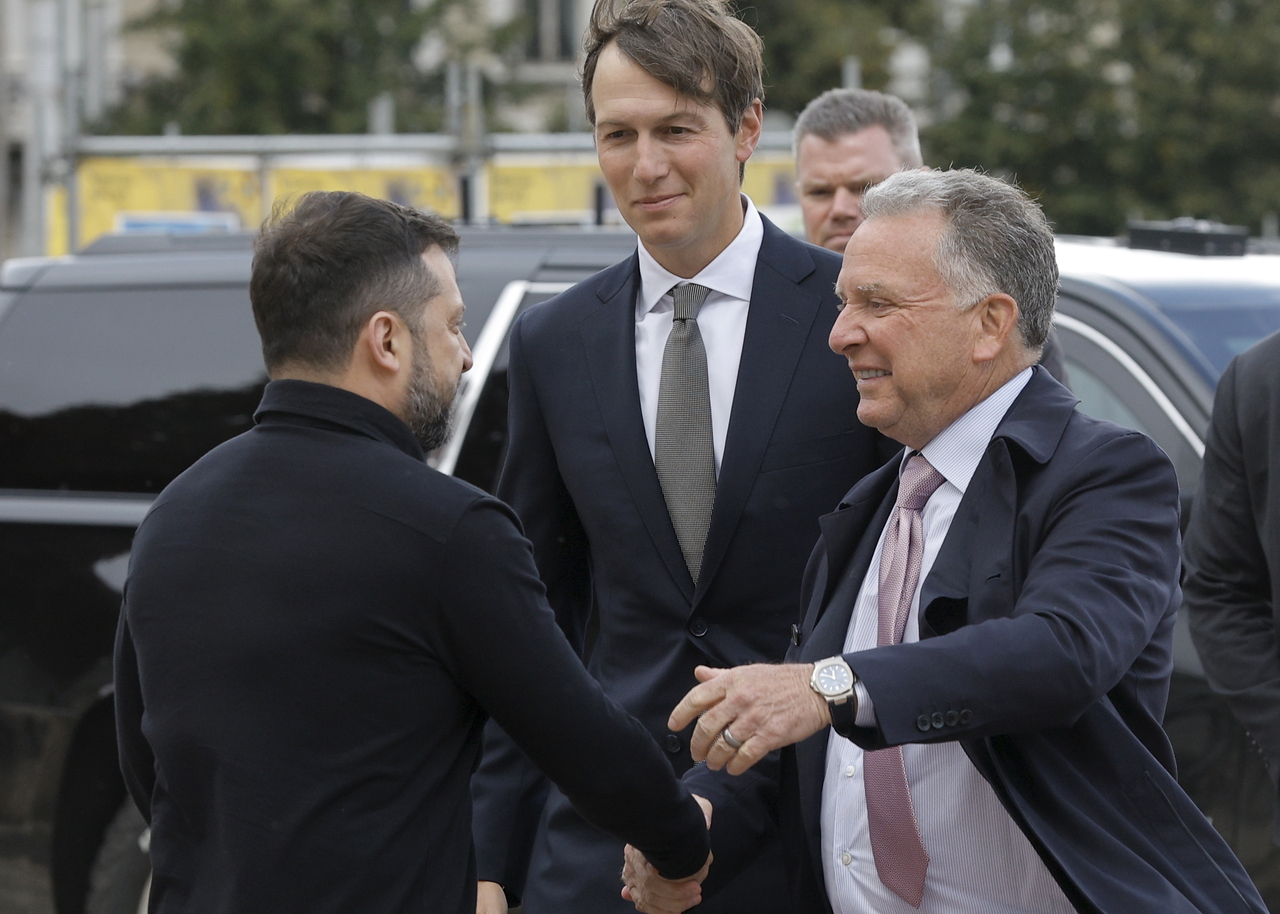
Kim Se-jin, secretary-general of the think tank Mirae Saenggak and a panelist at last week's hearing, wrote on social media Sunday that Donald Trump's announcement of a Space Force academy showed the United States was "moving to further specialize professional domains." "Korea is in an uproar about closing the Army, Navy and Air Force academies in the name of preparing for future warfare," Kim wrote. "None of this adds up."
Kim had raised a similar point at the first hearing, asking why the military was suddenly dismantling the three service academies when it had already established the Korea Defense Advanced Science and Technology Academy years ago to prepare for future warfare. Trump announced Friday (local time) that he would establish a Space Force academy, saying, "I created the Space Force, the sixth branch of the US military, during my first term, and I am about to make another historic announcement."
The Defense Ministry, responding to a hearing that descended into near-chaos amid fierce protests from Army, Navy and Air Force academy alumni, said it would "think about how to better allow citizens to share their opinions."
Asked whether additional public hearings would be held, a ministry official said it was "important to hear from a wide range of people" and that the ministry was "considering what format would work best — whether to hold another hearing or how to conduct policy briefings." The ministry is also weighing participation in opinion-gathering sessions organized by civic groups.
The official added that the ministry was "already conducting policy briefings for various groups, though not all of them are open to the press," and expressed hope that "when we announce the detailed plan in October, we will be able to present more developed content."
Meanwhile, a Gallup Korea survey conducted Tuesday through Thursday among 1,001 adults aged 18 and older nationwide found that 58 percent of respondents opposed the Defense Ministry's plan to merge the three service academies, while 30 percent supported it and 11 percent said they did not know or declined to answer.
Among supporters of the Democratic Party, 54 percent backed the merger. Opposition was overwhelming among People Power Party supporters, at 85 percent, and among independents, at 70 percent. The survey was conducted via telephone interviews using randomly selected virtual mobile numbers. The margin of error was plus or minus 3.1 percentage points at the 95 percent confidence level, with a contact rate of 44.5 percent and a response rate of 9.5 percent.
At the public hearing Wednesday, supporters of the merger cited the need to strengthen jointness, prepare for evolving future warfare and the transfer of wartime operational control, respond to a sharp decline in the school-age population driven by the demographic cliff, and expand investment in the academies through economies of scale. Opponents raised concerns including the weakening of military specialization and identity, insufficient public deliberation and scrutiny, and what they described as politically motivated pursuit of the merger.
Park Pan-jun, chairman of the Korea Military Academy alumni association, abruptly took the podium that day and declared that the closure of the academies was being handled "like gangsters doing business," adding: "I guarantee this plan cannot go forward to the end. It will be nothing more than a waste of budget and national resources."
When Defense Ministry policy director Kim Hong-cheol eventually made his way to the podium to present the merger policy, alumni in the audience unleashed a torrent of jeers and profanity. One attendee pretended to splash water toward the stage while shouting obscenities and demanding Kim step down. A visibly strained Kim finally said, "Please do not swear. If you want to swear, do it after this is over."
youknow@heraldcorp.com