A 1928 Hungarian concert season fee list ranks him at the top
Estimated in dollars, his fee equals about 54 million won today
He and Paderewski shared the highest billing among the era's stars
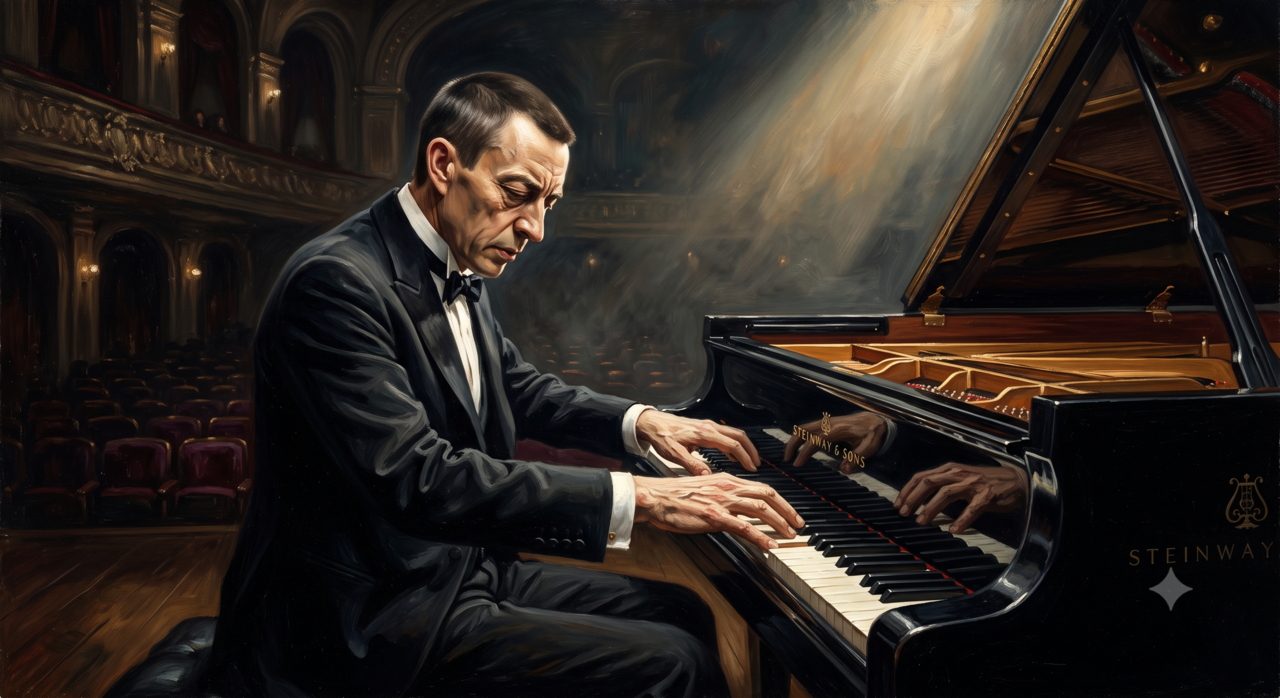
The classical music world had its superstars, too. Sergei Rachmaninoff (1873–1943) — one of the most beloved classical composers among Korean audiences and a towering figure of Russian music — commanded fees to match his fame. He was a star then, and he remains one now.
A fee list from the 1928 Hungarian concert season, unearthed by Christopher Russell, a conducting professor at Azusa Pacific University in the United States, and published by the British classical music outlet Slipped Disc, offers a rare glimpse into what top performers earned nearly a century ago.
The document covers a number of composers and performers. Rachmaninoff, the composer-pianist, leads the list, joined by Ignacy Jan Paderewski, cellist Pablo Casals, violinist Jascha Heifetz, conductor Wilhelm Furtwängler and Béla Bartók, among others.
The highest figure on the list is 2,000. Rachmaninoff, the towering figure of Russian late Romanticism, and Paderewski, the pianist who also served as prime minister of Poland, both commanded 2,000 — the top fee on the list.
Jascha Heifetz and Pablo Casals followed at 1,500, while Wilhelm Furtwängler, regarded as one of the greatest conductors of the era, received just 500. Béla Bartók, counted among the 20th century's most important composers, received just 250 — one-eighth of the top fee.
The currency of the figures listed in the document has not been confirmed, but the source publication presents them on the assumption that they are US dollars. Applying the 2026 US consumer price index, the purchasing power of $1 in 1928 works out to roughly $19.53 today.
The $2,000 fee received by Rachmaninoff and Paderewski would be worth about $39,060 today — approximately 53.8 million won ($39,000). In other words, Rachmaninoff's fee for a single performance was in the range of 53.8 million won. The $1,500 fee translates to about 40.4 million won, $500 to about 13.5 million won, and $250 to about 6.7 million won.
In today's classical music world, fees for top performers at home and abroad have already surpassed 100 million won. A direct comparison between Rachmaninoff's roughly 50 million won fee and modern performance guarantees is difficult, given that production costs, ticket prices, taxes and management fees were entirely different in that era.
Even so, the list confirms that top-tier performers in the 1928 classical music market were already operating within what could be called a star industry.

In March 1928, Time magazine, in an article on the music industry, classified Paderewski, Rachmaninoff, Josef Lhevinne and Heifetz as "top box-office draws." The piece also cited estimates that Americans were spending $20 million a year on music, with a substantial share going to individual performers and summer concerts. In Paderewski's case, a report was cited estimating his concert earnings over two years at $1 million.
The timing of the Hungarian concert fee list also matters. By 1928, Rachmaninoff had established himself as a pianist of worldwide renown.
After leaving Russia in the wake of the 1917 revolution, he built his career in the West, and his activity as a pianist surged through the 1920s. During the 1927–28 season, he performed across North America and Europe, appearing at Carnegie Hall in New York, the Queen's Hall in London, and venues in Copenhagen and Berlin. On March 31, 1928, he gave a solo recital at Carnegie Hall, and on April 22 he returned to the same stage for a charity concert benefiting Russian war wounded — an event that raised between $4,635 and more than $6,000, according to surviving records. He was already a star of his time.
The case of Ignacy Jan Paderewski (1860–1941), who shared the top fee of $2,000 with Rachmaninoff, is even more remarkable.
He was far more than a pianist. A Polish statesman who later served as prime minister, he carried two distinct identities — musician and political symbol.
Time named him among the top box-office draws in the American music market, and that same year The New Yorker followed his US tour, reporting that he was in the middle of a 50-concert run. His performances were not simply musical events — they were social occasions that drew wide public attention.
His stature was equally evident at a 1928 concert in Lausanne, Switzerland, where the program included a note asking the audience to rise as he entered, as a gesture of respect and gratitude. Museum records describe this as evidence of the extraordinary reverence he commanded at the time.
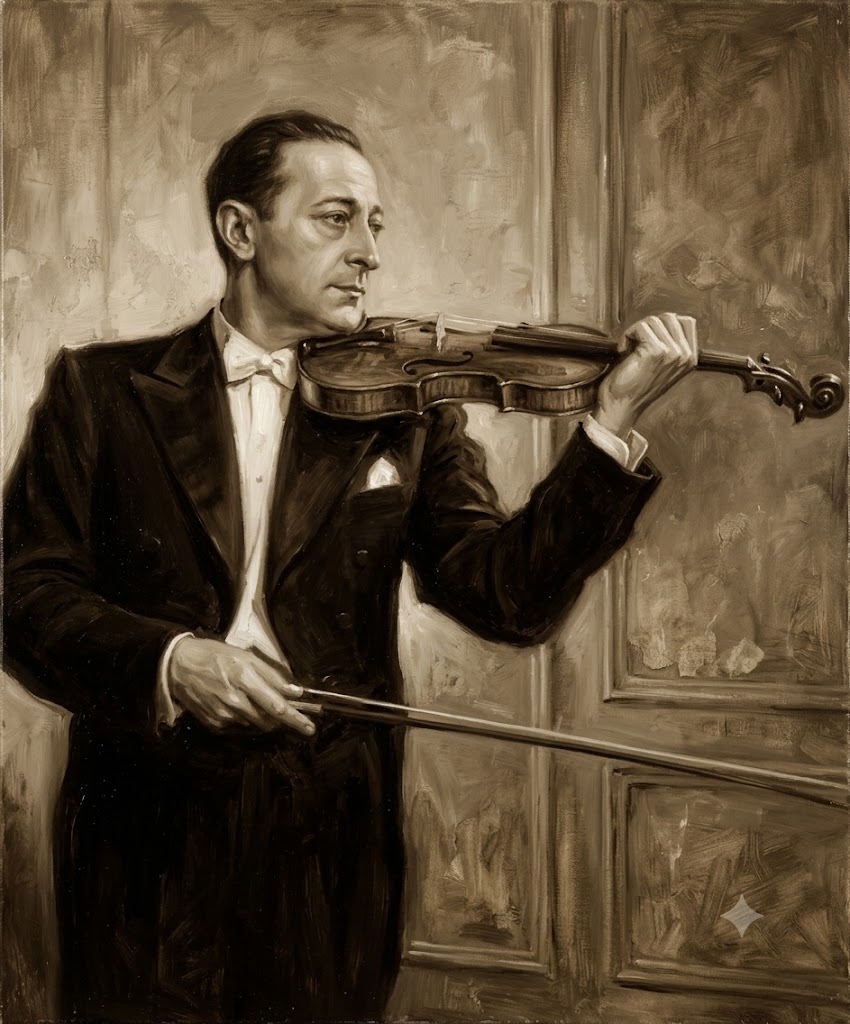
Jascha Heifetz (1901–1987) was the youngest superstar the document confirms. Central to understanding his fee is the recording industry. Heifetz began recording for Victor at just 16 in 1917, and his records introduced him to audiences around the world before they ever saw him on stage. In Britain, roughly 70,000 copies of his recordings had already sold before his London debut in 1920.
His touring range was equally remarkable. In 1926 he undertook a world tour taking in the Netherlands, Germany, Hungary, Austria, France, Spain, Italy, Egypt, Palestine and Scandinavia. In 1927 he extended his reach to India, Singapore, China, the Philippines, Australia, the United States and Mexico. By 1928 he was giving debut performances in Switzerland, Turkey, Romania and Greece.
Pablo Casals (1876–1973) was the master who set the standard for the cello. He revolutionized the instrument's modern technique and interpretation, and by the 1920s had expanded his work to encompass conducting, orchestra founding and chamber music alongside his solo career.
In 1927 he conducted the Vienna Philharmonic and organized a festival marking the centenary of Beethoven's death. During the same period he continued touring as part of the Cortot-Thibaud-Casals Trio. On Feb. 26, 1928, he gave his final US solo recital at Town Hall in New York.
What stands out is that Furtwängler (1886–1954), one of the greatest conductors of the era, received a fee of just $500.
He had succeeded Arthur Nikisch as chief conductor of the Berlin Philharmonic in 1922 and was already regarded as Germany's preeminent conductor. He served as a guest conductor with the New York Philharmonic from 1925 to 1927, and in 1928 he concluded his association with the Leipzig Gewandhaus Orchestra and deepened his work with the Vienna Philharmonic.
The disparity suggests that in the music world of the time, the largest fees were concentrated on soloists capable of headlining their own tours.
The most striking name on the list remains Bartók (1881–1945). One of the defining composers of 20th-century music history, he received just $250 — one-eighth of what Rachmaninoff and Paderewski earned. The Hungarian-born composer was actively expanding his international performance schedule in the late 1920s. According to Oxford University records, his concert activity grew to an international scale during that decade, and from late 1927 into early 1928 he completed a successful cross-country US tour, performing in New York, Philadelphia, San Francisco, Los Angeles, Seattle and Chicago. Yet his fee in his home country was negligible.

shee@heraldcorp.com