
Field of view 100 times wider, observation speed 1,000 times faster than Hubble; equipped with 300-megapixel infrared camera
Roman telescope to hunt dark matter, dark energy secrets; billions of stars and tens of thousands of planets expected
Trump hails 'golden age of America' as US races to counter China's space ambitions
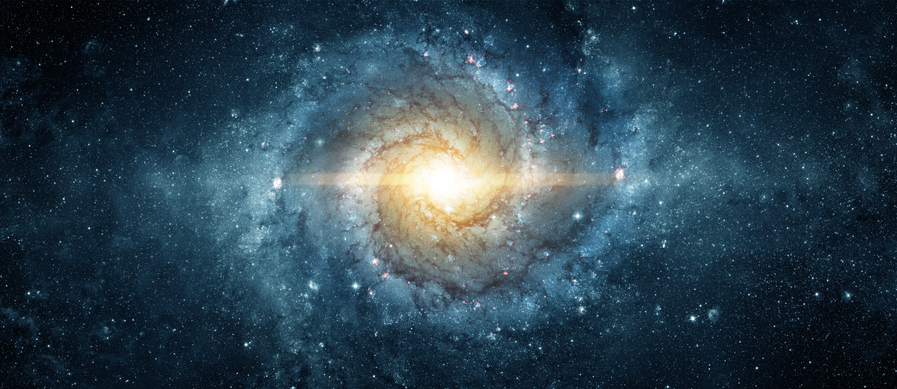
The United States has launched a next-generation space telescope capable of surveying in a single month what the Hubble Space Telescope would need 100 years to observe. With a field of view more than 100 times wider than Hubble's and observation speeds more than 1,000 times faster, the new instrument is expected to shed light on two of astronomy's deepest mysteries: dark matter and dark energy.
NASA launched the Nancy Grace Roman Space Telescope aboard a SpaceX Falcon Heavy rocket from Kennedy Space Center in Florida at 7:26 a.m. Sunday (local time). The telescope successfully reached orbit roughly 10 minutes after liftoff.
Roman's destination is Lagrange Point 2 (L2), about 1.6 million kilometers from Earth — approximately four times the distance between Earth and the Moon. The James Webb Space Telescope, launched in 2021, already observes the cosmos from the same location. Roman is expected to take more than three months to reach it.
Roman's most striking feature is its sweeping observational range and speed. It has a field of view more than 100 times wider than the Hubble Space Telescope, which launched in 1990, and can observe more than 1,000 times faster. NASA expects the telescope to cover in a single month what Hubble would require a century to survey.
The telescope carries a 300-megapixel infrared camera built from 18 4K detectors. It will photograph vast swaths of the universe and track the bending of light to map the distribution of dark matter — a substance that pervades the cosmos but cannot be seen directly.
"If Hubble and the James Webb Space Telescope were like peering through a keyhole, Roman kicks the door wide open," said Nicola Fox, NASA's associate administrator for science. "We will discover thousands of supernovae, tens of thousands of planets, billions of galaxies and hundreds of billions of stars."
Astronomers are particularly focused on Roman's potential for dark matter and dark energy research. The telescope will precisely observe gravitational lensing — the bending of light by gravity — along with the brightness and distances of supernovae and variations in planetary brightness. That data is expected to help explain why the universe is expanding at an ever-accelerating rate.
Roman also carries a coronagraph instrument that blocks starlight to directly image faint nearby planets. The device could enable detection of distant Earth-like exoplanets that were difficult to capture with earlier telescopes, as well as rogue planets — worlds that drift through space unbound to any star.
Roman's first images are expected to reach Earth in early next year. Over a five-year observation mission, the telescope is expected to discover previously unknown galaxies and exoplanets in large numbers while opening a new chapter in dark matter and dark energy research.
The bus-sized telescope is named after Nancy Grace Roman, NASA's first chief astronomer, who pioneered the concept of space-based astronomical observation by placing telescopes above Earth's atmosphere. Known as the "mother of the Hubble Space Telescope," she inspired a project that took about a decade to develop at a cost of approximately $4.3 billion.
The launch was moved up by several months from its original schedule. As China accelerates its space development program, the United States is pressing ahead with its space ambitions, including the Artemis program for crewed lunar exploration.
President Donald Trump called NASA Administrator Jared Isaacman directly during a NASA news conference that day to congratulate the agency on the successful launch. Trump described the United States as "the most dominant nation in space" and later posted on Truth Social that "this is the golden age of America."
Earlier, on Aug. 28, Trump visited Lyndon B. Johnson Space Center in Houston, Texas, where he signed an executive order establishing a space service academy and presented the Congressional Space Medal of Honor to the Artemis 2 astronauts.
sjy@heraldcorp.com





