
Ministry of Statistics releases July industrial activity report
Mining and manufacturing output up 0.2%; services down 1.3%
Durable goods sales drop 7.7%, weighing on consumption recovery
South Korea's industrial activity in July showed flat production and a decline in consumption, while equipment investment rose for a second consecutive month. The "triple increase" in production, consumption and investment recorded in June ended within a month.
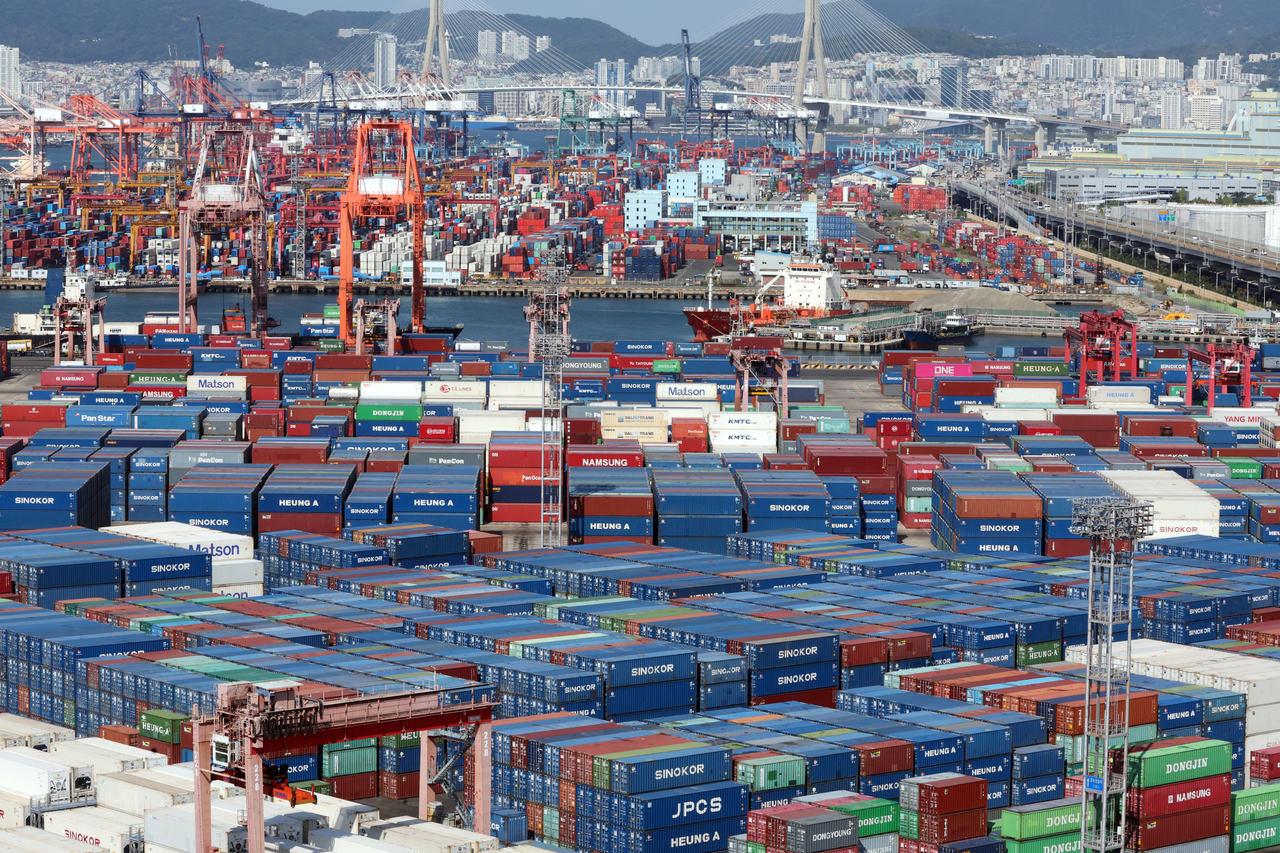
The all-industry production index (seasonally adjusted, excluding agriculture, forestry and fisheries) stood at 120.2 (base year 2020=100) in July, unchanged from the previous month, according to the July industrial activity report the Ministry of Statistics released Monday.
Mining and manufacturing output rose 0.2 percent from the previous month. Although automobile production fell 4.5 percent, electronic components — led by OLED panels and printed circuit boards — surged 20.7 percent, and primary metals output climbed 4.2 percent. The average manufacturing capacity utilization rate edged up 0.2 percentage points to 74.9 percent.
Services output fell 1.3 percent from the previous month, dragged down by declines in finance and insurance (minus 4.8 percent) and professional, scientific and technology services (minus 2.7 percent). Information and communications services grew 3.5 percent.
Consumption also swung back to a decline. The retail sales index, which tracks product consumption, fell 2.4 percent from the previous month. Durable goods dropped 7.7 percent as sales of passenger cars and home appliances weakened, while semi-durable goods such as clothing fell 1.4 percent and non-durable goods including cosmetics edged down 0.1 percent.
Equipment investment rose 7.5 percent from the previous month, driven by a 15.4 percent increase in transportation equipment investment — centered on ships and aircraft — and a 4.2 percent rise in machinery including semiconductor manufacturing equipment. The gain follows a 6.9 percent increase in June, marking two consecutive months of growth.
Construction work completed (in constant prices), which reflects domestic construction activity by contractors, fell 1.1 percent from the previous month. Civil engineering output jumped 18.5 percent, but that was offset by a 7.4 percent drop in building construction as both residential and non-residential building activity declined. New construction orders fell 34.0 percent from a year earlier, with decreases across both civil engineering — including railways and tracks — and building construction such as housing.
The cyclical variation of the coincident composite index, which reflects current economic conditions, rose 0.8 points from the previous month. The cyclical variation of the leading composite index, which signals the future direction of the economy, also climbed 0.4 points.
y2k@heraldcorp.com





