Dunsan, Songchon districts targeted for renewal through 2035; baseline floor-area ratio raised to 360%
Daejeon has announced a redevelopment project targeting aging planned cities — those fully developed more than 20 years ago that cover at least 1 million square meters.
The city published its "2035 Daejeon Aging Planned City Redevelopment Master Plan" on Monday, covering the Dunsan and Songchon districts under the Special Act on the Maintenance and Support of Aging Planned Cities.
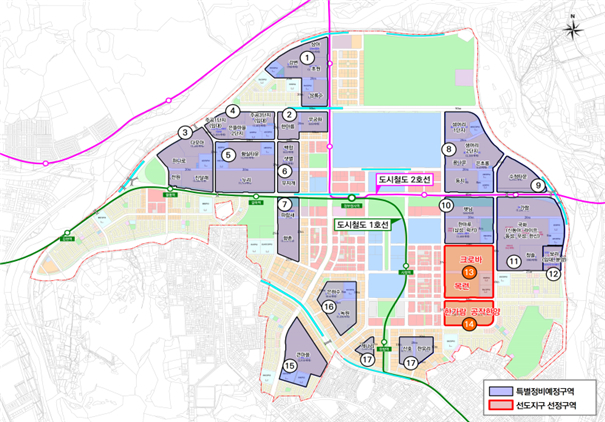
The Dunsan district, spanning 8.7 million square meters, is built around the vision of "Dunsan — a vibrant city balancing work and life." The plan calls for a multi-centered urban core linking administrative, knowledge and lifestyle functions, along with a network of parks and green spaces to energize the city center. Under the special act, the baseline floor-area ratio will rise from 226 percent to 360 percent, and the planned population will increase by 41,000 — from 158,000 residents in 74,000 units to 199,000 residents in 94,000 units.
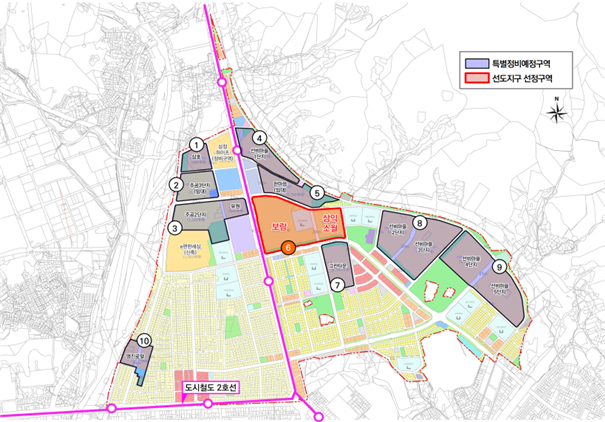
The Songchon district, which includes the Jungni and Beopdeong areas, covers 2.7 million square meters. Its guiding vision is "Songchon·Jungni·Beopdeong — a smart, healthy city for a new everyday life." Key elements include improving the pedestrian environment to create an N-minute neighborhood and upgrading urban functions centered on tram development and the Jochajang Station area. The baseline floor-area ratio will increase from 239 percent to 360 percent, and the planned population will grow by 10,000 — from 59,000 residents in 27,000 units to 69,000 residents in 33,000 units.
The master plan's publication also establishes the institutional framework needed to advance redevelopment projects. In all designated preliminary special redevelopment zones, residents will be able to form a representative body to gather community input and serve as a driving force in the early stages of a project. The body is formed by securing the consent of a majority of landowners and property holders within the zone through certified consent forms, followed by approval from the designating authority. It will then handle preparatory work including selecting a project operator or preliminary project operator, drafting an outline of the special redevelopment plan, and preparing for the formal designation of a project operator.
Zones selected as pilot districts this year are preparing to establish special redevelopment plans and secure designation as special redevelopment zones. Zones not selected as pilot districts are expected to prepare their redevelopment projects in line with a selection process for next year's planned redevelopment volume, which will be announced after October.
Daejeon held a community meeting Wednesday to hear residents' views on the selection process for next year's planned redevelopment volume, and the city plans to continue actively incorporating feedback from the field.
Choi Jong-su, director of the city's urban affairs bureau, said the publication of the master plan "establishes the basic framework for Daejeon-style aging planned city redevelopment through 2035." He added that the city would "continue to work on institutional support, systematic management of relocation demand, and the expansion of quality infrastructure to provide residents with a stable residential environment."
kwonhl@heraldcorp.com