Company allegedly secured low-tariff quotas under partner firms' names; nine people referred to prosecutors without detention, 5.4 billion won in evaded tariffs fully recovered
A company that evaded customs duties by improperly securing low-tariff import quotas under the names of partner firms has been caught by customs authorities.
The Korea Customs Service's Seoul Customs Office said Thursday it had referred nine people — including the head of a company identified as A — to prosecutors without detention on charges of violating the Act on Aggravated Punishment of Specific Crimes and the Customs Act. The company is accused of abusing the free trade agreement tariff rate quota system to import 5,307 metric tons of malt.
The FTA tariff rate quota, or TRQ, system is a dual-tariff regime designed to stabilize prices and protect domestic industries. It applies a low tariff rate to imports up to a set allocated volume and a higher rate to any amount exceeding that allocation.
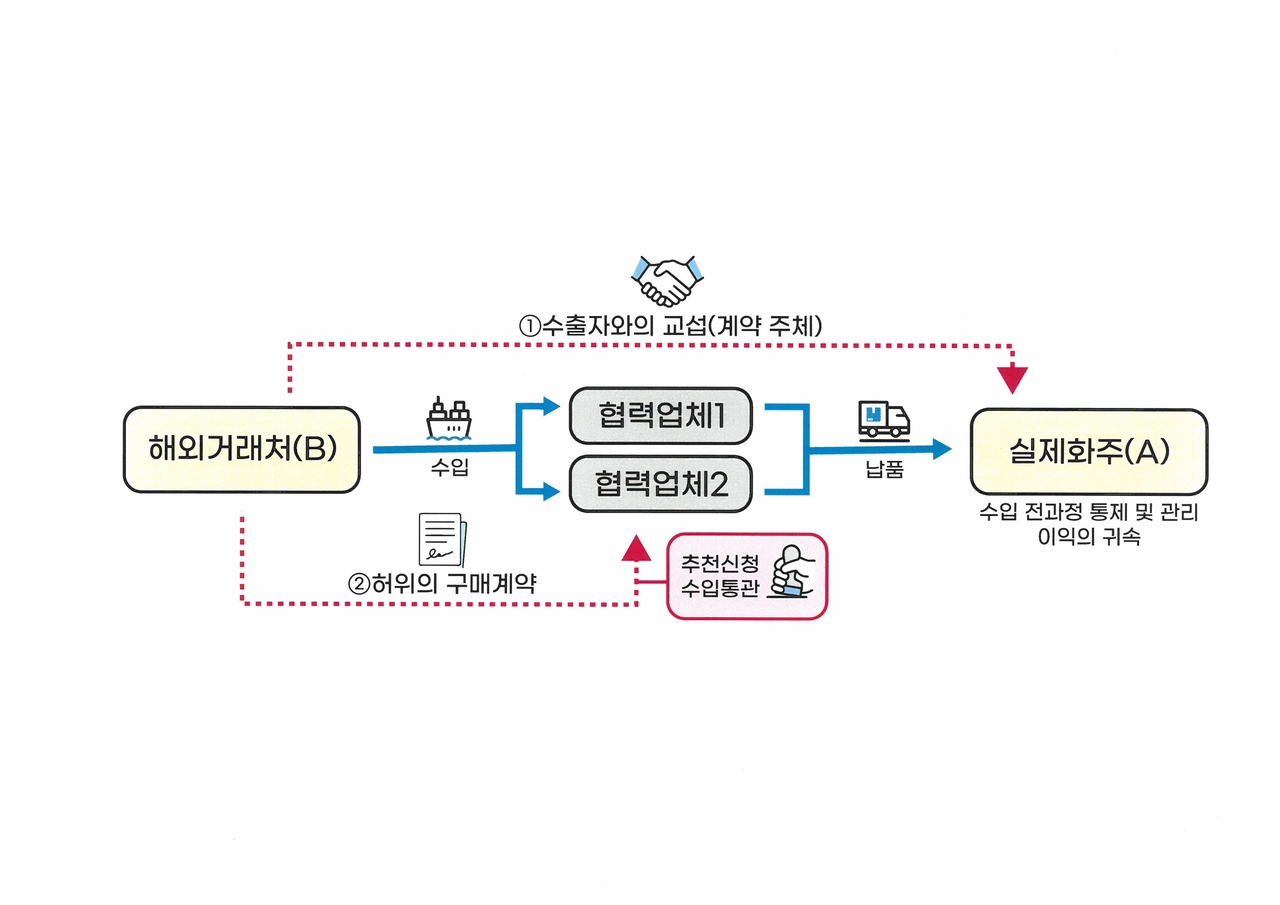
The investigation found that the suspect company exploited a rule under which all applicants receive equal shares of the TRQ allocation. It used the names of two partner firms established by former employees to improperly secure additional quota, then disguised those firms as the actual taxpayers to import 5,307 metric tons of malt at a zero tariff rate.
Companies that receive a malt FTA TRQ allocation through the Korea Agro-Fisheries and Food Trade Corp. can import malt duty-free — with the tariff rate dropping from a maximum of 161.4 percent to zero. Because the malt FTA TRQ volume is divided equally among all applicants, however, legitimate individual companies are disadvantaged by the resulting cap on their import volumes.
Through intelligence analysis and search and seizure operations, the Seoul Customs Office established that the partner firms had lent their names in exchange for fees only. Authorities charged the suspect company as the actual taxpayer and completed the full recovery of all evaded duties.
Yun Cheong-un, director of Investigation Bureau 1 at the Seoul Customs Office, said the FTA TRQ system exists to stabilize prices and protect domestic industries, adding that authorities would continue to respond strictly to illegal acts that privatize the benefits of low-tariff treatment.
kwonhl@heraldcorp.com