Ulsan tram public forum held Friday
Advanced cities worldwide have validated trams as urban growth engines
Speakers call for cross-city network extending to Line 4
"Setting aside the question of establishing a proper transportation network for Ulsan's citizens — if the government were to halt a project it has already vetted and committed funding to, what do you think the government would make of any future project requests from Ulsan?"
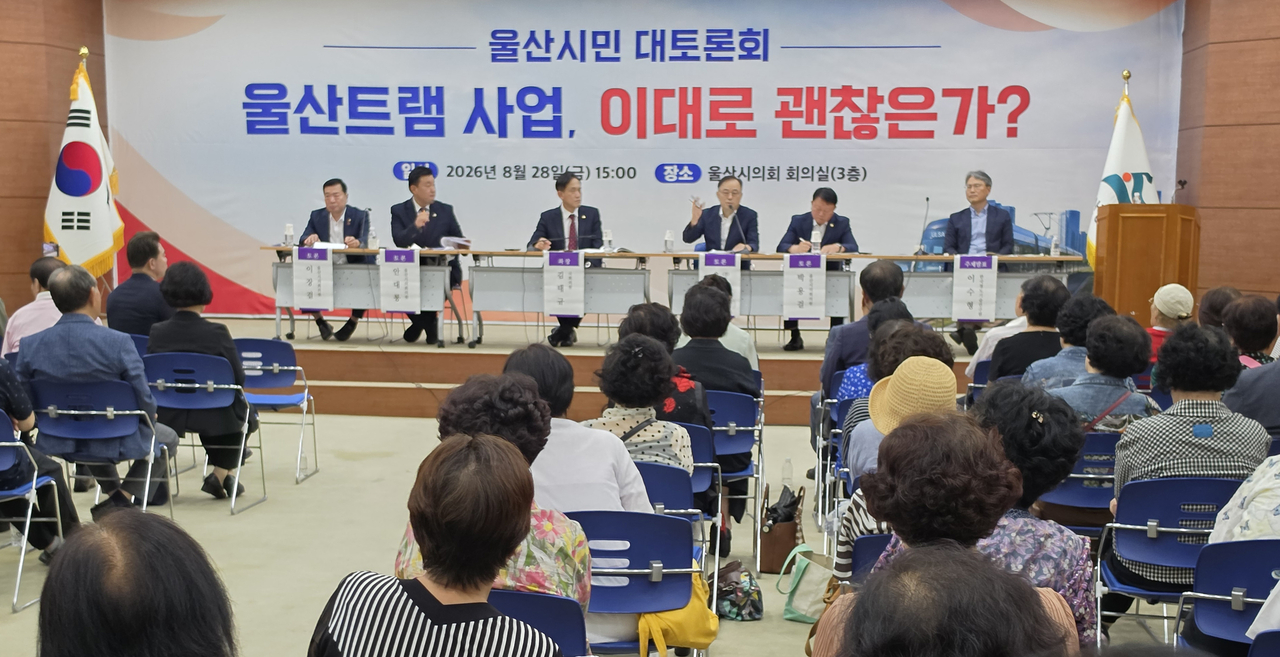
Panelists at a public forum held Friday at the Ulsan City Council chamber were unanimous: halting Ulsan's urban railway Line 1 tram project, which is already underway, is simply not an option. The forum, titled "Is the Ulsan Tram Project on the Right Track?", was hosted by National Assembly member Kim Tae-gyu of Ulsan Nam-gu (Gab district).
The forum drew about 300 citizens and was attended by Assembly member Kim Ki-hyun of Ulsan Nam-gu (Eul district) and Nam-gu District Mayor Im Hyeon-cheol, proceeding through panel discussions and an open floor for public comment.
The Ulsan tram project calls for 15 stations along a 10.85-kilometer route between Taehwagang Station and Sinbok Intersection. The project advanced through a series of milestones: an urban rail network plan established in 2017, public hearings and City Council consultations in 2019, and a government feasibility re-examination in 2023. This year it moved into contracts for hydrogen-electric tram manufacturing and groundwork including soil reinforcement and temporary facility installation. Amid this progress, the newly launched ninth-term Ulsan city administration has classified the project for review and is seeking a public deliberation process before full construction begins next February, keeping the debate over whether to proceed very much alive.
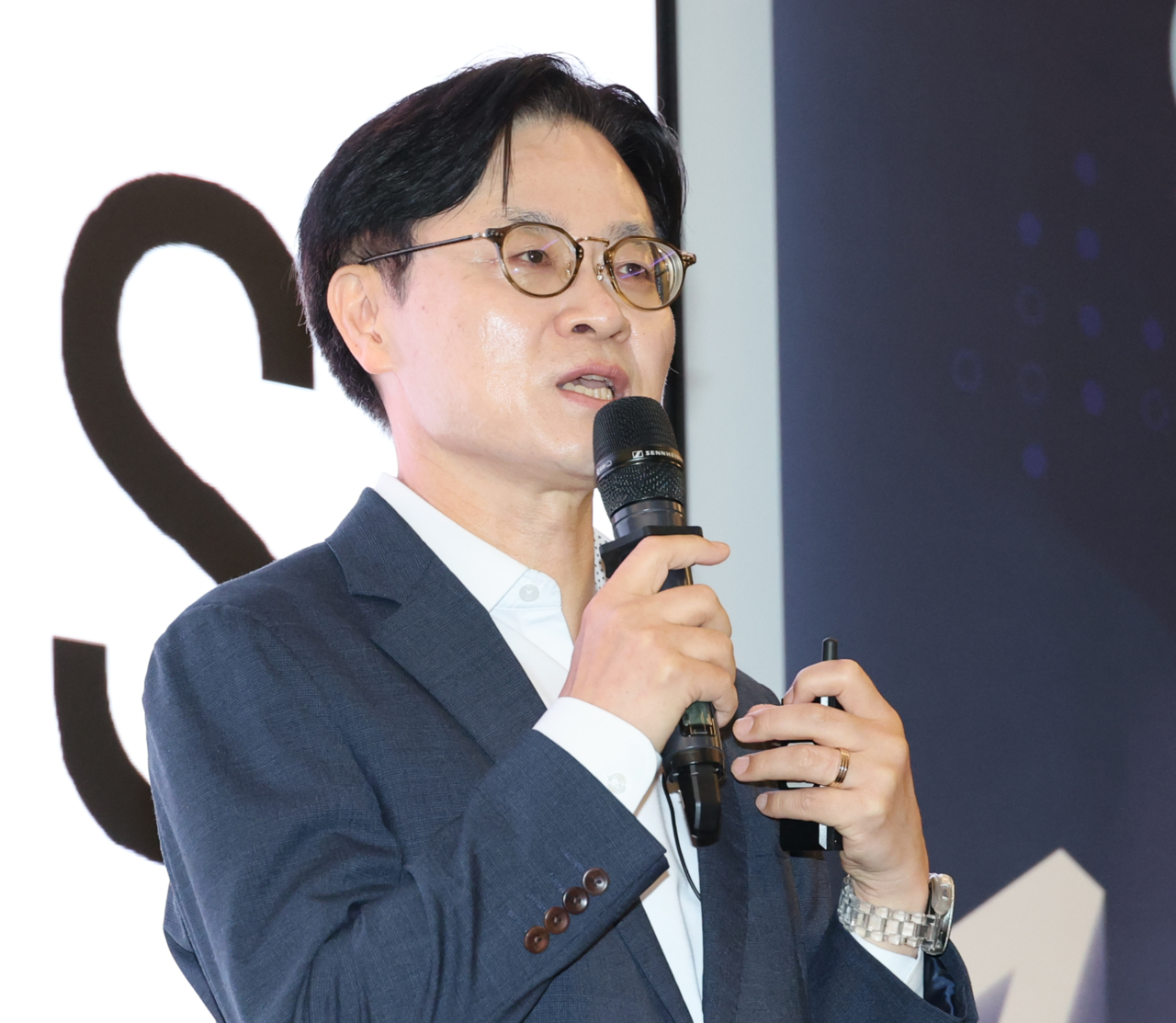
At the forum, Lee Su-hyeong, head of the tram research division at the Korea Railroad Research Institute, presented on the theme "Trams: A Springboard for Ulsan's Future Growth." Drawing on examples from small and mid-sized cities in Japan, Germany and France, Lee said trams have been proven as a transit system capable of driving transit-centered urban development, offering schedule reliability, operational safety, transfer convenience, accessibility for mobility-impaired passengers and environmental friendliness. He added that tram lines also serve as an axis around which bus routes can be reorganized, with cars rerouted along alternative paths to ease traffic congestion.
Yun Si-cheol, former speaker of the Ulsan City Council, traced the push for tram introduction back to his time as a city councilman in 2005. "I don't understand why we are holding a forum on a project that has already gone through public opinion gathering and City Council procedures," he said. "The tram construction project, which citizens have long called for, must go forward regardless of ruling or opposition party lines."
Assembly members An Dae-ryong, Park Yong-geol and Lee Jang-geol also weighed in, citing citizen convenience, population retention and the economic revitalization that 15 transit-oriented station areas would bring, and called for a cross-shaped north-south-east-west rail network extending all the way to Line 4.
cityblue@heraldcorp.com