The sixth annual conference, held in Indianapolis in partnership with Indiana University School of Medicine, brought together 50 leading medical experts from institutions including Harvard and UC Irvine to share the latest research on integrative medicine
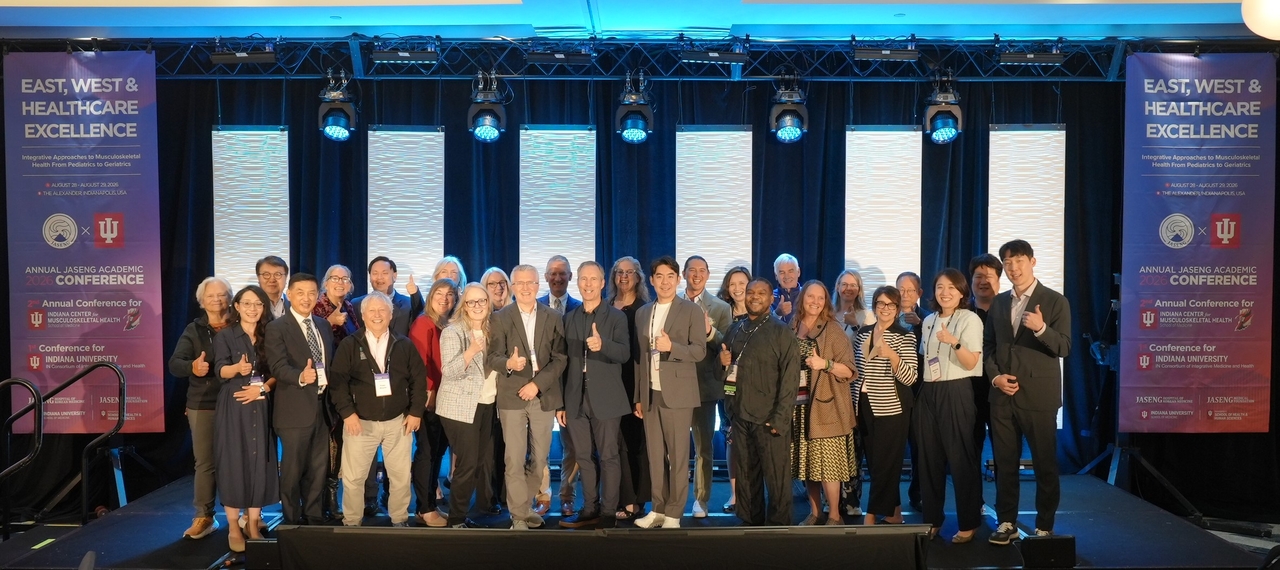
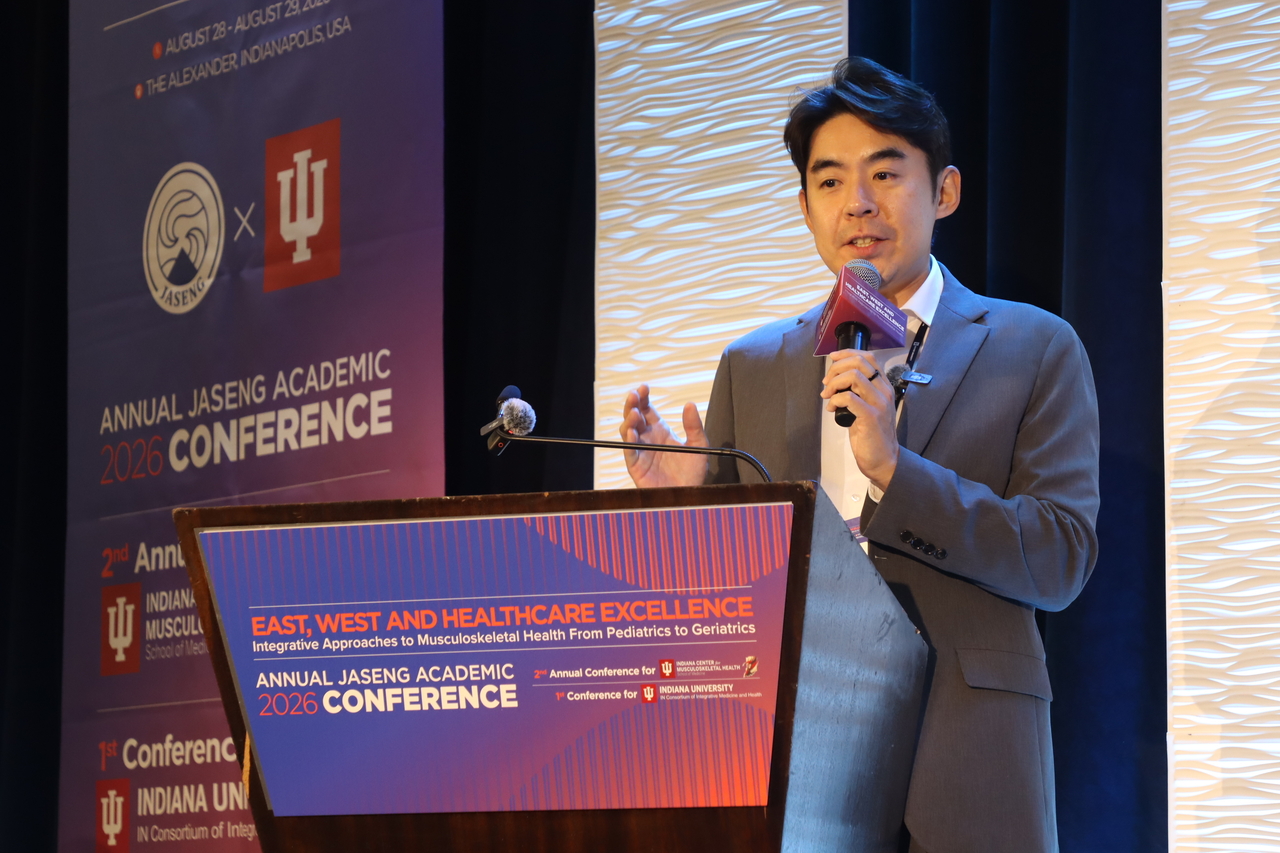
Jaseng Hospital of Korean Medicine announced Monday that it successfully concluded the 2026 Annual Jaseng Academic (AJA) International Conference, held Friday and Saturday in Indianapolis, Indiana.
The AJA conference is an academic exchange event that Jaseng Hospital has organized with leading overseas universities to advance the scientific development and globalization of Korean medicine. Now in its sixth year, this edition marked the event's first overseas outing, co-hosted with Indiana University School of Medicine. Indiana University School of Medicine is the largest medical school in the United States by enrollment in its doctor of medicine program, operating across nine campuses throughout Indiana and partnering with more than 400 clinical training institutions.
The conference was held under the theme "East Meets West: An Integrative Medicine Approach to Musculoskeletal Health from Pediatrics to Geriatrics," with wide-ranging discussions on the latest advances in integrative medicine. Fifty leading medical experts from institutions including Indiana University School of Medicine, Harvard Medical School and the University of California Irvine School of Medicine presented as speakers, and about 200 healthcare professionals from various countries attended.
The program comprised four keynote addresses and 11 sessions. The first day featured presentations and discussions on pain management, the adoption of acupuncture in US hospitals, and topics extending beyond musculoskeletal health into areas such as brain health. The second day broadened the scope to clinical treatment and mechanistic research, covering musculoskeletal medicine and prosthetic care, research into the mechanisms of fascial therapy, and exercise therapy related to oncology and aging.
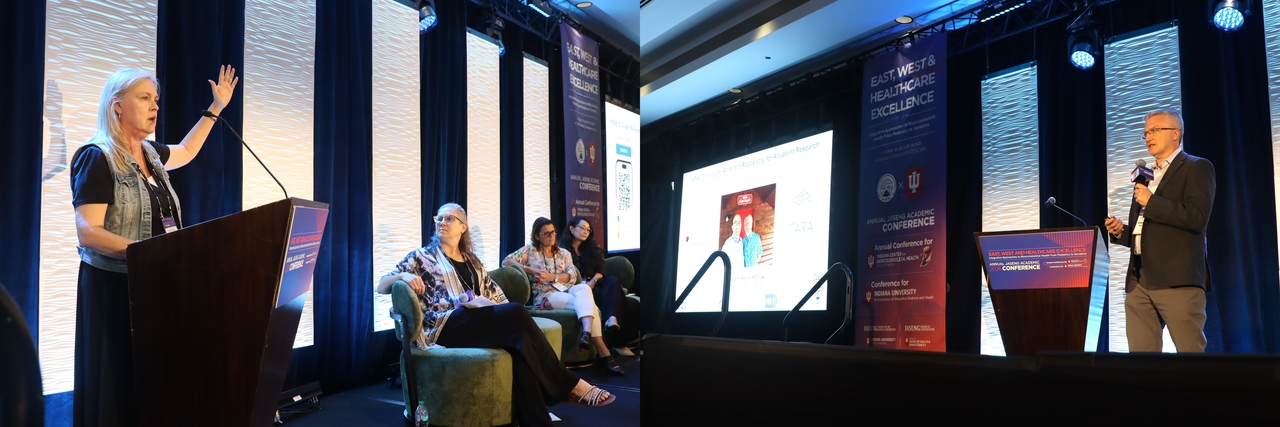
Among the keynote speakers were Jaseng Hospital Director Lee Jin-ho, Richard Harris, distinguished professor at the University of California Irvine (UCI), and Melissa A. Kacena, distinguished professor of orthopedic surgery at Indiana University School of Medicine.
Lee emphasized the importance of holistic treatment in managing musculoskeletal pain — one that addresses both physical function recovery and quality of life. He said "secondary trigger points" arising from defensive compensatory responses such as abnormal gait and fascial tension cause greater pain than the primary lesions visible on imaging. He then presented a precision pharmacopuncture technique that accurately targets these secondary trigger points, which he identified as a leading cause of chronic pain, drawing considerable attention from the audience.
"Ultrasound-guided pharmacopuncture has accumulated a scientific evidence base for its efficacy and safety through sustained clinical use and research," Lee said. "The integration of imaging technology with Korean medicine treatment will enhance the precision and objectivity of care, providing an opportunity to further systematize integrative therapy."
Discussions also addressed the standardization of acupoint research to strengthen the scientific basis for acupuncture. Richard Harris of UC Irvine presented a research platform called the Topological Atlas and Repository for Acupoints (TARA), designed to systematically establish the biological basis of acupoints. TARA is a three-dimensional anatomical map that organizes acupoint names and locations according to unified standards and compiles physiological data related to acupoint stimulation. Harris said the platform would allow researchers to analyze acupoint characteristics and the body's responses to stimulation using consistent criteria, improving the objectivity and reproducibility of acupuncture research.
Research methodology for building a scientific foundation for manual therapy was also a major focus. Terry Loghmani, professor at Indiana University School of Health and Human Sciences, introduced a "force-based manual therapy (FBM)" model that comprehensively analyzes the forces applied during treatment, the surrounding environment and the resulting biological responses. She also called for standardizing treatment procedures and evaluation methods to objectively establish the mechanisms of manual therapy and improve research reproducibility.
Melissa A. Kacena, distinguished professor of orthopedic surgery at Indiana University School of Medicine, said research conducted in diverse environments — including microgravity — is essential to expanding scientific discovery and research possibilities in the musculoskeletal field. She presented case studies on bone formation and fracture healing in mice conducted aboard the International Space Station (ISS).
Discussions on the integrated management of aging-related musculoskeletal health also took place. Lisa J. Taylor-Swanson, associate professor at the University of Utah College of Nursing, introduced the concept of "menopausal musculoskeletal syndrome," which encompasses joint pain and sarcopenia following menopause. Drawing on her own research experience — including a personalized menopause management program called MENOGAP — and existing studies on musculoskeletal pain, she explained the effects of acupuncture on pain relief and physical function improvement.
Peter Wayne, assistant professor at Harvard Medical School, focused on the role of exercise and movement in recovery and aging among cancer patients. He said assessments should go beyond treatment outcomes to examine how well patients recover physical function and maintain daily life. Given that aging and chronic disease often produce a complex combination of pain and reduced mobility, he said a range of therapies including acupuncture should be used to manage physical function and movement over the long term.
In line with the digital transformation of healthcare, proposals were also made for using AI to improve the efficiency and reliability of integrative medicine research. Jeremy Y. Ng, assistant professor at McMaster University in Canada, introduced methods for applying generative AI to the evidence synthesis process in traditional, complementary and integrative medicine (TCIM), including literature searching, screening and data extraction.
The conference closed with a video address by Park Byung-mo, chairman of the Jaseng Medical Foundation. "This conference was a meaningful occasion to share diverse research achievements and clinical experiences from both Eastern and Western medicine, and to collectively explore the direction integrative medicine should take," Park said. "We will continue to build scientific evidence for integrative medicine through sustained academic exchange and research collaboration with researchers around the world, while translating that work into real improvements in patients' health and quality of life in clinical settings."
kty@heraldcorp.com