
61.55% of voters back tentative agreement
Base pay up 100,000 won; bonus at 400% plus 12.7 million won
15 shares of stock, 500,000-won welfare points included
Per-worker compensation gain estimated at around 40 million won
Deal reached after 120 hours of production-line disruptions
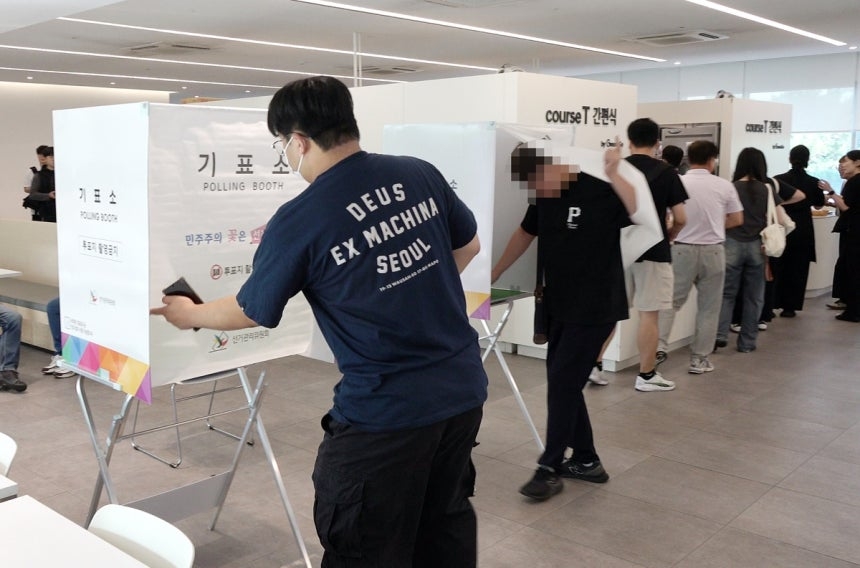
Hyundai Motor and its union have reached a final settlement on this year's wage negotiations. A prolonged labor dispute that escalated into the company's first full-day strike in a decade came to a close after union members voted to ratify a tentative agreement.
The Hyundai Motor chapter of the Korean Metal Workers' Union said Tuesday that 19,183 of 31,166 members who cast ballots Monday approved the tentative collective bargaining agreement, putting the approval rate at 61.55 percent.
Of the union's 39,638 total members, 78.63 percent turned out to vote. Those voting against the deal numbered 11,914, or 38.23 percent, while 69 ballots, or 0.22 percent, were invalid. Another 8,472 members abstained.
The agreement includes a 100,000 won ($73) increase in base pay, a performance bonus equivalent to 400 percent of monthly salary plus 12.7 million won, 15 shares of company stock, and 500,000 won in welfare points. The summer vacation allowance will rise by 200,000 won, from 800,000 won to 1 million won. The union estimated the total compensation gain at around 40 million won per member.
The two sides also reached partial agreement on additional union demands. They agreed to hire 500 skilled workers — 200 in the second half of 2027 and 300 in 2028. On the retirement age, both parties agreed that if relevant legislation is amended, the retirement age will be extended without expanding the existing wage-peak system. The company also agreed to withdraw all 10 damage claims and provisional seizure orders it had filed against the union.
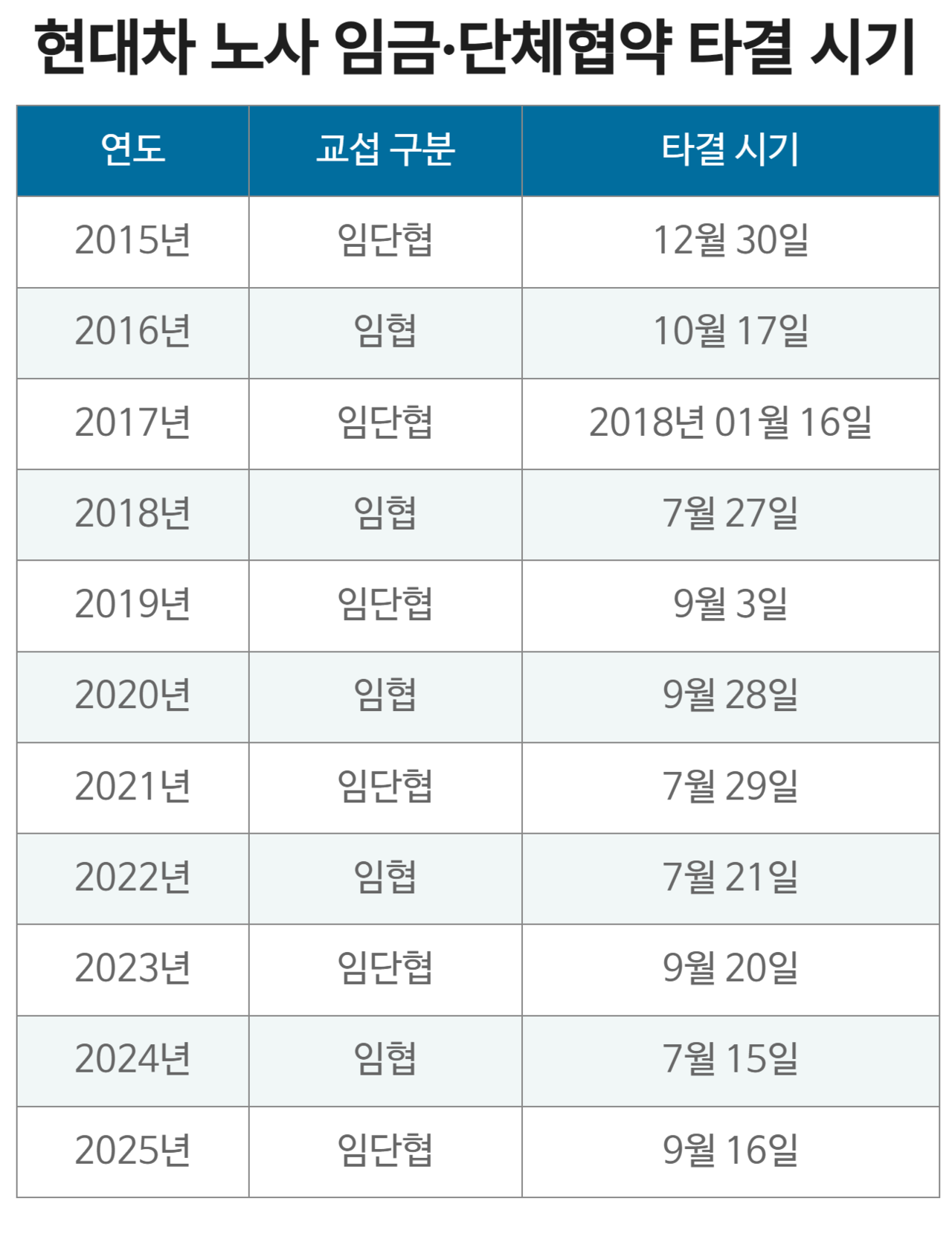
This year's negotiations got off to a rocky start after the two sides held their first meeting on May 6, taking 111 days to reach a tentative agreement on Aug. 25. The two sides had been at odds over the size of the base pay increase, performance bonuses, retirement age extension, bonus hikes and the reinstatement of dismissed workers.
In the course of the dispute, the union went on strike for the second consecutive year. It staged partial walkouts and refused overtime from July onward, and in August carried out an eight-hour full-day strike — the first of its kind in a decade. Strike hours totaled 60 per union member, or 120 hours measured against the day-and-night two-shift production line.
Industry estimates put the production disruption from the strike at 55,200 vehicles, with lost sales of at least 2.3 trillion won. Although the labor dispute has been resolved, Hyundai Motor still faces the challenge of restoring second-half production to normal levels while managing the rollout of new models.
Hyundai Motor plans to accelerate the production ramp-up of new and derivative models in the second half of the year, including the Avante, GV90 and GV80 hybrid. The key task ahead is making up for output lost to the strike and converting the momentum from new model launches into a sales recovery.
kwater@heraldcorp.com





