Global clean hydrogen investment up 2.8-fold in 3 years
Japan commits 15 trillion yen over 15 years, subsidizing price gap for up to 15 years
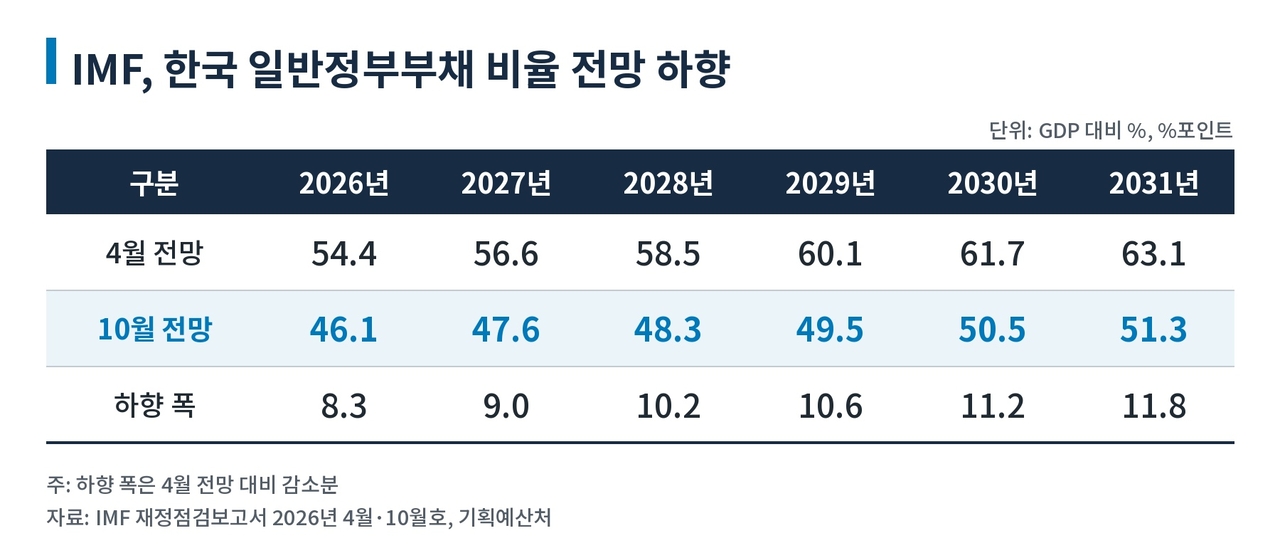
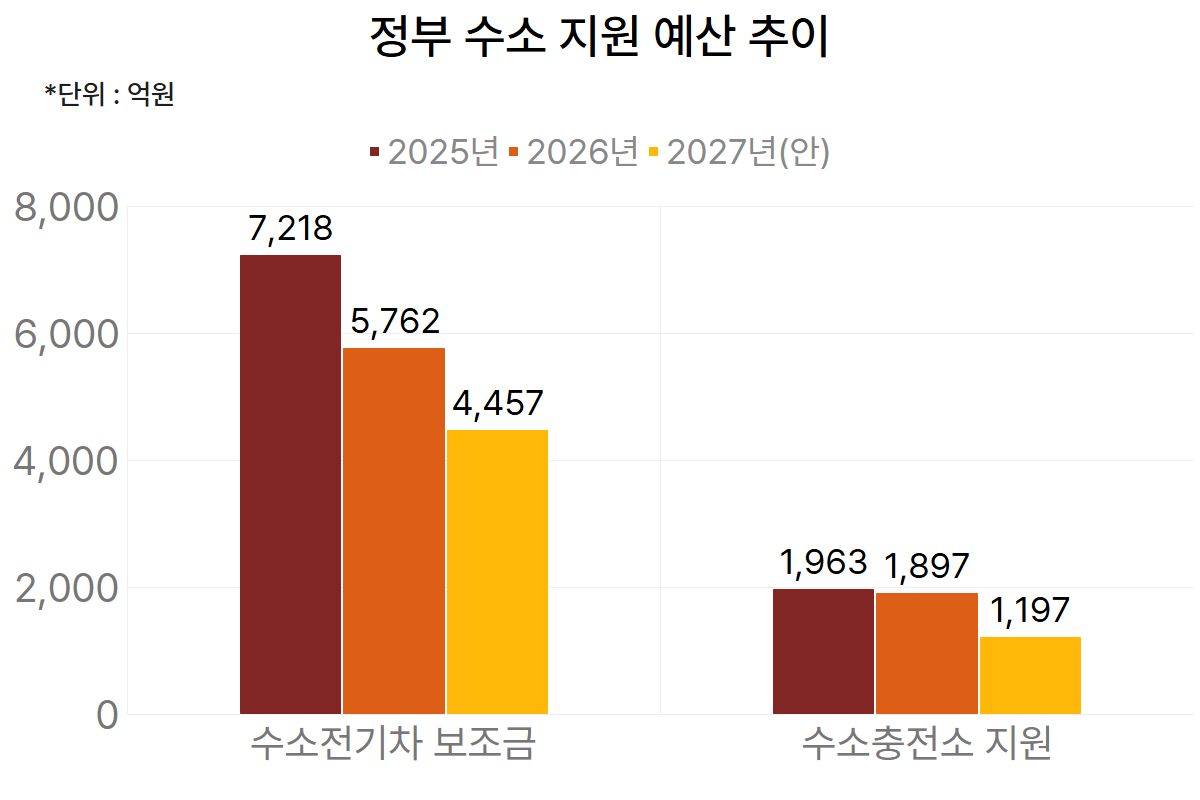
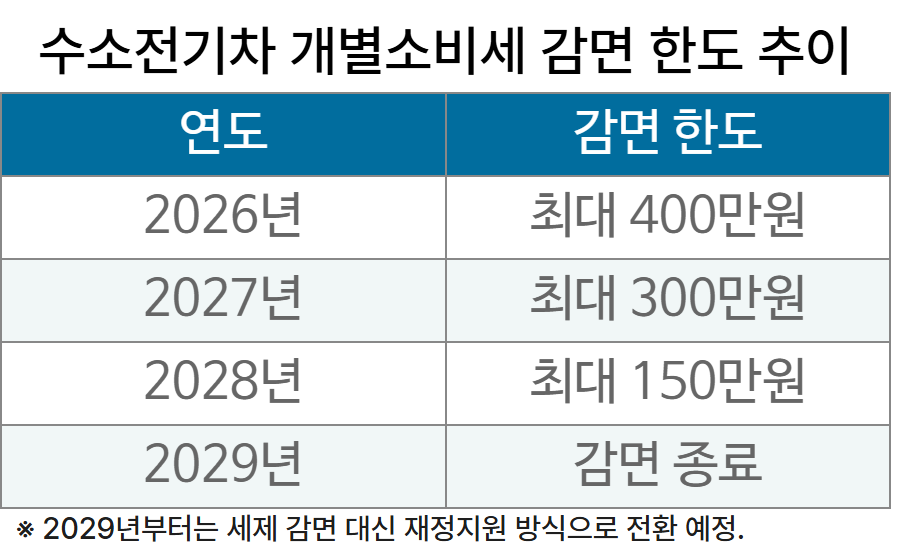
Korea cuts hydrogen budget despite 93% energy import dependence
Korea has the technology but must link supply chains and demand
'Long-term policy and predictable markets needed'
![The all-new Nexo and Universe hydrogen fuel cell bus on display at the Hydrogen Council CEO Summit in December 2025. [Hyundai Motor]](https://wimg.heraldcorp.com/news/cms/2026/09/28/news-p.v1.20251204.811ca74900194ebd8a49c7124c053d0b_P1.jpg)
As South Korea scales back hydrogen support, the global hydrogen industry is rapidly moving into the actual investment phase. Confirmed investment in clean hydrogen projects worldwide has nearly tripled in three years, and Japan is committing 15 trillion yen ($95.2 billion) to its hydrogen supply chain over the next 15 years. With energy security now rivaling carbon neutrality as a driving force, the race among nations to develop hydrogen is picking up speed again.
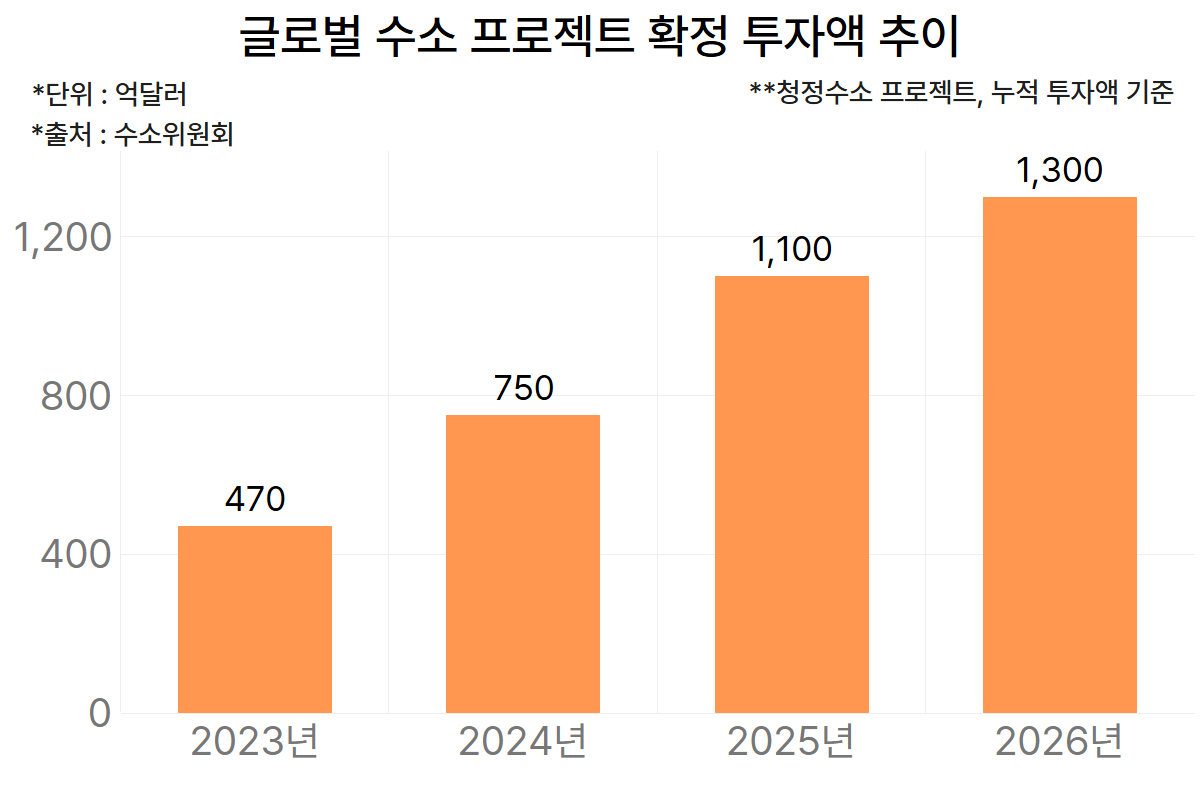
According to the Hydrogen Council's "Global Hydrogen Compass 2026" — a report released Monday drawing on major hydrogen and energy companies worldwide — cumulative confirmed investment in global clean hydrogen projects grew from $47 billion in 2023 to $75 billion in 2024, then $110 billion last year, reaching $130 billion this year. That represents roughly a 2.8-fold increase in just three years.
![Hyundai Motor's hydrogen fuel cell vehicle, the all-new Nexo. [Hyundai Motor Group]](https://wimg.heraldcorp.com/news/cms/2026/09/28/news-p.v1.20251028.65976679a91e4078bfdf1d1fafd89dfa_P1.jpg)
The growth is not limited to investment plans on paper. More than 570 projects have reached a final investment decision (FID) or entered construction or operation, with about 90 percent already under construction or in operation. Operational clean hydrogen production capacity also rose 70 percent in a single year to 1.7 million tons annually, and once facilities currently under construction come online, output is expected to reach about 3.8 million tons next year.
Investment that crossed the FID threshold in the past year alone totaled $30 billion. China and Europe led the way, accounting for more than 80 percent of the net increase.
Beyond carbon neutrality: energy security reshapes the case for hydrogen
The rationale driving hydrogen investment is also shifting. Where carbon neutrality and greenhouse gas reduction were once the primary justifications, a series of energy supply shocks has elevated hydrogen's importance as a tool for energy security and supply chain diversification. Unlike oil and natural gas, hydrogen can be produced domestically using renewable or nuclear power, and even when imported, procurement can be spread across multiple countries.
The International Energy Agency addressed hydrogen's energy security role in a dedicated section of its recent "Global Hydrogen Review 2026," citing the Middle East conflict as a catalyst. The agency said hydrogen production from renewable and other energy sources could help reduce dependence on fossil fuel imports and diversify supply chains concentrated in specific regions.
![[123RF]](https://wimg.heraldcorp.com/news/cms/2026/09/28/9/news-p.v1.20260105.29e9537c3aab44728fccf19f45b5c509_P1.jpg)
The IEA cautioned, however, that "current production levels are insufficient to offset immediate energy supply shocks," adding that realizing hydrogen's long-term potential "requires sustained policy support, long-term investment, and integration across the broader energy system."
A Hydrogen Council survey of about 70 global hydrogen industry executives found that 64 percent said recent energy market shocks had accelerated interest in clean hydrogen. Hydrogen is gaining particular traction as a long-term supply chain diversification tool in Europe, India and East Asia, where energy import dependence is high.
Japan's 50-year hydrogen push: a 15 trillion yen long-term bet
Japan, heavily dependent on energy imports, is moving in the opposite direction from South Korea — doubling down on signals that it will build a long-term market. With an energy self-sufficiency rate of just 13 to 15 percent, Japan has nurtured hydrogen technology continuously since the oil shocks of the 1970s, driven less by carbon neutrality goals than by a structural awareness that it cannot produce its own energy. The country has now moved beyond research and demonstration into a phase of creating real markets through long-term price support and policy finance.
Japan revised its Basic Hydrogen Strategy in 2023 and is pursuing 15 trillion yen in combined public and private investment over the next 15 years. It enacted the Hydrogen Society Promotion Act in 2024 and has launched a program using about 3 trillion yen ($19 billion) to cover the price gap between low-carbon hydrogen and ammonia and conventional fossil fuels for up to 15 years. The structure is designed to have the government absorb the cost premium of expensive hydrogen in the early market over an extended period, drawing in private investment.
![HTWO Energy Cheongju hydrogen refueling station. [Hyundai Motor Group]](https://wimg.heraldcorp.com/news/cms/2026/09/28/news-p.v1.20260709.d50b2f7c7ddf479da4071858ae6608ef_P1.jpg)
China is also expanding rapidly. According to China's National Energy Administration, hydrogen output last year exceeded 39 million tons, up 7.3 percent from the previous year. The number of hydrogen fuel cell vehicles reached about 32,000, a year-on-year increase of more than 30 percent, while hydrogen refueling stations surpassed 590. By June this year, the number of stations had grown to about 620. Renewable energy-based hydrogen production capacity has also expanded quickly, with operational and under-construction facilities combined exceeding 1.4 million tons per year.
The headline growth has not translated directly into clean hydrogen expansion, however. Of last year's total hydrogen output, 23 million tons came from coal and 7.9 million tons from natural gas, meaning fossil fuel-based hydrogen accounted for about 79 percent of production. Renewable energy-based hydrogen production capacity exceeded 250,000 tons per year — more than doubling in a single year — but the overall production mix remains dominated by fossil fuels. How quickly China can raise the share of clean hydrogen is the next key challenge.
The real game begins: predictable markets matter more than technology
Global investment is rising, but the hydrogen industry has not yet entered full-scale commercialization. According to the IEA, global hydrogen demand exceeded 100 million tons last year, yet production of "low-emission hydrogen" — with significantly reduced carbon output — fell short of 1 million tons, representing less than 1 percent of the total. This year is expected to be the first in which low-emission hydrogen's share exceeds 1 percent. Electrolyzer installations also doubled last year to surpass 4 gigawatts, though about 75 percent of new capacity is concentrated in China.
Viewed from another angle, the global hydrogen market is only now moving beyond research and demonstration into full-scale commercialization, meaning South Korea still has an opportunity to stake out an early position. With South Korea's energy import dependence reaching 92.9 percent last year, hydrogen matters not only for industrial competitiveness but also for energy security.
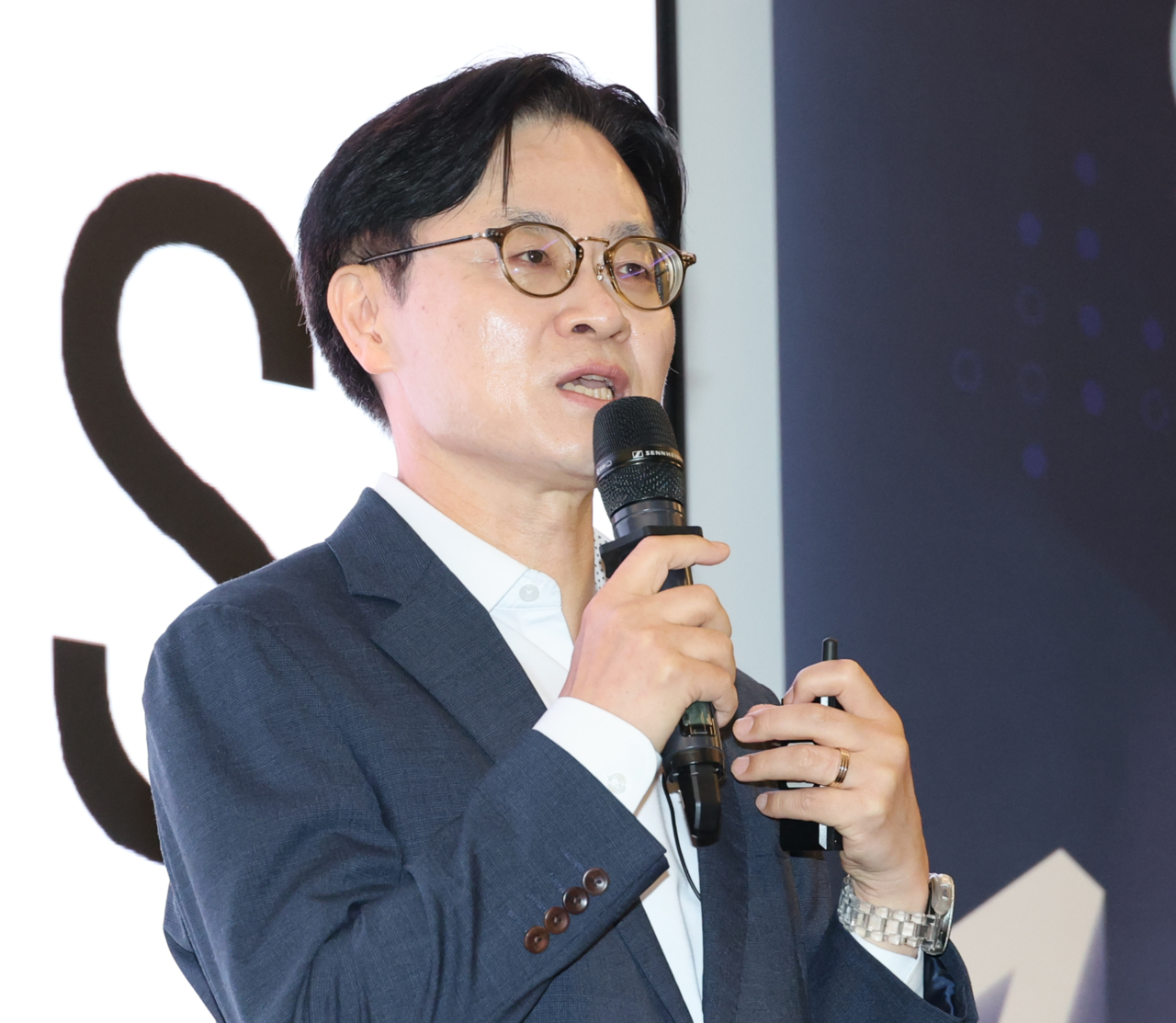
Kim Hee-sung, a senior researcher at the Posco Research Institute, said South Korea possesses world-class technology in fuel cells, water electrolysis and liquefied hydrogen carriers, but warned that "if these cannot be linked to supply chains, demand and financing, it will be difficult to translate them into industrial competitiveness." He recommended building an early market anchored around large-scale demand centers and using policy finance and upfront government investment to attract private capital.
![Minister of Climate, Environment and Energy Kim Sung-hwan, Hyundai Motor Group Vice Chairman Jang Jae-hoon and other attendees watch a demonstration of an automatic hydrogen vehicle charging robot at the World Hydrogen Expo 2025, held at KINTEX Hall 2 in Goyang, Gyeonggi Province, in December 2025. [Yonhap]](https://wimg.heraldcorp.com/news/cms/2026/09/28/news-p.v1.20251204.bac8c12e2b0f4b0c81e969363c569702_P1.jpg)
Hydrogen is not an industry where building production facilities alone creates a market. Storage and transport networks must be developed alongside power generation and industrial demand, and recouping investment takes a long time. The LNG market faced similar challenges in its early days, requiring enormous capital for production and transport infrastructure, but it grew by spreading investment risk through 20-to-25-year long-term purchase contracts and financial support.
For this reason, concerns are growing that even if the government restructures its support framework to improve clean hydrogen's environmental credentials and economic viability, a sharp near-term reduction in market scale or uncertainty about demand a few years out could dampen private investment. Sudden changes in government support or the size of the power generation market could destabilize not only national-level hydrogen supply chain plans but also the business strategies of companies that invested early in good faith.
![Exterior image of Hyundai Motor's new 2027 Xcient hydrogen fuel cell truck. [Hyundai Motor and Kia]](https://wimg.heraldcorp.com/news/cms/2026/09/28/rcv.YNA.20260507.PYH2026050704910001300_P1.jpg)
The Hydrogen Council said "clear and predictable policy is essential to creating commercially viable demand, driving final investment decisions and expanding the hydrogen ecosystem."
An industry official said that "while major countries are racing to capture the hydrogen market with government backing, South Korea cutting support alone means it will inevitably fall behind," adding that "if companies that invested based on the government's roadmap lose their bearings, the hydrogen industry foundation built up with great effort could be shaken along with them."
kwater@heraldcorp.com