
Experts propose tapping agricultural reservoirs and power dams to secure industrial water
Specialists urge higher water recycling rates and diversified sources
Han Jung-ae calls for shared water supply system serving both semiconductors and agriculture
Experts are calling for the multipurpose use of agricultural reservoirs, power generation dams and recycled wastewater to secure a stable industrial water supply for the Lee Jae Myung government's flagship "Three Major Mega-Projects for Korea's Great Leap Forward."
The National Assembly Water Forum said Tuesday it held a forum Monday at the National Assembly Members' Office Building on the theme of "How to Secure Semiconductor Industrial Water Supply for the Three Major Mega-Projects," discussing strategies for securing water resources for the semiconductor industry along with related legislative and policy tasks.
Kim Ho-eun, water use policy director at the Ministry of Climate, Environment and Energy, said stable water supply is a prerequisite for securing a decisive edge in national advanced strategic industries. "We will proactively secure industrial water sources before corporate demand arises and build a climate-resilient water supply chain through multilayered source development," Kim said.
Jeong Hye-ryeon, food policy director at the Ministry of Agriculture, Food and Rural Affairs, said the agricultural water supply system needs improvement. "We will complete the smart irrigation pipeline project, which can cut water loss by 30 to 40 percent, and the Yeongsan River alternative water purification facility without delay, so that farmers feel the water supply has improved compared to before," Jeong said.
Experts proposed multipurpose use of existing water resources and higher water recycling rates as key alternatives. Kim Du-il, president of the Korean Society of Water and Wastewater, suggested the Three Major Mega-Projects be designated as a national-level "smart water grid" pilot project integrating dams, water supply systems, recycled wastewater and agricultural water under unified management.
Kim Seong-jun, a professor at Konkuk University, said the in-house water recycling rates at Samsung Electronics and SK hynix stand at around 40 percent and need to be raised to at least 60 percent. Bae Young-dae, head of water resources planning at K-water, described the multipurpose use of agricultural reservoirs as "a realistic alternative that can secure reserve water resources while minimizing the social and environmental burden of building new dams."
Proposals for using power generation dams were also put forward. So Seung-young, head of hydropower operations at Korea Hydro & Nuclear Power, said stable water supply is "a key factor that will determine the success or failure of the Three Major Mega-Projects" and pledged to support government policy through the multipurpose use of power dams including Hwacheon Dam and Boseonggang Dam. Yoo Cheol-sang, president of the Korea Water Resources Association, said interconnection and integrated operation across dams is essential.
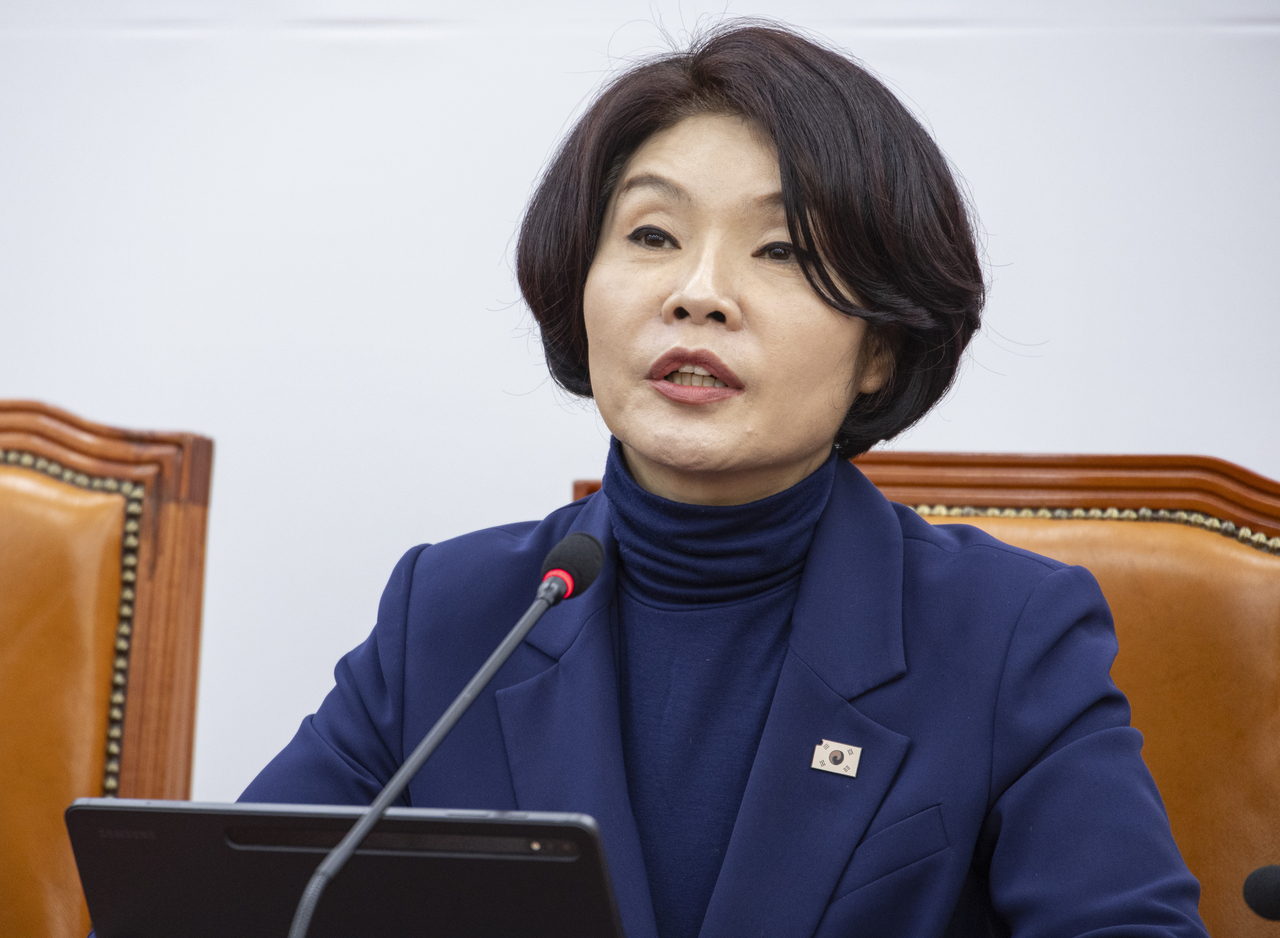
Han Jung-ae, a Democratic Party of Korea lawmaker who chairs the National Assembly Water Forum, said the time has come to think at the national level about how to make the best use of limited water resources. "We need to modernize the water supply system, which has been managed primarily around agriculture, and improve it so that the semiconductor industry and agriculture can use it together," Han said.
Han added that the forum heard a range of proposals, including expanding the use of treated wastewater for industrial purposes, modernizing aging agricultural water facilities, establishing a fair compensation system when agricultural water is used for multiple purposes, and installing underground dams. "The National Assembly Water Forum will provide legislative and institutional support for these measures," she said.
thanks@heraldcorp.com





