Future growth seen in heat pumps and data centers
26 years of management built on 'constant change'
M&A expanded group from special vehicles to HVAC
Differentiated products key to competing with China
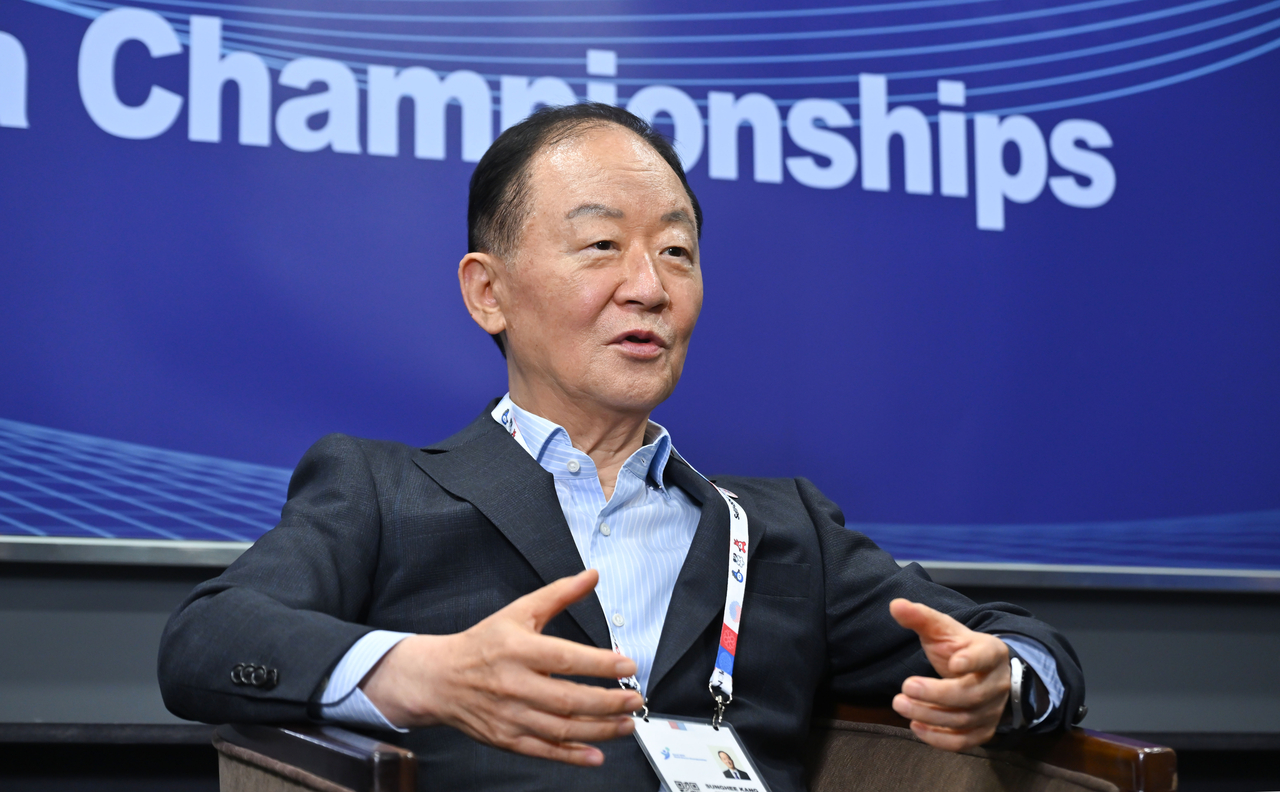
"When a market opens up, you can't wait — you have to chase it aggressively. You can't just stand there waiting for the train to come."
Autech Group Chairman Kang Sung-hee made the remarks in an interview Tuesday, stressing the need to get ahead of emerging markets. Since founding Autech in 2000 and steadily expanding from special-purpose vehicles into heating, ventilation and air conditioning and refrigeration, Kang said heat pumps are now the growth area he watches most closely. He is also investing heavily in the fast-growing data center cooling market, driven by the spread of AI.
'Heat pump market will explode' — data centers in the crosshairs
"Heat pump technology is critically important, and the market is going to grow enormously," Kang said.
A heat pump is a high-efficiency heating and cooling system that absorbs heat from outside air and uses it for space heating and hot water. As carbon neutrality policies spread worldwide and "heating electrification" — replacing fossil-fuel boilers with electric systems — gains momentum, the heat pump market is expanding rapidly. Autech Carrier's residential air-source heat pump was selected last month as an eligible product under the government's heating electrification support program.
Autech Carrier plans to push into the residential heat pump market while simultaneously expanding into commercial and industrial segments. On competition with large conglomerates such as Samsung Electronics, Kang said, "We just need to do what we do best," adding, "Particularly in the commercial and industrial space, we're actually better."
Behind Kang's confidence in the heat pump market is Autech's long track record in HVAC and its global technology network. Autech Carrier, built on a joint venture with global carrier Carrier, exchanges research and development resources and technical information through networks in the United States, China and Japan. The company can draw on technology and experience accumulated overseas and apply them to its domestic business, Kang said.

Kang described this network as "a hill to lean on." He said, "If you were developing everything from scratch, you'd need 500 engineers and a massive research center — but we have a hill to lean on. It's not that we lack technology; it means we can constantly absorb new technologies from the global market and always stay current."
The data center cooling market, expanding alongside the rise of AI, is another new growth pillar Autech Group is targeting. "The data center projects we are currently in contact with for orders alone amount to about 280 billion won ($204 million)," Kang said.
Autech Carrier recently won a contract to supply chillers — large industrial refrigeration units — for the first phase of a 48-megawatt data center project in the Greater Seoul area being developed by a Singapore-based global company. Kang cited Carrier's data center cooling experience built up in global markets and its domestic service network of more than 200 locations as key competitive strengths.
Kang also sees growth opportunities in energy efficiency for refrigeration and cold storage. "Air conditioners are used intensively for about three months a year, but refrigeration and cold-storage equipment runs 24 hours a day, 365 days a year," he said, underscoring the importance of energy savings. Autech Group affiliate CRK — formerly Autech Carrier Refrigeration — has developed refrigeration and cold-storage products that apply inverter technology to reduce power consumption. Anticipating tighter energy efficiency standards ahead, the company is building product competitiveness now to stay ahead of market shifts.
Kang forecast that this year's sales would grow by a single-digit percentage compared with last year. Revenue, which exceeded 1 trillion won in 2021 and 2022, dipped slightly afterward, but the operating loss narrowed sharply to 2.3 billion won last year from 14.9 billion won the year before. "Compared with last year, growth this year will be under 10 percent," he said. "We are currently going through the process of shifting from heat pumps and data centers, and from residential to commercial and industrial." He said the results of these new businesses would become more visible starting next year.
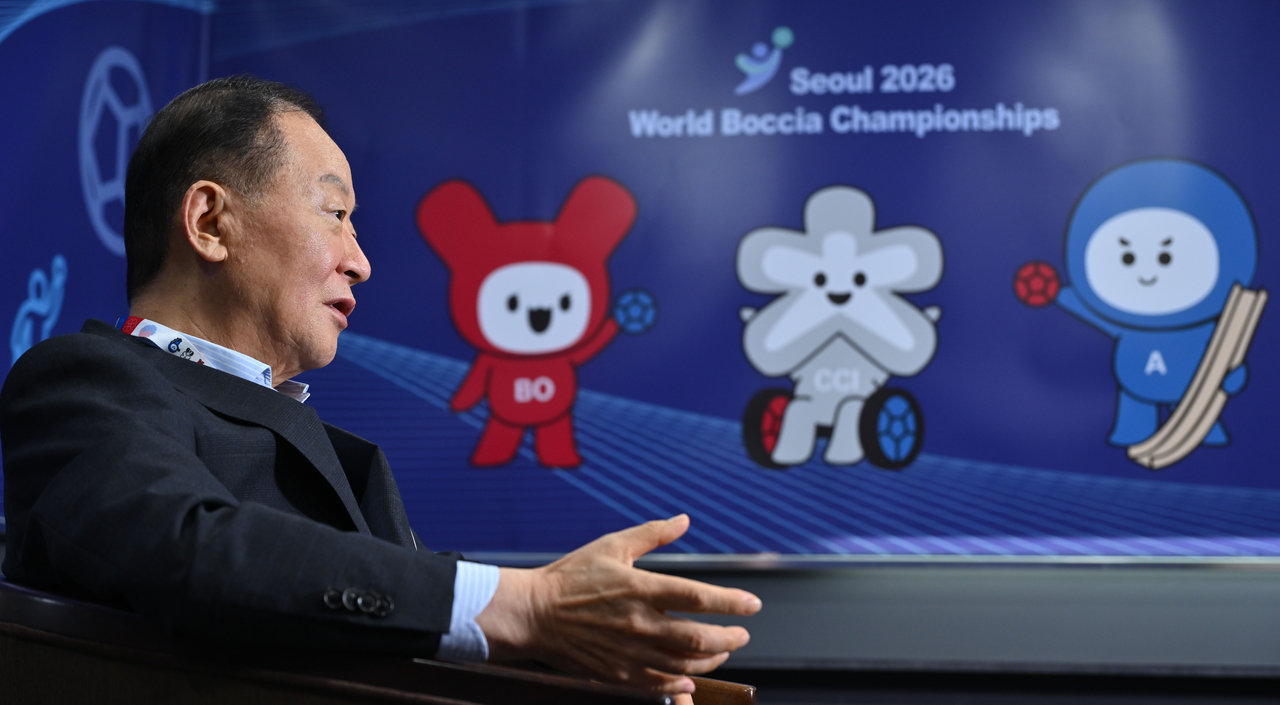
26 years of '30·30·30' management: 'You must keep changing to grow'
Kang, who founded Autech in 2000 and has built it over 26 years, says his core management philosophy is constant change. He sums it up in a formula he calls "30·30·30." "You need to grow 30 percent, change 30 percent of your product lineup," he said, "and to keep pace with how fast the world is changing, you also need to change 30 percent of your company's structure."
Mergers and acquisitions have been another pillar of Autech Group's expansion. The 2011 acquisition of Carrier Air Conditioning was a particular turning point that transformed the group's scale and business structure. Kang looks back on that decision as "an extremely important and bold call." He said acquiring established talent and technology through M&A — and absorbing a new organizational culture — can be a more efficient path to growth than building a new factory from the ground up.
"Through M&A you can bring in new people," Kang said. "A uniform, entrenched culture can lead to decline if you're not careful — mixing things together matters." He added, however, that M&A alone is not enough. "You have to acquire a good company and then grow it by applying your own thinking and capabilities," he said.
Alongside M&A, Kang also cited in-house development of new products as a growth strategy. The area he is watching most closely is special-purpose vehicles — the business where Autech began. He sees new market opportunities in specialized vehicles that have yet to take off in Korea, such as high-speed buses and tour buses for people with disabilities.
'Support vanishes when you outgrow SME status' — a ladder to growth is needed
The journey has not been without frustrations. Kang pointed to the sharp drop in financial and policy support that came when Autech graduated from small and medium-sized enterprise status to mid-tier company status. "Starting from a small and medium-sized enterprise with around 5 billion won in sales and growing to over 1 trillion won in revenue, the most painful moment was the instant we left SME status behind," he said.
As an SME, the company had access to a wide range of support through policy finance and public procurement. "When we were an SME, we received various benefits including interest rate support and preferential points in government procurement," Kang said. "But the moment we moved beyond SME status, all financial policy support and government policy support disappeared."
Having stepped outside the protective umbrella of SME support, the company still had to compete in the same market as large conglomerates — a significant burden. Growing into a mid-tier company does not instantly mean having the same competitive firepower as a large corporation.
Kang also noted that relatively few small businesses ever make it to mid-tier status in the first place. "The probability of an SME growing into a mid-tier company is about 0.6 percent," he said. Reaching mid-tier status is already difficult, and companies that manage it then face another wall: an abrupt cutoff of support. Financial and policy assistance from the SME years dries up just as the company must compete against much larger rivals, making sustained growth far from easy.
'Survive by beating China — make products only we can offer'
Kang identified competition from rapidly growing Chinese manufacturers as an unavoidable challenge. "Ultimately, surviving means overcoming China," he said. "If you're selling not just in Korea but to the whole world, you have to get past that."
Rather than competing with China on the same terms, Kang believes Korean companies must carve out differentiated territory of their own. He pointed to K-pop as an example, saying, "Outstanding pioneers created their own path."
In manufacturing, he cited diverse functionality and high efficiency as avenues for differentiation. Kang pointed to technologies such as simultaneously producing cold and hot water, or generating hot water at temperatures above conventional levels, as examples of how product competitiveness must be raised.
"You have to make products that people seek out specifically because they want yours," he said. "And you have to keep evolving."
Born in Seoul in 1955, Kang graduated from Hanyang University with a degree in history in 1981 and completed a graduate business program at Korea University in 1982, the same year he joined Seoul Chassis. He founded Autech in 2000, then acquired Carrier Air Conditioning and Carrier Refrigeration in 2011. He has served as chairman of the Korea Boccia Federation for People with Disabilities since 2015, chairman of the Korea Refrigeration and Air Conditioning Industry Association since 2020, and chairman of the Korea Federation of Mechanical Equipment Organizations since 2024.
boo@heraldcorp.com