
Massive floods devastate Nepal, leaving Korea-based Nepalis desperate for news of loved ones; memorial planned for Saturday in Dongdaemun
![Cleanup efforts continue along the Narayani River in Chitwan, Nepal, on Aug. 30, after catastrophic flooding struck the Himalayan border region between Nepal and China. [Yonhap]](https://wimg.heraldcorp.com/news/cms/2026/09/02/rcv.YNA.20260830.PYH2026083007250001300_P1.jpg)
"I keep wondering — are they alive but just unable to reach us? Are they hiding somewhere in the mountains? I'm worried that even if we can't find the people, we might not even be able to find the bodies."
Brum Snida, 33, a Nepali national living on Jeju Island, has spent days scouring every news update from his homeland. The massive floods in Nepal have severed contact between him and the children and relatives of his paternal uncles. The disaster struck the very area where Snida and his family once lived. "I heard that 55 people from just one village are unaccounted for," he said.
With communications cut off, he was unable to confirm for some time whether his parents were even alive. Only after a generator was brought in was he able to reach his father and learn that his parents were safe — but two of his nephews were injured and receiving treatment.
Snida, who had been helping out at his younger sibling's Nepali restaurant on Jeju, has been unable to go to work for days, still reeling from the shock. "Even if we went back right now, there's nothing we could do immediately," he said. "We're looking into pooling money with other Nepalis in Korea to send to the affected areas, or finding ways to join relief efforts directly. I hope the various support centers in Korea can help, even a little."
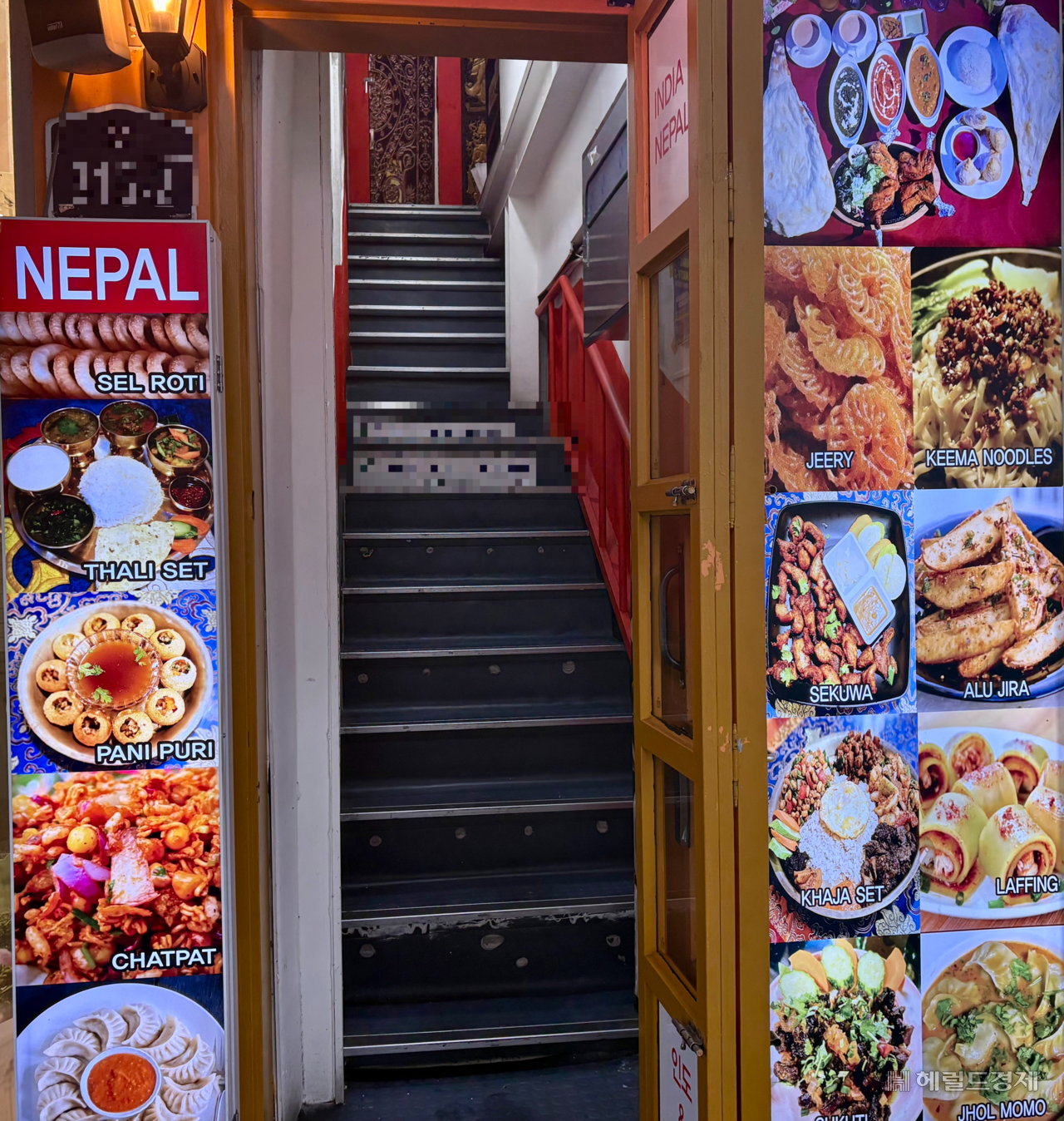
The devastation wrought by the floods in northern Nepal is shaking the daily lives of Nepalis living in Korea, thousands of kilometers away. On Monday afternoon, vendors along Nepal Food Street in Changsin-dong, Jongno-gu, Seoul, were glued to their phones and televisions, tracking rescue operations and hanging on every piece of news from home.
Shaping momo while waiting for word from home
Inside one traditional Nepali restaurant on the street that day, staff sat around a table shaping momo — a Nepali dumpling similar to Korean mandu — their hands moving without pause as they rolled out dough, cut it into rounds and filled each piece. Their hearts were heavy with news of the disaster back home, but life in Korea had to go on.
Manisha, 35, who has run the restaurant for 17 years since coming to Korea, said there was no time to simply sit and cry. "I'm waiting to hear what news comes from home, and I'm also taking part in donation drives," she said.
The Changsin-dong neighborhood, once dense with garment factories, gradually drew Nepali workers who had come to Korea seeking employment. Restaurants, grocery stores and travel agencies followed, and the area naturally became a gathering place for the Nepali community.
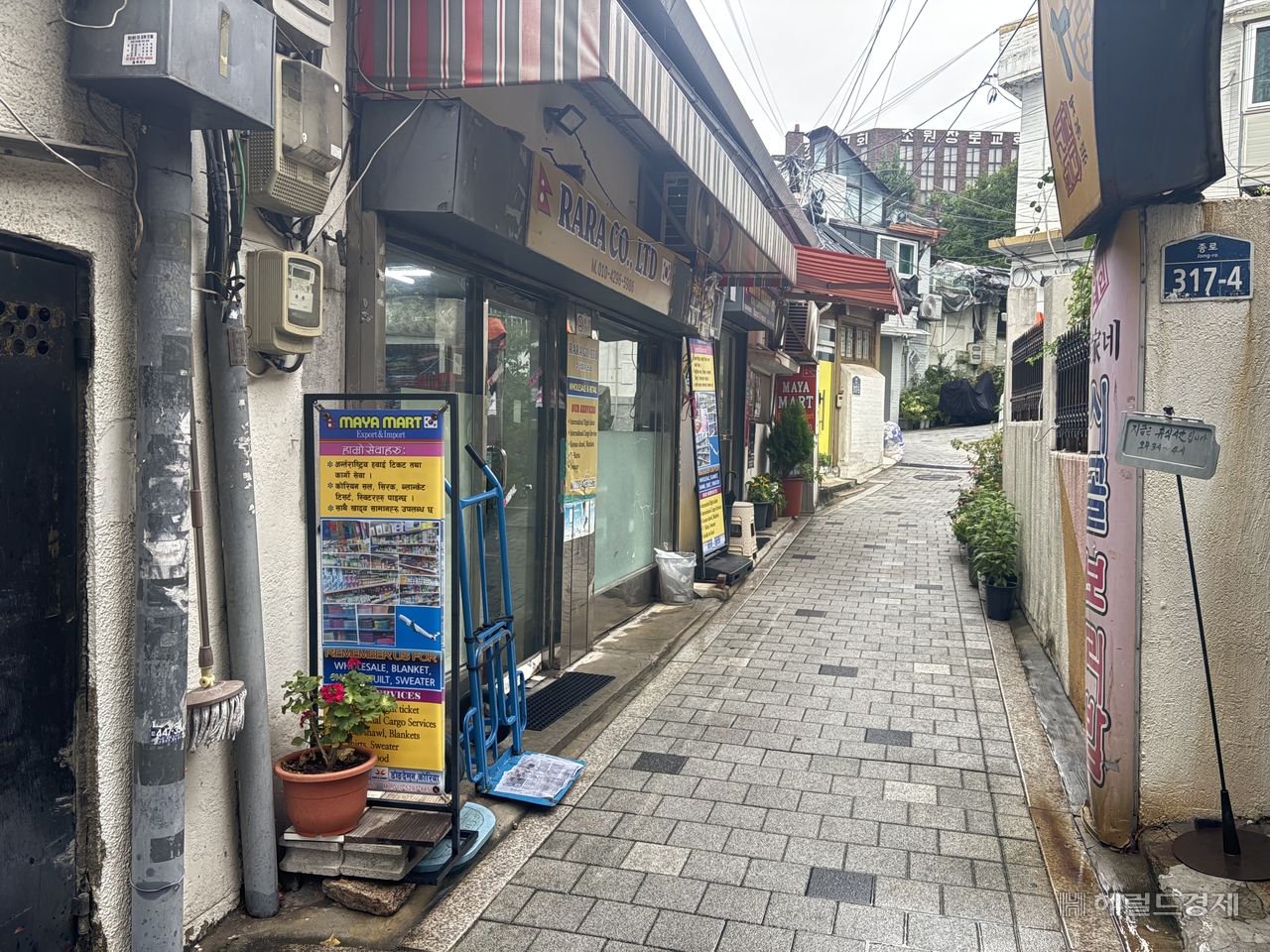
Bhim Gurung, 62, who runs a small retail shop on the street, was also constantly checking his phone for updates on the situation back home. Gurung came to Korea more than 20 years ago, worked in medical supplies wholesale in Sinseol-dong, and now sells Nepali spices and goods in Changsin-dong.
His hometown of Pokhara is far from the affected areas, but his attention was fixed entirely on the rescue operations. "Avalanches happen often in the Himalayan region, but this one was on a completely different scale," he said. "There's talk that workers drilled a tunnel and found yet another tunnel beneath it, with people possibly trapped inside."
Gurung said the Nepali government had opened a relief account and was appealing for donations, and that he and other Nepalis in Korea were contributing what they could.
For the Nepalis encountered along the street, this disaster was anything but distant. Even those who had not been directly affected were hearing about losses through relatives and acquaintances. Restaurant workers stole glances at local news broadcasts on television even as they served customers.
Holiday festival turned memorial: 'We still have to make a living'
The disaster's ripple effects have reached community events as well. A Nepali holiday gathering that had been planned is now set to become a memorial service for the victims.
Rai, 57, who has lived in Changsin-dong for 25 years, said a memorial service is planned for Saturday evening near Dongdaemun History and Culture Park, where members of the Nepali community will gather. "Everyone works on weekdays, so we decided to hold it on a weekend when people can come together," he said.
The Nepali Embassy in Seoul is also working to identify whether any Nepalis residing in Korea have family members among the victims. Rai said the embassy had asked people to reach out if they had affected family members, noting that it could help discuss options such as traveling back to Nepal or accessing support.
The disaster has also thinned the crowds on Nepal Food Street. "People here are in shock too — it feels like everyone has pulled back," Rai said. "Even wealthy countries struggle to manage disasters of this scale. For Nepal, with its high mountain terrain, it's even harder."
![A person weeps while holding a notice searching for a missing Nepali worker employed by Doosan Enerbility, outside the Bidur Trishuli military base in Nepal on Aug. 29. [Yonhap]](https://wimg.heraldcorp.com/news/cms/2026/09/02/rcv.YNA.20260830.PYH2026083000030001300_P1.jpg)
An employee at a traditional Nepali restaurant, who asked not to be named, said the grief was real but there was little choice but to keep going. "My heart aches, but right now I'm listening closely for any news from home and waiting for even a small piece of good news," the worker said. "We can't give up our livelihood — we have to keep the business running."
Concern for missing South Korean nationals also surfaced along Nepal Food Street. Lethi Hong, 43, who lives with her South Korean husband, said colleagues from his workplace had traveled to Nepal for a project and lost contact. "Some of the Doosan Enerbility employees he works with went to Nepal for a project and we haven't heard from them," she said. "We're still waiting for news about the missing workers."
jookapooka@heraldcorp.com





