IP agency hosts in-depth forum Wednesday, bringing together demand, supply, brokerage and investment players
Relevant agencies and experts are joining forces to find ways to revitalize intellectual property trading, a sector where South Korea has been falling behind both domestically and in global markets.
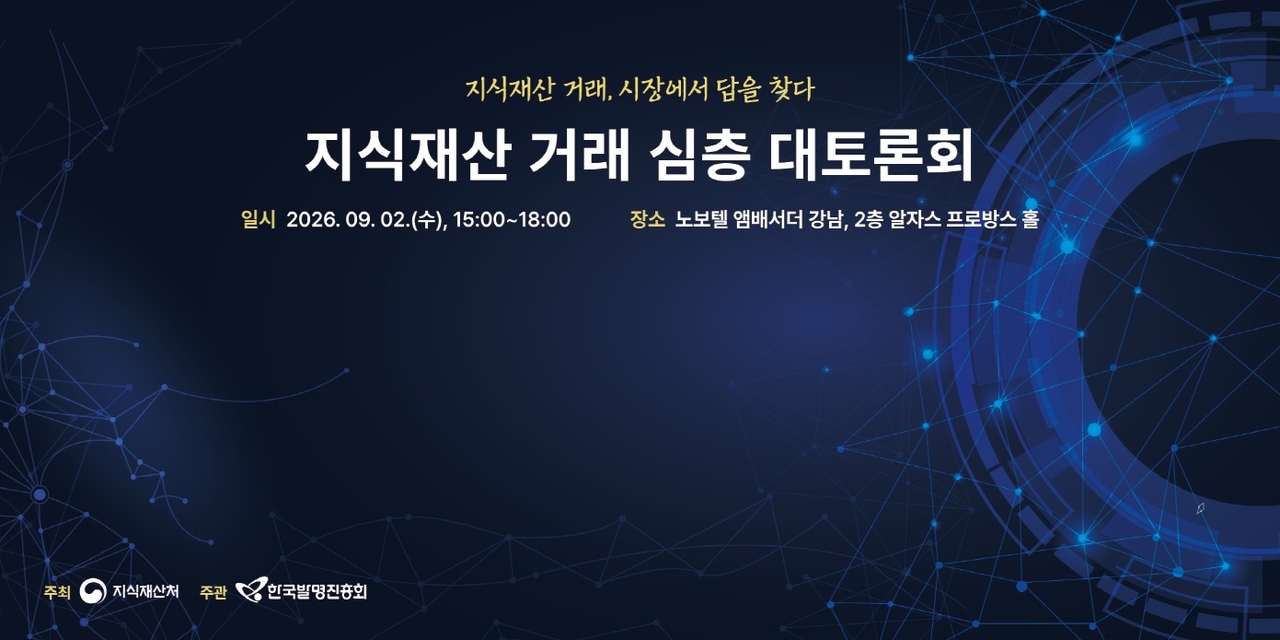
The Korea Intellectual Property Agency announced it will hold an "In-Depth Forum on Intellectual Property Trading" on Wednesday at Novotel Ambassador Gangnam in Gangnam-gu, Seoul. About 30 participants — representing demand-side companies, supply-side institutions such as universities and public research institutes, and brokerage and investment organizations — will gather to explore a shift toward a market- and user-centered IP paradigm.
South Korea has seen steady quantitative growth in IP trading in recent years. The number of public research institutions earning more than 1 billion won ($728,000) annually in technology licensing revenue has grown consistently, rising from 10 in 2007 to 53 in 2024. In the private sector, large-scale global deals by pharmaceutical and biotech companies drove technology exports in the pharmaceutical and biotech sector past 20 trillion won last year, a notable achievement.
Despite those gains, the IP trading market has continued to draw criticism for sluggish activity, with analysts pointing to a mismatch between the technologies on offer and what the market actually needs, a shortage of trading specialists, and regulatory barriers. In practice, technology licensing revenue at South Korean universities and public research institutes totaled 278 billion won in 2024 — less than what a single American university, the University of Pennsylvania, earned at 639.5 billion won. The agency has decided to fundamentally restructure the IP trading ecosystem around the market and convened the forum to hear directly from those on the ground.
The forum will take up the theme "Finding Answers in the Market for IP Trading," with in-depth discussions covering the streamlining of brokerage systems, the creation of high-quality IP based on market demand, the removal of unreasonable regulations, and the expansion of domestic and overseas trading markets. The agency said it plans to actively incorporate the difficulties and policy recommendations gathered at the forum into its future policy direction.
"For IP trading to translate into growth engines for companies and the creation of national wealth, we must thoroughly shift the paradigm toward the market and users," said Korea Intellectual Property Agency Commissioner Kim Yong-seon. "We will focus our policy efforts on building a foundation where private players can operate independently in the market, and on ensuring that our outstanding patents receive fair recognition on the global stage."
kwonhl@heraldcorp.com