
Prosecutors say Park Sung-joo blocked a joint investigation to conceal police failures; Park calls the indictment 'unreasonable'
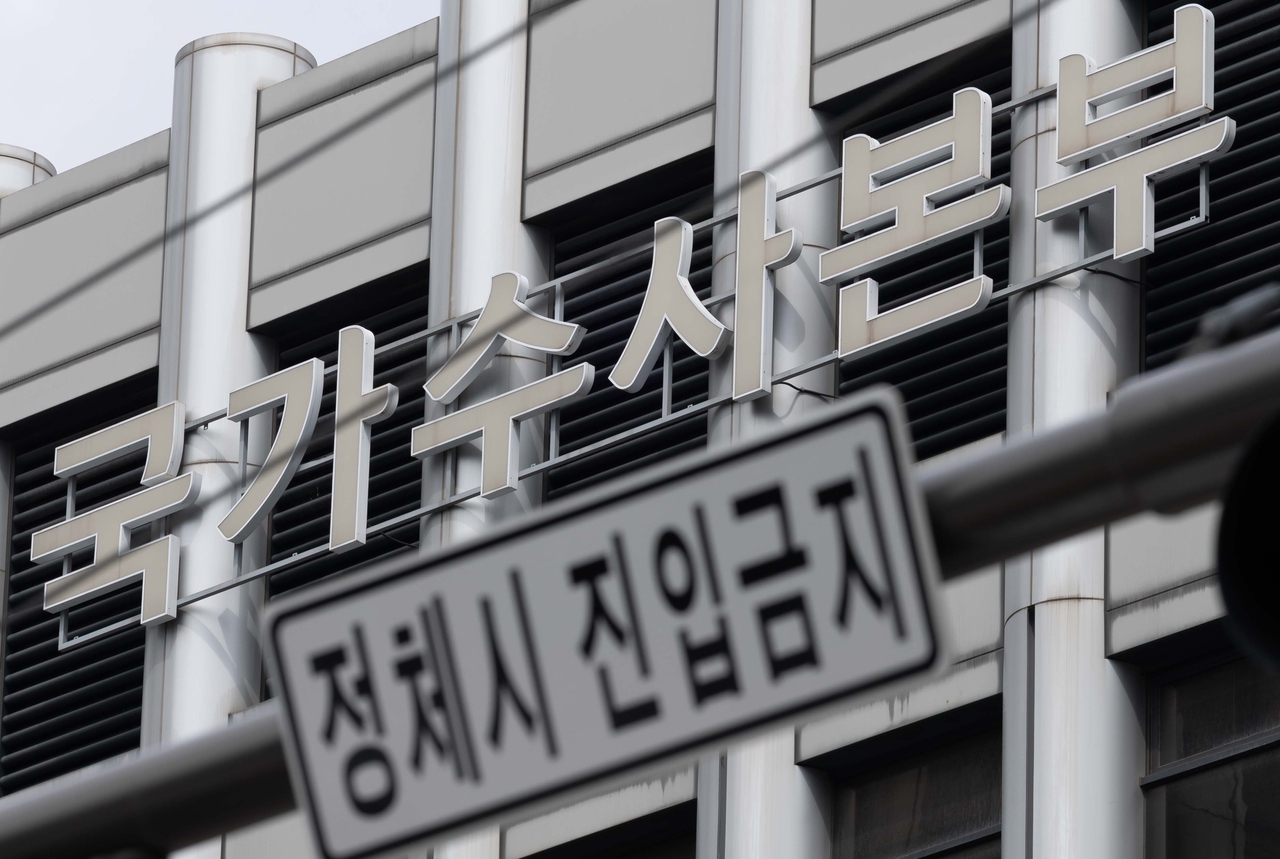
Prosecutors have indicted the former head of the National Investigation Headquarters on charges of abuse of authority for allegedly blocking a joint investigation into the cases of Jang Yun-gi, the man convicted of murdering a high school girl in Gwangju. Prosecutors determined that Park Sung-joo ordered investigators to keep a separate stalking and rape case against Jang quiet — telling them to handle "the rape case discreetly" — out of concern that linking the two cases would expose the police's inadequate response to the earlier stalking report and fuel public criticism that the murder could have been prevented.
The Gwangju District Prosecutors' Office special investigation team, led by senior prosecutor Kim Bong-jin, announced Wednesday that it had indicted Park without detention on charges of abuse of authority obstructing the exercise of rights. Three other officials were also indicted without detention on the same charges: Choi, a violent crimes section chief at the National Investigation Headquarters; Min, a former head of the headquarters' women and juvenile crimes investigation division; and Lee, a sexual violence crimes investigation section chief at the headquarters. All three remain active-duty police officers; Park retired at the mandatory retirement age in June.
According to prosecutors, Jang had been stalking a foreign female coworker since April 26 before breaking into her residence on May 3, where he sexually assaulted and confined her. The victim called 112 to report the stalking that same day, but responding officers closed the case at the scene without formally logging it. Two days later, on May 5, Jang was arrested on suspicion of kidnapping a high school girl on her way home, attempting to rape her, killing her with a weapon, and attempting to kill a male student who tried to intervene.
Investigators at the Gwangju Gwangsan Police Station determined that the two cases were connected in time and location, and that a joint investigation was necessary to establish Jang's motive for the murder. After interviewing the stalking and rape victim directly, the team reported to the National Investigation Headquarters through the Gwangju Metropolitan Police Agency that it intended to consolidate the two cases.
Prosecutors concluded that despite being informed of the need for a joint investigation, Park moved to block it out of concern that the police's inadequate handling of the original stalking report would become public. At the time, police were already under fire for their poor response to stalking-related killings, including the so-called Namyangju stalking murder case.
Prosecutors found that after receiving the report, Park instructed section chief Choi to keep "the rape case quiet," to ensure it was "not made public," and to investigate the murder and the stalking and rape cases "separately." Prosecutors concluded that Park feared that if the connection between the two cases became known, it would intensify criticism that the murder was one the police could have prevented had they responded properly to the initial stalking report.
Park's instructions were passed down through National Investigation Headquarters staff to frontline investigators. Choi relayed the order to Lee, who agreed and coordinated with Choi to keep the cases separate. Choi then conveyed the headquarters' policy prohibiting a joint investigation to the Gwangju Metropolitan Police Agency's violent crimes section chief.
The Gwangju agency and the Gwangsan station repeatedly pushed back, conveying their view that the cases should be investigated and referred to prosecutors together, but their requests were rejected, according to the investigation. Prosecutors found that Choi and Lee discussed ways to prevent the joint investigation even while acknowledging that separating the cases would make it difficult to explain Jang's motive for the killing.
When the Gwangju agency's violent crimes section chief insisted that consolidating the investigation and referral was unavoidable on investigative principle and asked that the matter be escalated back to Park, Choi refused, saying Park's directive was to keep the cases separate, prosecutors said. Choi also dismissed the Gwangsan station's push for a joint investigation as mere "case greed" and instructed the Gwangju agency's violent crimes section chief to tell the media that a joint investigation was already underway within the Gwangsan station, prosecutors said.
Ultimately, the Gwangsan station team was unable to consolidate the stalking and rape case with the murder case, and Jang was referred to prosecutors under detention on charges of "simple murder" only. The stalking and rape case was later transferred to prosecutors as a separate matter at a prosecutor's request, after the murder case had already been referred.
Prosecutors had been investigating the Gwangsan station chief and members of the Gwangsan investigation team on charges including leaking official secrets and destroying evidence related to the Jang case when they detected signs that the National Investigation Headquarters had issued directives. They subsequently conducted searches and seizures at the headquarters, the Gwangju agency and the Gwangsan station, and booked five people for investigation, including Park. A former criminal investigation bureau chief at the headquarters who was also booked was cleared of charges due to insufficient evidence, though prosecutors said they could not entirely rule out his involvement.
"The supervisory authority was exercised for the purpose of concealing the police organization's failures and avoiding public criticism and reprimand, blocking an investigation that was legitimately underway," prosecutors said, describing the case as one that "established an instance of improper interference by the top police investigative command in frontline investigations."
Park issued a statement Wednesday expressing strong objection to the indictment. He acknowledged "a heavy sense of responsibility" for "some inappropriate and insufficient aspects of the investigative process" and noted that "related investigations and trials are ongoing." But he said he "cannot and will not accept the unreasonable and logically incomprehensible claim" that he and the National Investigation Headquarters ordered the cases separated in order to conceal the police's poor response and avoid public criticism.
Park added that he "had no need and no reason to distort, downplay or issue improper instructions," and that his directions had been "entirely normal and routine — to investigate each function thoroughly so that there would be no suspicion surrounding the case, and to maintain security given the nature of the matter." He said he had "fully explained the circumstances during the Gwangju District Prosecutors' Office's investigation" and expressed "strong regret" that prosecutors had nonetheless decided to proceed with the indictment.
yg@heraldcorp.com





