China projected to hold 70% of gen-8.6 OLED capacity for mobile and PCs by 2028, against Korea's 30%; oversupply seen from 2029; Korean makers urged to defend high-end segment through technology edge
Chinese display makers are pouring cash earned from their LCD businesses into OLED, rapidly closing the gap with Korean rivals. By 2028, China's production capacity for gen-8.6 OLED panels — used in laptops and tablets — is expected to more than double Korea's, and oversupply is forecast to set in from 2029, intensifying the threat of a Chinese price offensive.
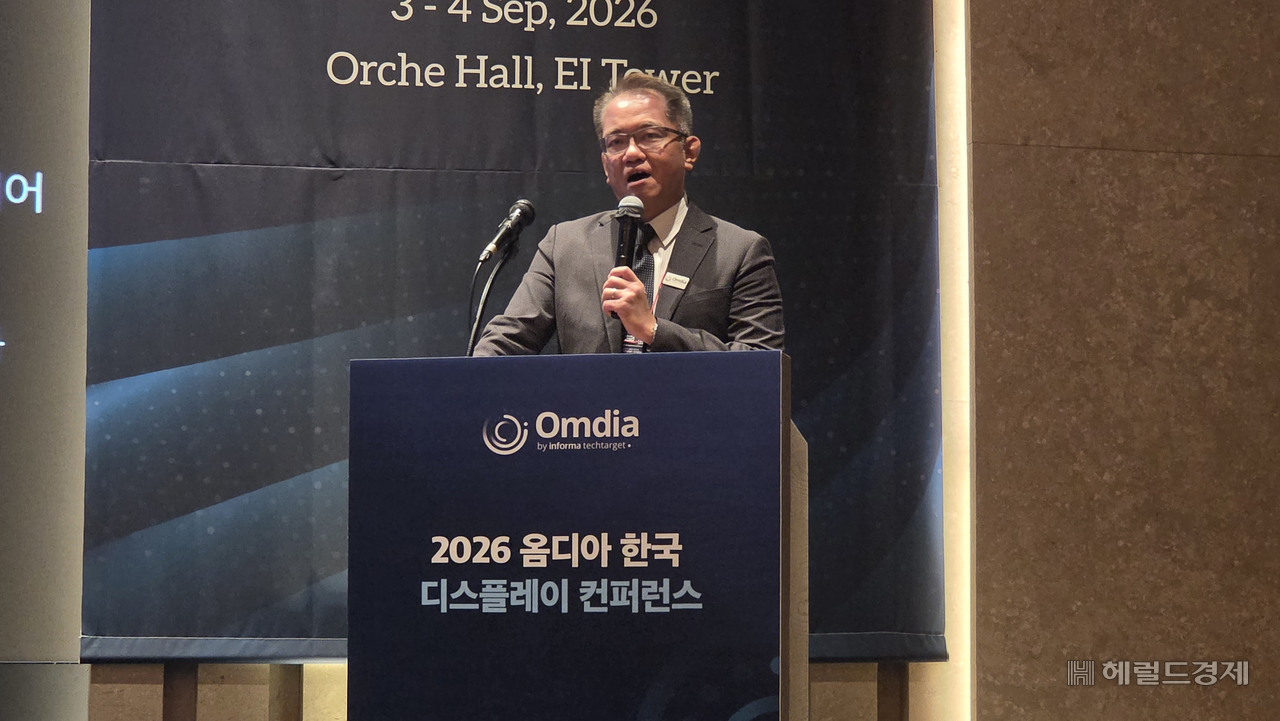
Park Jin-han, a director at Omdia, said Thursday at the Omdia Korea Display Conference 2026 at L Tower in Yangjae, Seoul, that Korea and China currently account for roughly 70 percent and 30 percent of total global OLED production capacity, respectively, but that the gap would narrow to 60-40 by 2031.
The reversal is happening fastest in IT OLED. Samsung Display is the only Korean company investing in a gen-8.6 OLED line domestically, while in China, BOE, Visionox and CSOT are simultaneously scaling up capacity.
Looking only at gen-8.6 OLED capacity for mobile devices and PCs — the fastest-growing segment — Omdia projects China will account for about 70 percent by 2028, with Korea at 30 percent. Korea retains an overall OLED lead, but China is on track to surpass it on a capacity basis in the market with the highest future growth potential.
The aggressive capacity expansion is likely to produce oversupply. Omdia's analysis shows that supply of OLED panels for laptops and tablets will outpace demand starting in 2029, when gen-8.6 output is measured against projected demand.
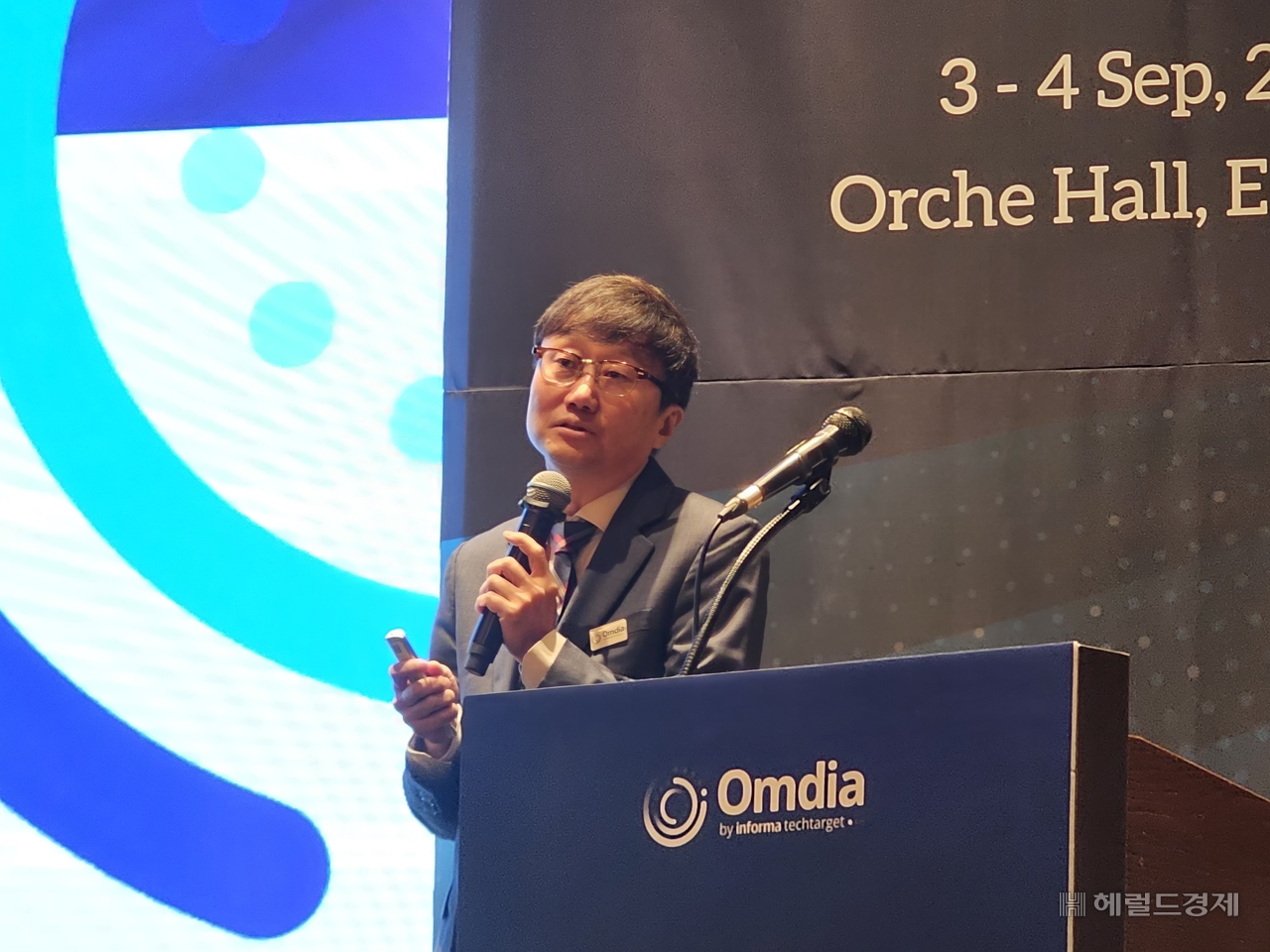
"There is a possibility that Chinese makers will repeat in the mobile and PC space what they did in the smartphone OLED market," Park said. "If they fail to secure enough high-end customers, we could see competition that involves drastically cutting panel prices."
LCD profits are what allow Chinese companies to keep investing in OLED even at a loss. David Hsieh, head of display research at Omdia's Taiwan office, said Chinese makers control about 80 percent of global LCD production capacity and are using the cash flow and profits from that business to grow their OLED operations.
Chinese companies have yet to turn a meaningful profit from OLED, however. According to Omdia, major players including BOE, CSOT and Tianma are using earnings from their LCD businesses to offset losses on the OLED side. LCD TV open-cell operations — which sell only the LCD panel cell — are estimated to generate double-digit operating profit margins on some products, aided by the end of depreciation cycles and adjustments to utilization rates.
For Korean makers, the decisive battleground is technology and high-end customers. Chinese companies have rapidly expanded their sixth-generation OLED capacity for smartphones, yet Samsung Display and LG Display still hold the upper hand in panels for Apple's iPhone. The ability to reliably supply the high-spec products Apple demands has served as a barrier to entry.
"Chinese makers have caught up quickly on capacity, but Korean companies still supply most of the high-margin, high-end products," Park said. "If the OLED transition expands further in iPads and MacBooks, a similar pattern to what we saw in smartphones could emerge."
Park added that Korean makers had managed to stay ahead of Chinese challengers pursuing them with bold investment, and consolidate their share in the high-end market. He stressed the importance of timely investment that pairs technological strength with capacity expansion.

go@heraldcorp.com