Analysis of National Assembly bill information system
Disciplinary motions in 22nd Assembly twice the pace of 20th, 21st
Both ruling and opposition parties wary of forming ethics panel
Experts doubt panel would work even if formed
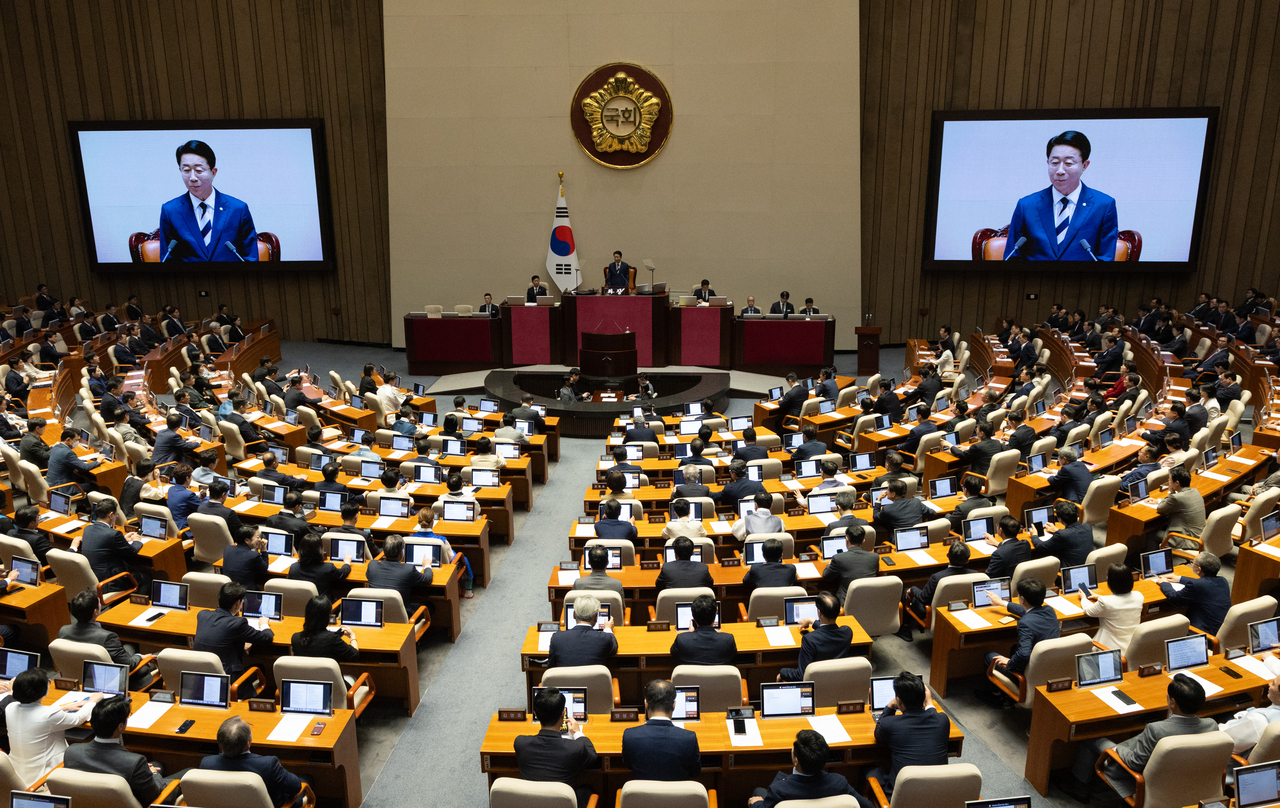
Disciplinary motions against lawmakers have piled up to 56 in the 22nd National Assembly — more than twice the pace seen at the same point in the 20th and 21st assemblies — fueling concerns that political disputes are increasingly being routed through quasi-judicial procedures rather than resolved through dialogue.
Experts question whether the Assembly's ethics subcommittee, which is responsible for reviewing such motions, would function effectively even if it were formed.
According to the National Assembly's bill information system, 56 disciplinary motions against lawmakers have been filed since the 22nd Assembly convened in 2024 through Saturday.
At the same point — two years and three months after the opening of each assembly — the 20th and 21st assemblies had seen 21 and 23 motions filed, respectively, roughly half the current figure.
The sharp increase has prompted analysis that disciplinary motions have been "distorted into a tool for political expression."
A senior People Power Party lawmaker told The Herald Business by phone that disciplinary motions "have become, in effect, a means of making a political statement rather than a tool for sanctions." The lawmaker added that the cost of filing one is essentially zero while the media exposure is guaranteed. "Motions are being filed over matters that would otherwise just warrant a press statement," the lawmaker said.
The lawmaker said the tendency to treat the other side as an enemy had grown stronger since the martial law declaration and subsequent impeachment, adding that "a structure of mutual hostage-taking is intensifying." The lawmaker also said that "politics has fallen too deeply into extreme partisan logic — it has become a political climate where you cannot survive without clear factional allegiance."
The Assembly's ethics special committee — a non-standing body that would handle the growing backlog of motions — has not been formed even once since the 22nd Assembly launched. Motions continue to accumulate with no panel in place to adjudicate them.
The need to make the ethics committee a standing body is not a new concern. A 2020 report by the National Assembly Research Service titled "The Need to Establish a Permanent Ethics Review Body for Lawmakers" stressed that "since lawmakers are expected to uphold stricter ethical and moral standards than ordinary public officials in the performance of their duties, the operation of a permanent ethics review body to oversee and evaluate them is critically important."
However, as motions pile up in the current assembly, the political burden on both the ruling and opposition parties of actually forming the ethics committee appears to be growing.
An official from the ruling Democratic Party of Korea said forming the ethics committee is necessary to deal with problematic lawmakers, but acknowledged the difficulty: "The more disciplinary cases accumulate, the more lawmakers on both sides become potential targets, making it harder to reach an agreement. The political burden only grows with time."
Another senior People Power Party lawmaker criticized the situation, saying, "Because nothing gets processed, there is no deterrent — and that makes it even easier to file more motions."
A first-term lawmaker from the same party said that because the ethics committee is composed of equal numbers from each party, "if it does convene, it could end up as a 'three for you, three for me' arrangement." The lawmaker added, "It is not easy to discipline fellow lawmakers, and even if the committee is formed, it tends not to function well."
Experts said the ethics committee would likely lack effectiveness even if formed. Lee Jae-muk, a professor of political science and diplomacy at Hankuk University of Foreign Studies, said the committee serves as a kind of internal judicial body within the Assembly, but that "the motions themselves are politically polarized and the enforcement mechanisms are weak, making it hard to function effectively." He noted that a significant number of past disciplinary motions had lapsed when the relevant assembly term expired.
Shin Yul, a professor of political science and diplomacy at Myongji University, said the ethics committee's dysfunction is not unique to this assembly. "Even if it is formed, I doubt the problem of members protecting their own will disappear," he said.
raining@heraldcorp.com