
The district wins the Prime Minister's Award at the Ministry of Environment's 2026 municipal food waste management evaluation; volume-based fee system has cut more than 30,700 tons and saved 69.1 billion won since 2013. Songpa-gu also debuts the nation's first 0.6-liter bag to improve urban livability and advance resource recycling.
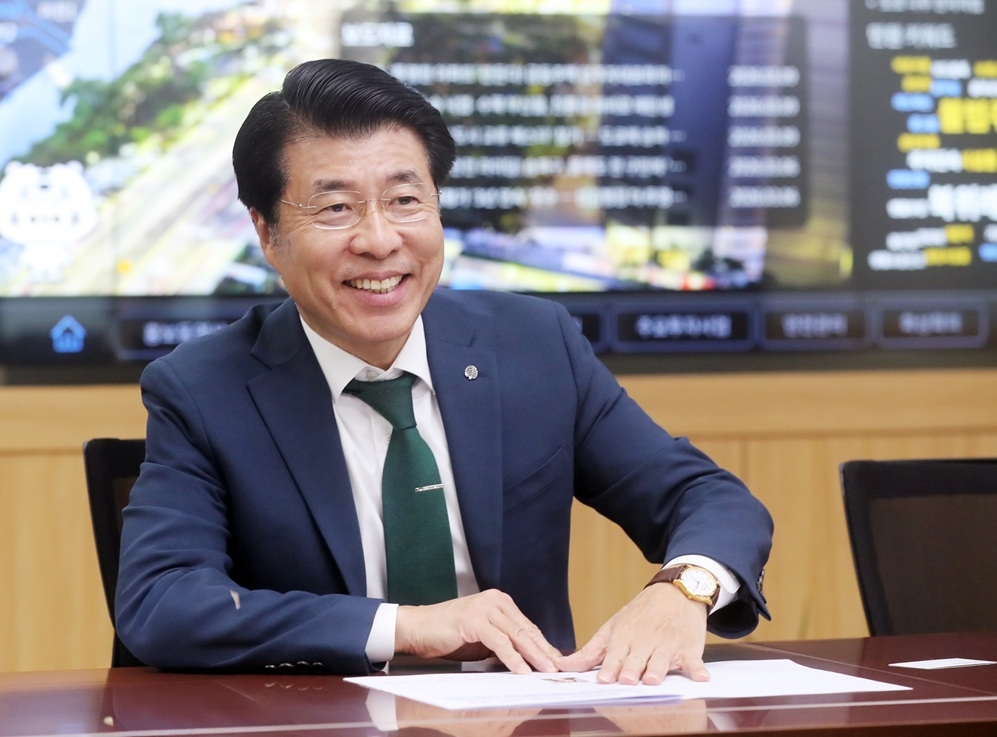
Songpa-gu has saved 69.1 billion won ($50.8 million) in waste management costs through an everyday "food waste diet," cementing its status as South Korea's leading resource-recycling district.
Songpa-gu announced Friday that it ranked first nationwide in the Ministry of Environment's "2026 Municipal Food Waste Management Performance Evaluation" at the 18th Resource Recycling Day ceremony hosted by the ministry, earning the top prize — a commendation from the Prime Minister.
The recognition follows a top prize in 2023 and a ministerial commendation in 2024, marking the district's third major honor and again confirming that its waste management policy stands at the national forefront.
The evaluation assessed municipalities across the country on waste reduction efforts, fee structures, collection and transport operations, treatment facility management, and leadership engagement, combining on-site inspections with panel reviews.
Since introducing a volume-based waste fee system in 2013, the district has pursued proactive reduction measures, cutting food waste output by more than 30,700 tons compared with 2012 levels — a saving that translates to well over 69.1 billion won in waste treatment costs.
The backbone of this achievement is a dense network of RFID-based food waste metering units. The district currently operates 3,488 units, covering 100 percent of apartment complexes and 30 percent of single-family homes. Particularly notable is a policy — unique among local governments — that mandates RFID installation at the building-permit stage for new construction, a measure that has drawn wide recognition.
Resident-centered services have also stood out. The nation's first 0.6-liter food waste volume-based bag, introduced to keep pace with the growing number of one- and two-person households, has drawn an enthusiastic response by eliminating summer odors and pest problems that had long inconvenienced residents.
The district also allocated 35 million won in local funds to subsidize the purchase of 250 compact home food waste reducers and enacted a related ordinance to ensure the program's continuity.
Alongside this, a waste reduction competition involving 115 apartment complexes in the district produced a voluntary reduction of 7.03 percent.
The district's eco-friendly processing system also drew high marks. Continuous monitoring and rigorous odor management at treatment facilities helped Songpa-gu achieve 180 percent of its 2025 biogas production target, demonstrating its readiness for the carbon-neutral era.
District Mayor Seo Gang-seok said the award "is a precious achievement made possible by residents who joined in everyday efforts to reduce food waste," adding that the district would "continue to discover and advance field-centered resource recycling policies closely tied to residents' daily lives, building Songpa into a sustainable, low-carbon, eco-friendly city."
seouldream01@heraldcorp.com





