Rapid financial transaction freeze for deceased to launch across all sectors Friday
Banks, card companies, brokerages among 4,890 institutions to participate
Mobile banking, ATM transactions also subject to immediate block
Funeral, medical costs exempt with documentation
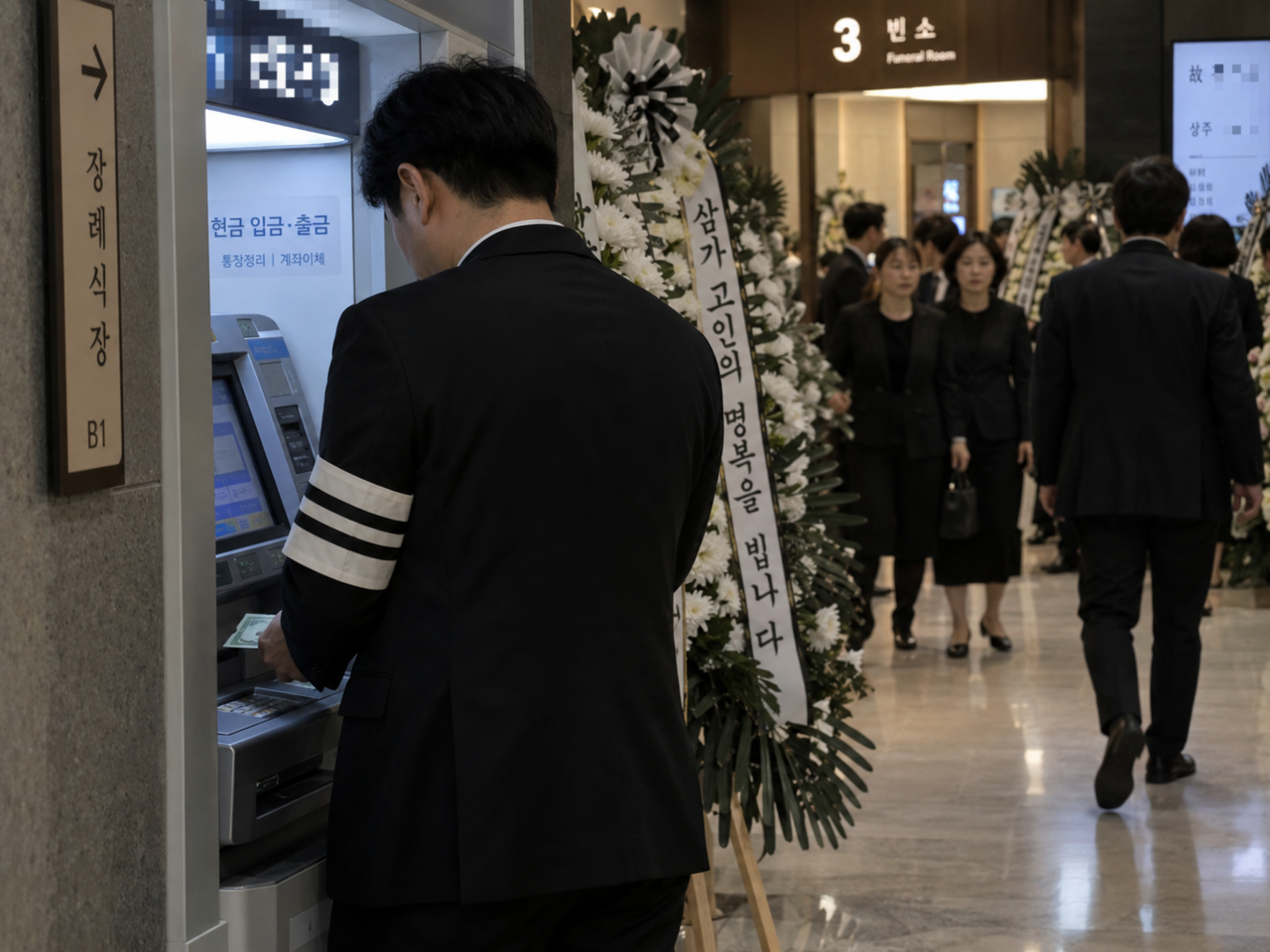
After his mother died in September 2022, a man identified only as A transferred 7.05 million won ($5,190) from her bank account into his own over about a month. Knowing her account password, he used a mobile banking app and ATMs to move the funds.
A claimed his mother had expressed her intention to give him the money while she was alive, but he had no evidence to support that. A court ultimately convicted him of computer fraud and embezzlement and fined him 3 million won.
In a separate case, a man identified as B accessed his late brother's bank app using the deceased's smartphone a week after his death. After completing a non-face-to-face identity verification process, B took out a 3 million won loan. The Seoul Eastern District Court convicted him of computer fraud in 2022 and sentenced him to four months in prison, suspended for one year.
Under a new system taking effect Friday, such transactions in a deceased person's name will be blocked starting the day after a death is registered. The overhaul replaces an existing system under which financial institutions could take up to two months to confirm a customer's death.
The Financial Services Commission, Ministry of Interior and Safety, Financial Supervisory Service and Korea Credit Information Services announced Friday that the system will go fully into operation on Sept. 11. Under the new arrangement, death registration data will be automatically relayed through Korea Credit Information Services to financial institutions — meaning bereaved families will no longer need to separately request a transaction freeze.
Under the previous system, some financial institutions received death records from the Ministry of Interior and Safety through Korea Credit Information Services only once a month. Because the legal deadline for registering a death is one month from the date of death, and it could take another month for that information to reach the financial sector, institutions could go up to two months without knowing a customer had died. Coverage was also limited to banks and a handful of other institutions.
Under the new system, the Ministry of Interior and Safety will transmit death records to Korea Credit Information Services once a day. Financial institutions will check that data whenever a transaction — in person or online — is initiated, and will immediately block it if the customer is confirmed to have died.
The scope of coverage will also expand significantly. All 4,890 financial institutions across the sector — including not only banks but also insurers, credit card companies, brokerages, savings banks and mutual finance cooperatives — will share death records. Blocked transactions will include deposit withdrawals, loan disbursements, credit card payments, share trades, and transactions conducted via mobile banking or ATMs.
Deposits into an account held in a deceased person's name will still be permitted, however. Blocking incoming transfers as well would force heirs to go through a separate debt-collection process to recover funds, regulators said.
For urgent expenses such as funeral costs or medical bills incurred before death, families can apply for an exemption. By submitting proof of family relationship and supporting cost documentation to their financial institution, they can arrange for the institution to pay the hospital, care facility or funeral home directly. Bereaved families will not be able to withdraw cash from the deceased's account at their own discretion.
Families should also be aware that automatic transfers set up in the deceased's name may be interrupted. They are advised to update payment accounts or methods in advance to ensure bills such as utilities and insurance premiums continue to be paid. The deceased's financial assets and liabilities can be checked through the Financial Supervisory Service's heir financial transaction inquiry service or the Ministry of Interior and Safety's one-stop inheritance support service.
The government will also tighten internal controls to prevent financial institutions from using death records for any purpose other than blocking transactions. Institutions will be required to maintain electronic logs of how death data is handled and which transactions are blocked, and the Financial Supervisory Service plans to conduct ongoing inspections of data management and internal control practices.
rim@heraldcorp.com