Seoul council member Yun Yu-jin calls for school planning that reflects student demand in Jamsil
In Jamsil, Songpa-gu, middle school students are packed into overcrowded classrooms while a nearby high school is shrinking due to declining enrollment — a stark contrast playing out in the same neighborhood. With large-scale reconstruction and redevelopment projects continuing in the area, school supply planning must account for future shifts in student population.
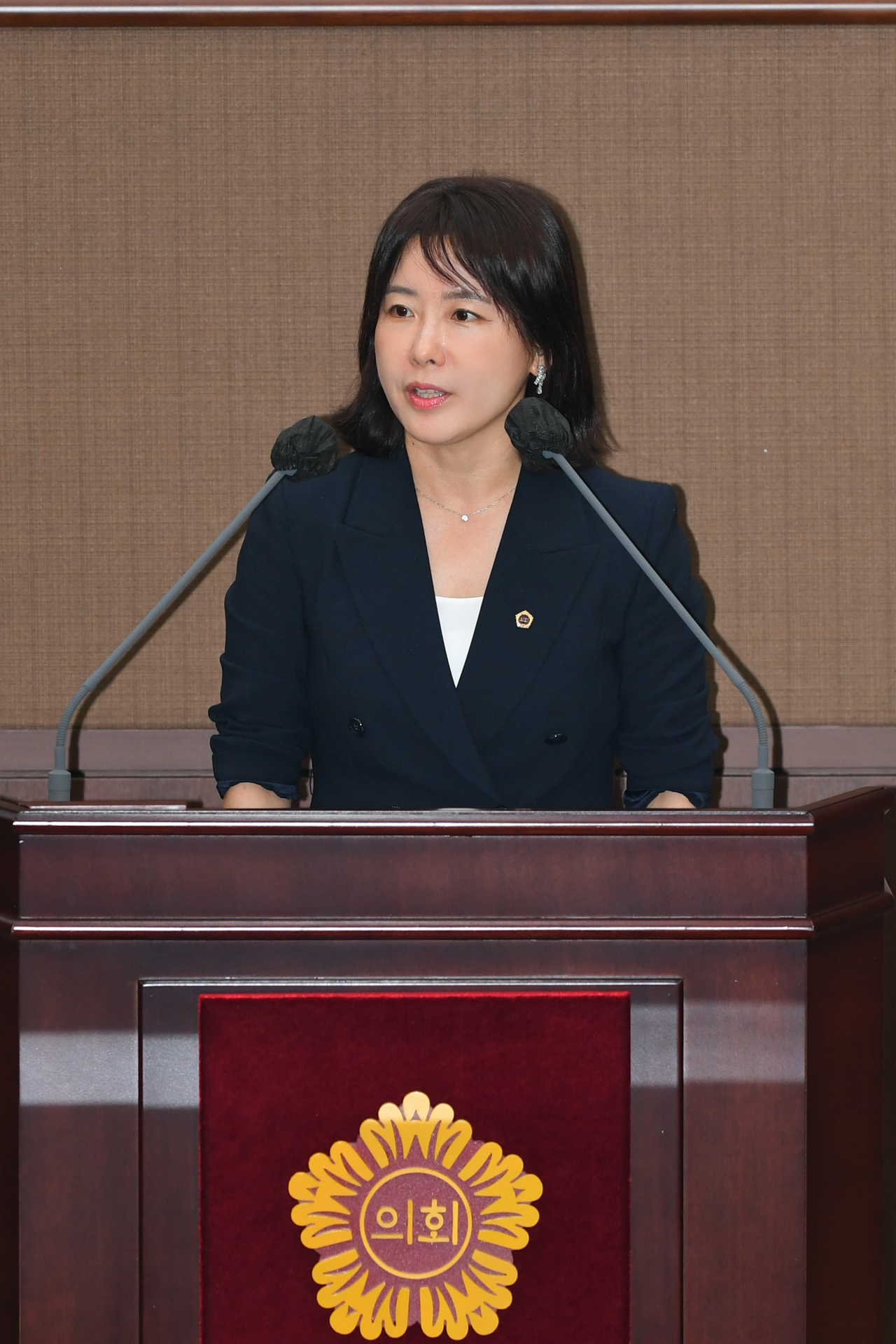
Yun Yu-jin, a People Power Party member of the Seoul Metropolitan Council's education committee representing Songpa District 1, raised the issue Thursday during a five-minute open address at the 339th extraordinary session plenary, calling on the Seoul Metropolitan Office of Education to take proactive steps to address overcrowding at Jamsil Middle School and a shortage of classes at Jamsil High School.
Jamsil-dong neighborhoods 4 and 6 together are served by just one middle school — Jamsil Middle School. This year, total enrollment stands at 1,210 students, with an average of 30.3 students per class. That figure exceeds both the Seoul citywide middle school average of 24.8 and the Songpa-gu average of 26.4, and surpasses the 28-student threshold that the Ministry of Education and the city education office use to define an overcrowded class.
The problem is not new. Data Yun obtained from the Seoul Metropolitan Office of Education show that the average number of students per class at Jamsil Middle School has exceeded 30 for five consecutive years, from 2022 through this year, peaking at 32.3 last year.
Yun said simply redistributing students to other schools — the solution the education office has proposed — cannot address the root cause. "Separating children from friends they have spent six years with, and asking parents to send their child to an unfamiliar neighborhood when there is a school five minutes away on foot, is not something parents can easily accept," she said, calling for substantive measures including the construction of new schools and the expansion of existing ones.
Yun also said factors driving student inflows show no sign of letting up. Following the completion and move-in of Jamsil Raemian I'Park and Jamsil Le'El, the reconstruction of Jamsil Jangmi complexes 1, 2 and 3 is set to add a net 1,583 households to the area. The reconstruction of Jamsil Jugong Complex 5 is also under way, which could push school demand even higher.
Yun said proactive planning is essential because expanding classroom capacity takes considerable time. The process requires securing a site, clearing internal and central investment reviews, and commissioning design work — meaning that waiting until students actually arrive before drawing up a response would make it nearly impossible to act in time.
Jamsil High School faces the opposite problem. The school has operated as an all-boys institution since opening in 1982, but a declining school-age population has cut the number of classes per grade from 16 to seven. The school converted to coeducation in March in hopes of boosting enrollment, but the result was four boys' classes and three girls' classes — leaving the total at the same seven classes as before.
Jamsil High School currently enrolls 538 students, fewer than nearby Yeongpa Girls' High School with 836, Jamshin High School with 682, and Yeongdong First High School with 921. Yun warned that if the school shrinks too far, students could be disadvantaged in accessing elective courses under the high school credit system and in how the five-tier internal grading system operates.
"The school even converted to coeducation to grow, yet the number of classes has not changed and the increase in students has been negligible," Yun said, calling for a review of options to add classes and build up student numbers.
Yun urged the Seoul Metropolitan Office of Education to carefully calculate the student generation rates associated with reconstruction and redevelopment projects and to draw up a comprehensive plan that includes classroom additions and new school construction. She also called for a simultaneous review of expanding the number of classes at Jamsil High School.
As the imbalance in school supply and demand in Jamsil deepens, the challenge now is how accurately authorities can forecast post-reconstruction student demand — and whether they can expand educational facilities in time to meet it.
7toy7@heraldcorp.com