Federal allocation rises 9.5% from this year, topping 7 trillion won for the first time
Key projects including Incheon e-eum and GTX-B reflected in government plan
GTX-B and Gyeyang-Ganghwa expressway funded well below city's requests
Seven projects left out entirely
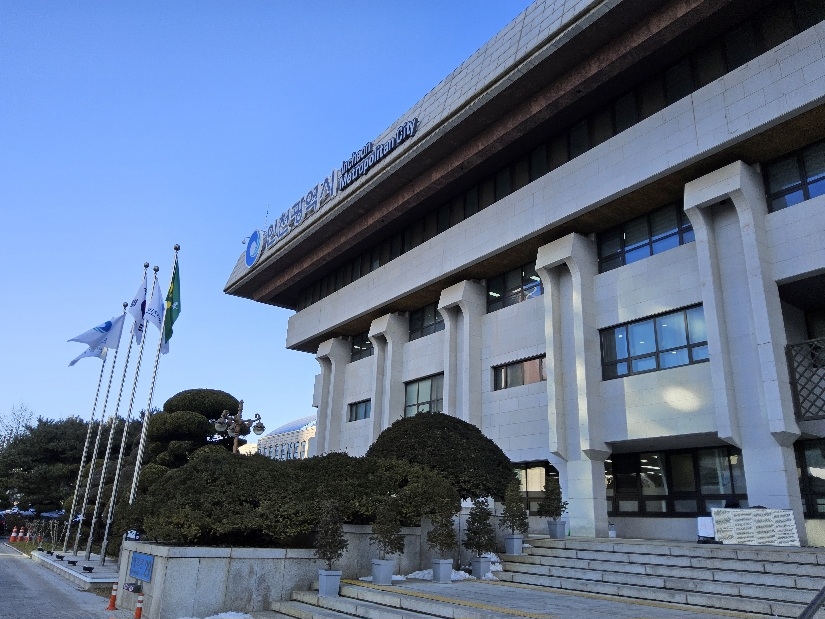
Incheon has secured more than 7 trillion won ($5.15 billion) in state funding in the government's draft budget for 2027 — the first time the city has crossed that threshold.
However, many of the key projects Incheon had originally requested were either cut or left out entirely, leaving the city with the task of pushing for additional increases during the National Assembly's budget review before final allocations are confirmed.
The city announced Monday that 7.09 trillion won in state funds earmarked for Incheon had been included in the government's 2027 draft budget.
The figure is 612.8 billion won, or 9.5 percent, more than the 6.47 trillion won secured this year, and also exceeds the city's own target of around 6.9 trillion won by 186.3 billion won.
National subsidy projects accounted for 6.01 trillion won, up 644.9 billion won from the previous year, while direct central government projects came to 1.07 trillion won, down 32.1 billion won from last year.
Incheon projects that once year-end ordinary local allocation tax payments are added, the total flow of state funds into the city will reach around 8 trillion won.
The government plan broadly reflects Mayor Park Chan-dae's "ABC+E" development strategy, along with transportation network expansion and welfare projects closely tied to residents' daily lives.
In the AI sector, 8.8 billion won was allocated for blockchain hub development and autonomous manufacturing system projects. Another 13.2 billion won was set aside for a global bio-campus education program in the biotech sector.
Regional content development in the culture and content sector received 2.5 billion won, while 126.3 billion won was earmarked for the rollout of electric and hydrogen vehicles in the energy sector.
Significant funding was also directed at transportation infrastructure. The government plan includes 366.2 billion won for construction of the GTX-B line, 203.2 billion won for the Gyeyang-Ganghwa expressway, 44 billion won for a new road connecting the Gongdan overpass to the West Incheon interchange, and 33 billion won for the Seochang-Ansan expressway.
In the welfare sector, 268.9 billion won was allocated for infant and toddler childcare support, 25.9 billion won for facilities serving people with disabilities, and 18.6 billion won for customized care services for the elderly.
Several projects that Mayor Park personally proposed to the government in July were also included — among them the remaining construction work on the KTX Incheon line, redevelopment of Piers 1 and 8 at Incheon Port's inner harbor, support for automotive cybersecurity certification, and a future connected-car support project. The plan also set aside 75 billion won for Incheon e-eum, the city's local currency program.
Yet the record-high figure alone is not cause for complacency.
GTX-B is a case in point: Incheon had requested 656.2 billion won, but the government plan includes only 366.2 billion won. The Gyeyang-Ganghwa expressway fared similarly, with the allocated 203 billion won falling 241 billion won short of the city's request of 444 billion won.
Support for the local currency program was also trimmed — the city had sought 101.4 billion won, but only 75 billion won was included, a shortfall of 26.4 billion won.
Seven of the major national subsidy projects Incheon had requested were dropped from the government plan altogether.
These include administrative restructuring, wide-area bus support, a quantum biotech project, a stadium scoreboard, an I-Food Park, a maritime and fisheries promotion agency, and an AI-based greenhouse gas reduction project.
Of the two natural disaster risk improvement projects — one in Wanggil and one at the Namdong No. 1 retention basin — only the Wanggil project was included.
As a result, the real battle for Incheon's state funding is expected to shift from the government's draft plan to the National Assembly's budget deliberations.
Starting this month, the city plans to hold budget policy consultations with the Democratic Party of Korea and work with local lawmakers and members of the National Assembly's Budget and Accounts Special Committee to push for increases to projects that were cut or excluded.
For large-scale transportation projects such as GTX-B and the Gyeyang-Ganghwa expressway in particular, the city intends to make a detailed case based on project progress and budget execution conditions to secure additional funding in the Assembly.
"Securing funding directly tied to residents' lives — including our core ABC+E strategy, transportation infrastructure and Incheon e-eum — is a meaningful achievement," Mayor Park said. "We will focus these resources on improving livelihoods and building the foundations for future growth."
gilbert@heraldcorp.com