Gangnam 3 districts' share of transactions collapses from 16.1% to 9.1%
Sub-900 million won deals account for 54.3% of total
Seoul apartment transactions tumble 60% as market turns to wait-and-see
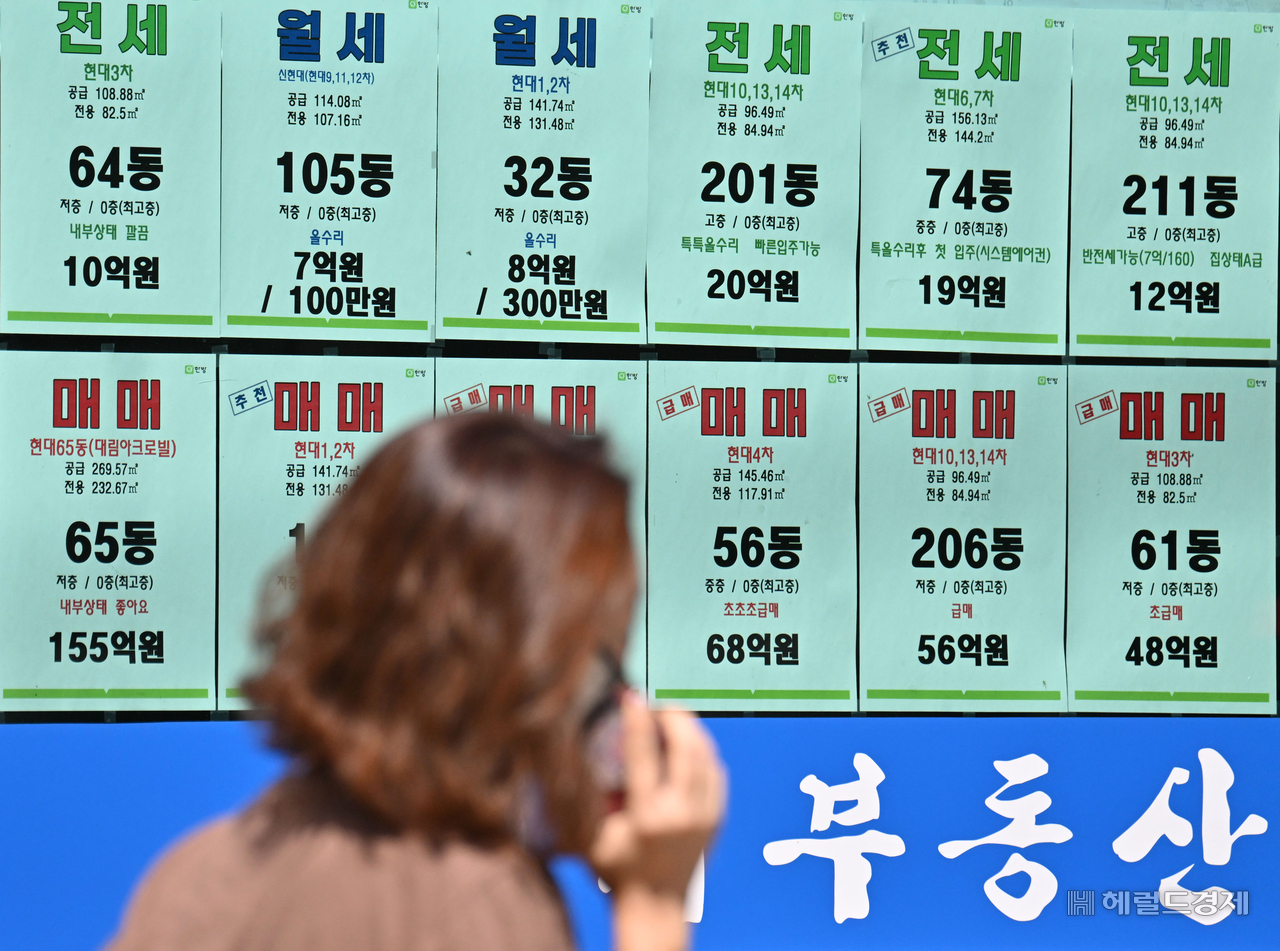
Seoul's apartment market has cooled sharply as the government's aggressive lending restrictions collide with uncertainty over tax reform, with transactions in the high-end "Gangnam 3 districts" — Gangnam, Seocho and Songpa — shrinking rapidly while demand shifts toward mid-to-lower-priced units below 900 million won ($664,000).
Ham Young-jin, head of Woori Bank's real estate research lab, compiled data from the Ministry of Land, Infrastructure and Transport's actual transaction price disclosure system and found that Seoul apartment sales in August stood at 2,322 transactions as of Friday — a 60% tumble from July's 5,800 deals within a single month.
Seoul apartment sales this year soared from 5,373 transactions in January to a peak of 8,962 in May, before retreating to around 5,000 in June (5,289) and July (5,800). The deadline for reporting August transactions runs through the end of September, but analysts say any recovery in deal volume is likely to remain limited.
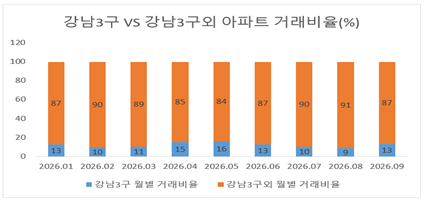
The pullback was especially pronounced in high-priced Gangnam apartments. The Gangnam 3 districts' share of total Seoul transactions climbed to 16.1% in May, but by August that figure had plunged to 9.1% — the lowest level of the year.
While the share of high-priced transactions has dropped sharply under tighter lending rules, demand has visibly concentrated in mid-to-lower-priced apartments below 900 million won. That segment's share of total transactions rose 7.2 percentage points — from 47.1% in January to 54.3% in August — crossing the majority threshold. Within that range, units priced between 300 million and 600 million won saw their share climb from 16.97% to 21.32%, while those below 300 million won rose from 3.39% to 5.12%.
By contrast, the 900 million to 1.5 billion won segment shrank from 31.8% to 26.6% over the same period, and the above-1.5 billion won tier also contracted, from 21.07% to 19.08%.
"Even in Gangnam, where reliance on loans is relatively low, wealthy asset holders have moved to the sidelines amid uncertainty over the final shape of the tax reform package," Ham said. He added that while the rush toward premium addresses in the Gangnam 3 districts has paused under heavier taxation and lending curbs, non-Gangnam areas — where lease price instability is more acute, supply is tighter and loan availability is somewhat better — have seen a comparatively smaller drop in demand.
Ham also cautioned that the gap between buyers' and sellers' price expectations will not narrow easily, given that the final form of the real estate tax overhaul has yet to be confirmed and the possibility of further benchmark interest rate increases remains on the table. "The direction of Seoul's apartment market appears to hinge on when the tax reform package is finalized, whether the monetary authorities raise rates again, and how severe the instability in the autumn housing lease market turns out to be," he said.

hss@heraldcorp.com