Interview with Kang Shin-gu, director of the National Arboretum of Sejong
Arboretum to open national land greening memorial hall next year
'Hangul Run' race to make site a dynamic public hub
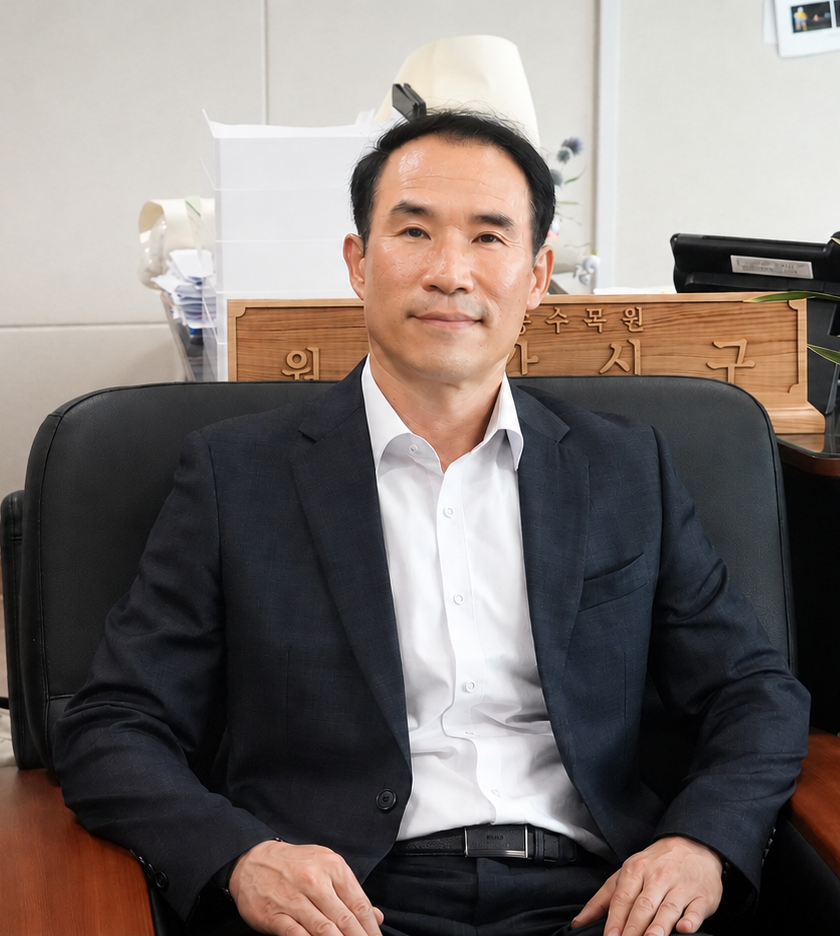
"As Sejong City's emergence as a fully functioning administrative capital becomes more tangible, the arboretum's role and standing will be elevated to a truly national level."
Kang Shin-gu, director of the National Arboretum of Sejong, laid out his long-term vision for the site in a recent interview with The Herald Business. The arboretum, which benefits from its proximity to the city center, became the only fee-charging arboretum in the country to surpass 1 million visitors in a single year last year. This year, the target is more than 1.2 million.
Behind that growth is a visitor base drawn evenly from across the country. The arboretum's ability to attract people well beyond its immediate region is its core competitive strength.
"At 70-odd public and private arboretums nationwide, 80 to 90 percent of visitors come from nearby municipalities," Kang said. "At Sejong, local residents account for only about 20 percent of visitors, while those from Daejeon and the Chungcheong region make up 30 to 40 percent, and visitors from Greater Seoul, the Yeongnam and Honam regions, and other areas account for more than 40 percent."
In line with Sejong City's growing stature as the national administrative capital, Kang plans to accelerate improvements to visitor convenience and infrastructure. The arboretum will introduce an electric tram for internal circulation to keep pace with rising visitor numbers, and it plans to open a large indoor multipurpose cultural venue — a national land greening memorial hall — next year to accommodate major events and MICE (meetings, incentives, conventions and exhibitions) demand.
"We plan to introduce a circulating tram — one that requires a stable base of more than 1 million annual visitors to operate — to significantly improve the visitor experience," Kang said. "Centered on the national land greening memorial hall, which will open next year, we will build out spaces for large group events and business meetings, making the arboretum a multipurpose platform where business and culture come together."
The arboretum is also moving away from passive sightseeing toward more active public engagement. A prime example is the inclusion of an arboretum course for the first time in the 2026 Hangul Run, scheduled for Oct. 9. The idea is to let participants observe plant ecosystems while running, turning the arboretum into a dynamic, open space for exchange.
Kang envisions the arboretum becoming an established destination for extended public tourism by deepening ties with Sejong City's cultural and historical assets and local institutions.
"We will use the advantage of being an urban national arboretum to spread an ecological culture where nature and people coexist," he said. "Rather than a one-time visit, we want to create a place worth returning to with each season and each new program — and serve as a key driver of longer stays in Sejong City."
terry@heraldcorp.com