Public Prosecution Office to launch Oct. 2; prosecutor general post vacant for over a year
Nomination committee yet to be formed; appointment before opening seen as unlikely
Transitional provision exists, but acting minister setup complicates selection
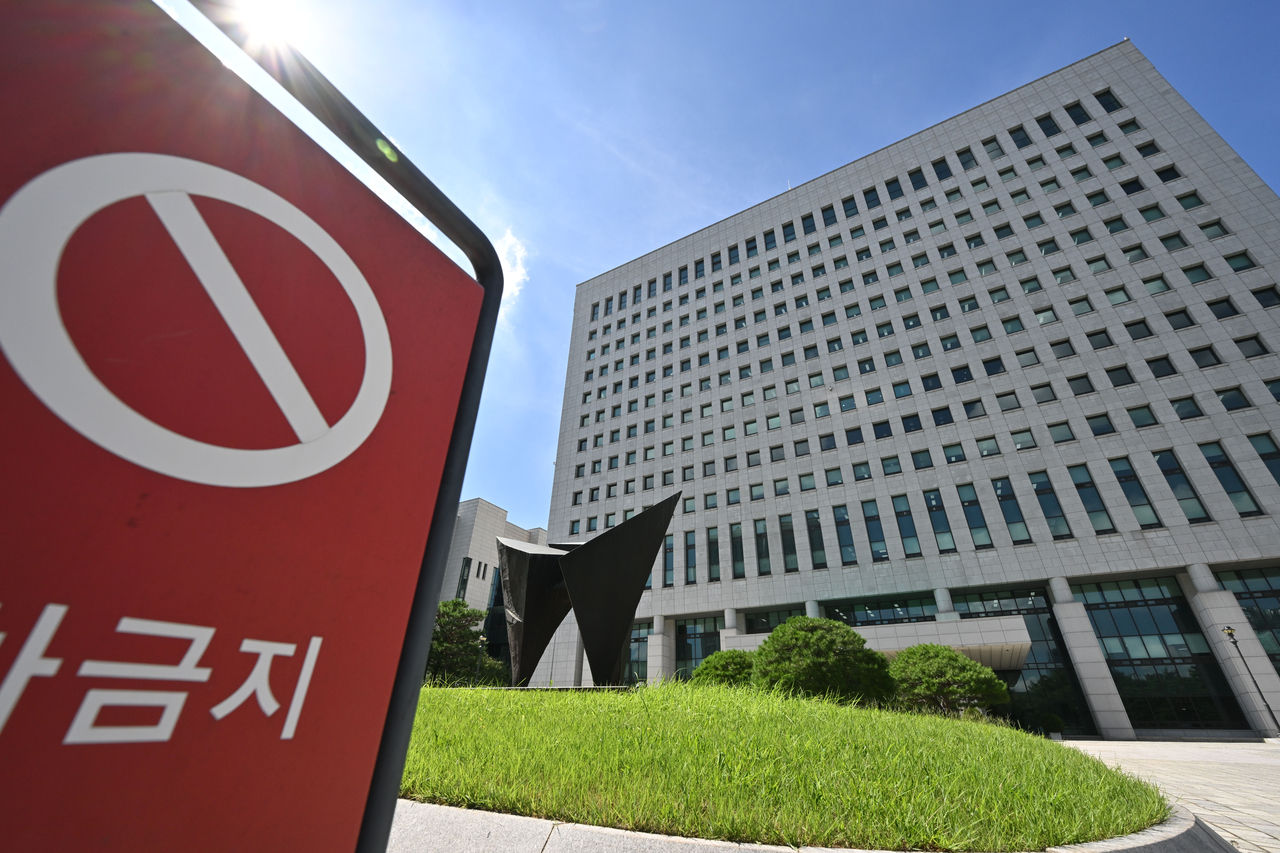
With less than a month to go before the prosecutors' office is abolished and the Public Prosecution Office opens, the search for a leader to head the new agency remains completely stalled. The prosecutor general post — the top position in the current prosecutorial system — has been vacant for more than a year, and the Justice Ministry seat responsible for nominating a candidate is also empty, raising the prospect that the Public Prosecution Office could open without anyone at the helm. Even if Justice Minister nominee Kim Seung-won — who is at the center of various controversies, including allegations of lobbying for new drug approval — is confirmed and appointed immediately after his National Assembly confirmation hearing, analysts say there is simply not enough time to fill the prosecutor general post before the new office opens.
According to legal circles Tuesday, the Public Prosecution Office is set to officially launch on Oct. 2, when the Public Prosecution Office Act takes effect. The act designates the head of the new agency by the same title used in the current system — prosecutor general — a choice shaped during the legislative process by the fact that the title appears in the Constitution and is listed among matters subject to Cabinet deliberation under the heading "appointment of the prosecutor general."
The top post at the prosecutors' office, which will close a 78-year chapter in October, has been vacant for more than a year. It has been empty since former Prosecutor General Shim Woo-jung stepped down in July last year, and even the acting arrangement has not been functioning normally. Koo Ja-hyun, the acting prosecutor general and deputy chief of the Supreme Prosecutors' Office, submitted his resignation after the National Assembly passed an amendment to the Code of Criminal Procedure on July 31 abolishing prosecutors' supplementary investigative powers, and he has since stepped back from his duties. His resignation has yet to be accepted, so he technically remains acting prosecutor general, but the organization is now effectively being run by Park Gyu-hyung, head of the Supreme Prosecutors' Office's planning and coordination division. As the prosecutors' office nears the end of its history, a so-called "acting-acting" arrangement — with both the prosecutor general and the acting prosecutor general absent — has been in place for more than a month.
The selection process for a leader of the incoming Public Prosecution Office is showing no signs of progress. With Oct. 2 just over three weeks away, observers say the agency will almost certainly have to open without a head, given the time constraints.
The rules governing the appointment of the Public Prosecution Office's prosecutor general closely mirror those of the current system, starting with the formation of a candidate recommendation committee. Under the Public Prosecution Office Act, the Justice Ministry is required to form a prosecutor general candidate recommendation committee. The committee consists of nine members including a chairperson and must recommend at least three candidates to the justice minister. The minister then nominates one of those candidates to the president, and the nominee undergoes a National Assembly confirmation hearing before being formally appointed by the president.
Compounding the problem is the fact that the justice minister post is also currently vacant. Since former Minister Jeong Seong-ho stepped down last month, the Justice Ministry has been operating under Vice Minister Lee Jin-su as acting minister.
The National Assembly confirmation hearing for Kim, nominated to succeed Jeong, is scheduled for Sept. 15. Even assuming Kim is appointed immediately after the hearing, that would leave barely two weeks before the Public Prosecution Office opens — an interval in which the recommendation committee would need to be formed, candidates recommended, a nomination submitted by the minister, and a National Assembly confirmation hearing completed. Finishing all of that within two weeks is effectively impossible.
Forming the recommendation committee alone would take considerable time. Under the current prosecutorial system, the standard process has involved a seven-day public nomination period for candidates, followed by roughly 20 days between the justice minister's nomination and the confirmation hearing. A sitting prosecutor said the committee's formation has never gone unannounced in the past. "There has never been a case where the recommendation committee was assembled without a public announcement," the prosecutor said. "Right now, we know nothing. Realistically, an appointment before the opening is not going to happen."
The Public Prosecution Office Act does include a transitional provision in its supplementary clauses allowing the appointment process to begin before the law takes effect. However, there are concerns that the provision would be difficult to use while the justice minister post is vacant. Legally, the acting justice minister can submit a nomination, but analysts say there are reservations about conducting the selection of the inaugural prosecutor general under an acting arrangement. Adding to the complexity, Vice Minister Lee — who is currently serving as acting minister — is himself being mentioned as a potential candidate for the post. Within prosecutorial circles, Lee is being discussed alongside Seoul Central District Prosecutors' Office chief Park Cheol-woo, Seoul Southern District Prosecutors' Office chief Seong Sang-heon and Daejeon High Prosecutors' Office chief Kim Tae-hun.
Because the Public Prosecution Office is a newly created organization born out of a sweeping overhaul of the criminal justice system, stabilizing its command structure from the outset is considered a critical task. There are particular concerns that if the leadership vacuum extends beyond the opening — with organizational restructuring, personnel redeployment, and the revision of various directives and guidelines still under way — internal confusion within the agency could deepen significantly.
Meanwhile, Kim Ji-yong, former chief of the Chuncheon District Prosecutors' Office, has been nominated as the inaugural head of the Serious Crimes Investigation Office, which will take over major criminal investigation functions from the prosecutors' office. Interior and Safety Minister Yun Ho-jung announced Monday at Government Complex Seoul that he had decided to nominate Kim from among the candidates recommended by the agency's head recommendation committee. The presidential office then announced that President Lee Jae Myung, who is on a state visit to France, had decided to formally designate Kim as the nominee for inaugural head of the Serious Crimes Investigation Office.
The Serious Crimes Investigation Office launch preparatory team said Monday that an office for Kim had been set up at the Seoul Records and Information Center of the National Archives of Korea at Gwanghwamun Platinum in Jongno-gu, Seoul, and that a confirmation hearing preparation team had been established at the Changseong-dong annex of Government Complex Seoul.
yg@heraldcorp.com