AfD wins 43.8% of vote in Saxony-Anhalt state election
Vote share doubles from previous election as 'firewall' strategy falters
Party pledges mass deportations of refugees, separate schooling for children
Elections loom in France, Italy and other EU states amid far-right surge fears
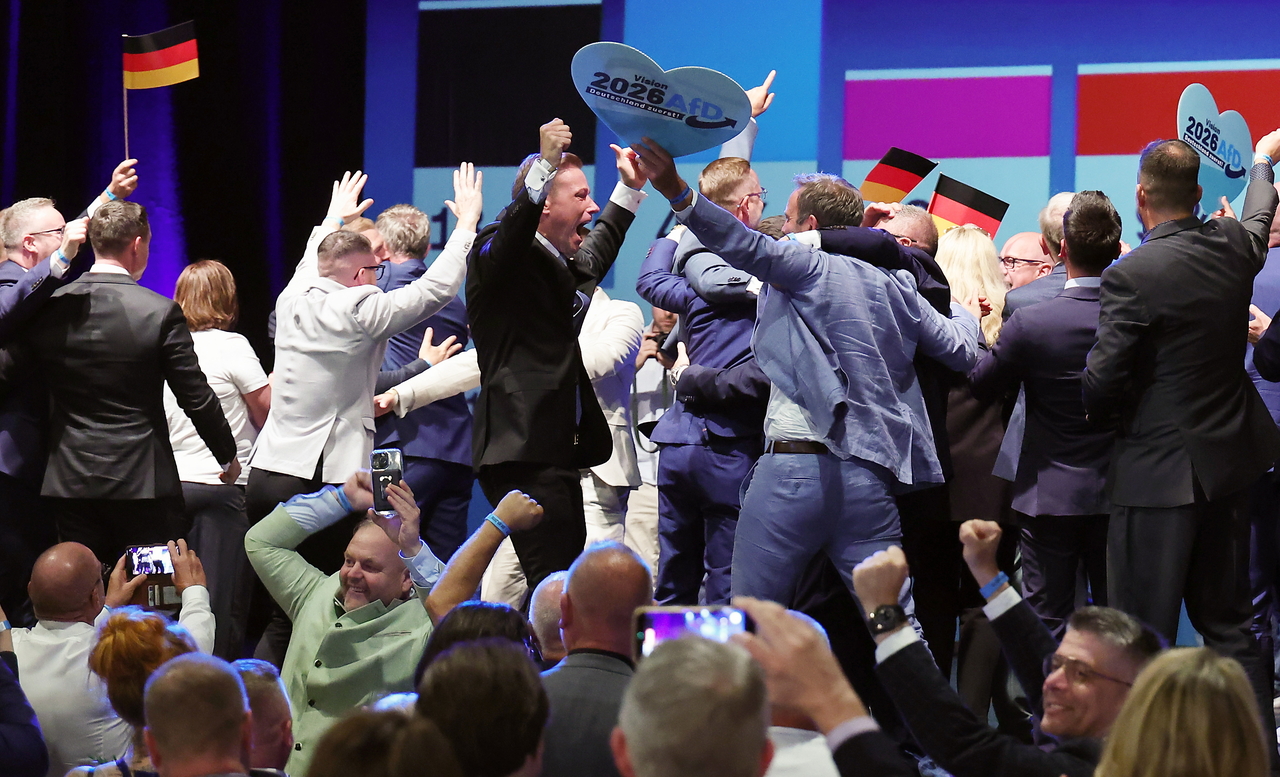
Germany's far-right Alternative for Germany party (AfD) won a landslide victory in the eastern state of Saxony-Anhalt's state election with nearly 44 percent of the vote. The result put to the test the "firewall" principle that has kept the far right out of power for nearly 80 years since World War II. As the rise of far-right and nationalist forces hardens into a continentwide trend across Europe, centrist politics on the continent are also on alert.
The New York Times reported Monday (local time) that AfD's overwhelming support in the Saxony-Anhalt election has pushed the decades-old "firewall" to its limit. The firewall refers to the principle of excluding extremists from power. Questions are also emerging over whether Chancellor Friedrich Merz, 16 months into his term, can retain his position amid clear public rejection of his policies and leadership.
Firewall strategy against far right backfires, fueling AfD's rise, critics say

Mainstream German politics has long used the firewall principle to reject coalitions or political cooperation with extremist parties since World War II. The aim is to prevent extremist forces from gaining institutional power and repeating the rise of Hitler and the Nazis.
In fact, the only previous instance of AfD topping a state election was in Thuringia in 2024. However, the margin then was not large enough to stop other parties from forming a broad, ideologically awkward coalition to keep AfD out of power.
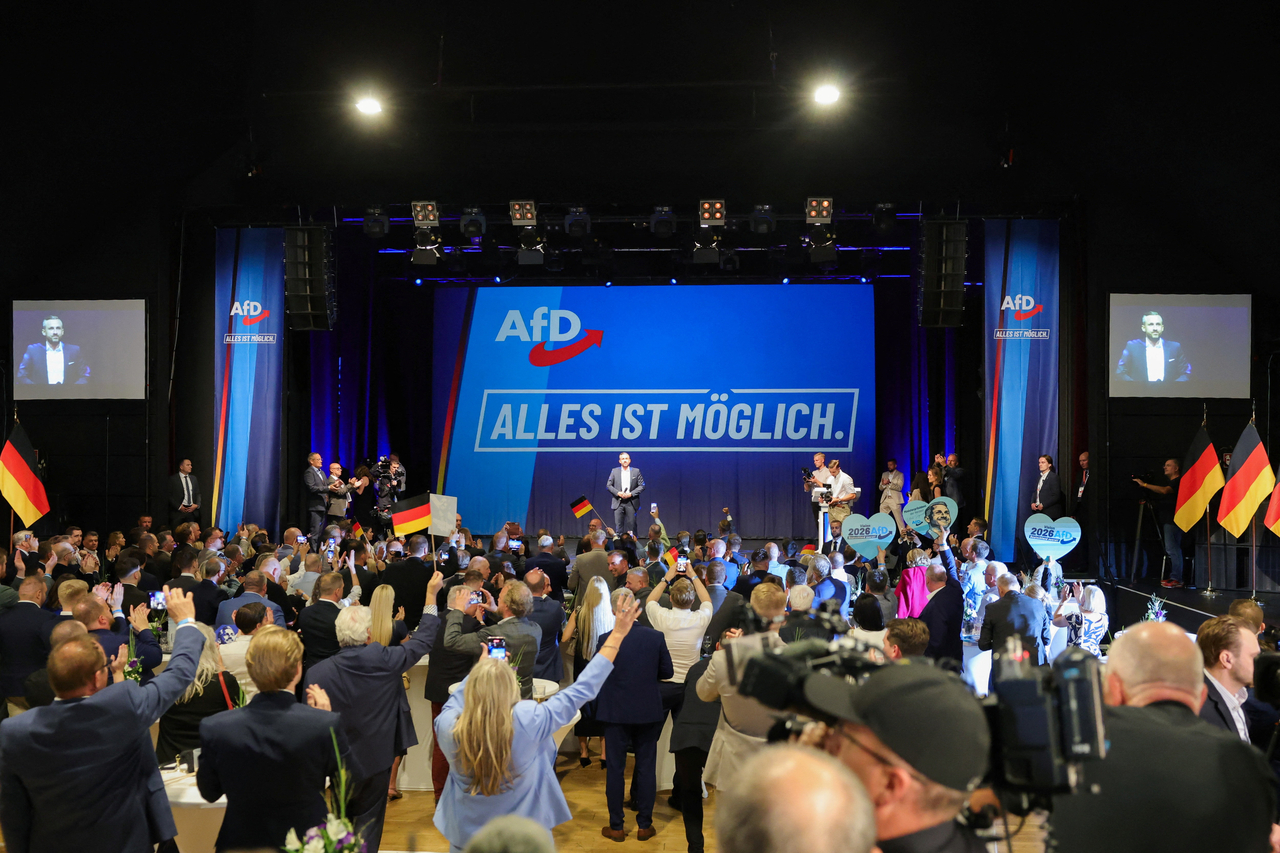
What stands out, however, is that AfD nearly doubled its vote share compared with five years ago. According to Saxony-Anhalt's state election commission, AfD won 43.8 percent of the vote, overtaking the center-right Christian Democratic Union, which took 17.2 percent, to become the largest party. That is more than double the 20.8 percent AfD won in the state's 2021 election. It marks the party's highest vote share ever, in both state and federal elections, since its founding. Observers say the result marks the first time since World War II that far-right forces in a German state have come close to taking power.
Critics in particular said the mainstream parties' firewall strategy of excluding AfD from power has paradoxically fueled the party's rise. Mujtaba Rahman of Eurasia Group said, "There is a self-reinforcing political dynamic that only strengthens AfD's momentum."
The BBC said German commentators have described the election result as a "tectonic shift," a "social and political earthquake" and a "watershed for Germany."
Thorsten Benner, director of the Berlin-based Global Public Policy Institute, said the result "shows the abject failure of the firewall strategy."
AfD calls for sharply restricting immigration and refugee inflows and stepping up deportations of undocumented immigrants, while pushing for a reassessment of the EU and the eurozone system. On energy, the party advocates restarting nuclear power plants and expanding the use of fossil fuels. On education, it emphasizes performance- and knowledge-based schooling, aiming to preserve a multi-tiered school system based on students' abilities and to strengthen vocational training.
Austrian-Hungarian political scientist Gabriella Grellinger said, "Regardless of whether the far right is actually in power, its politics and policies are already firmly at center stage in ongoing political debate. There is no firewall around their ideas."
France, Italy and other major EU states head to polls, stoking far-right fears
Germany's political turmoil is also becoming a burden for the EU. Germany is the EU's largest economy and one of its most influential member states. It currently plays a central role as Europe responds to Russia's aggression, US President Donald Trump's tariff pressure and economic threats from China.
Elections are set to take place over the next year in major EU member states including France, Italy, Sweden, Spain and Poland. Concerns are growing that far-right parties could make gains across Europe as well. Far-right parties are polling strongly in all of these countries, prompting worries among Europe's centrist politicians that a wave of nationalism could spread across the continent.
"Hardline right-wing parties across Europe differ in their policies and orientations, but they broadly share an anti-immigration stance and strong nationalist messaging," the BBC said. "What the EU is particularly concerned about is that this kind of national self-interest could weaken European unity."
Benjamin Haddad, France's minister for Europe and a close aide to President Emmanuel Macron, warned, "The far right's victory in Germany's local elections is a serious moment for Europe." In Belgium, there are concerns that this trend could spread to other countries, boosting nationalist and hardline right-wing parties.
Debriefing: The Herald Business's international desk clearly explains the hidden stories behind the world's hottest issues. Debriefing seeks to engage with readers -- leave your questions in the comments!
yckim6452@heraldcorp.com