First strike in company history becomes reality
Dozens join each round; 'limited output impact' expected
Core processes kept running under labor-management strike exemption
Auto, shipbuilding, construction sectors get priority on urgent supplies
President Lee Hee-geun focuses on communicating with workers on-site
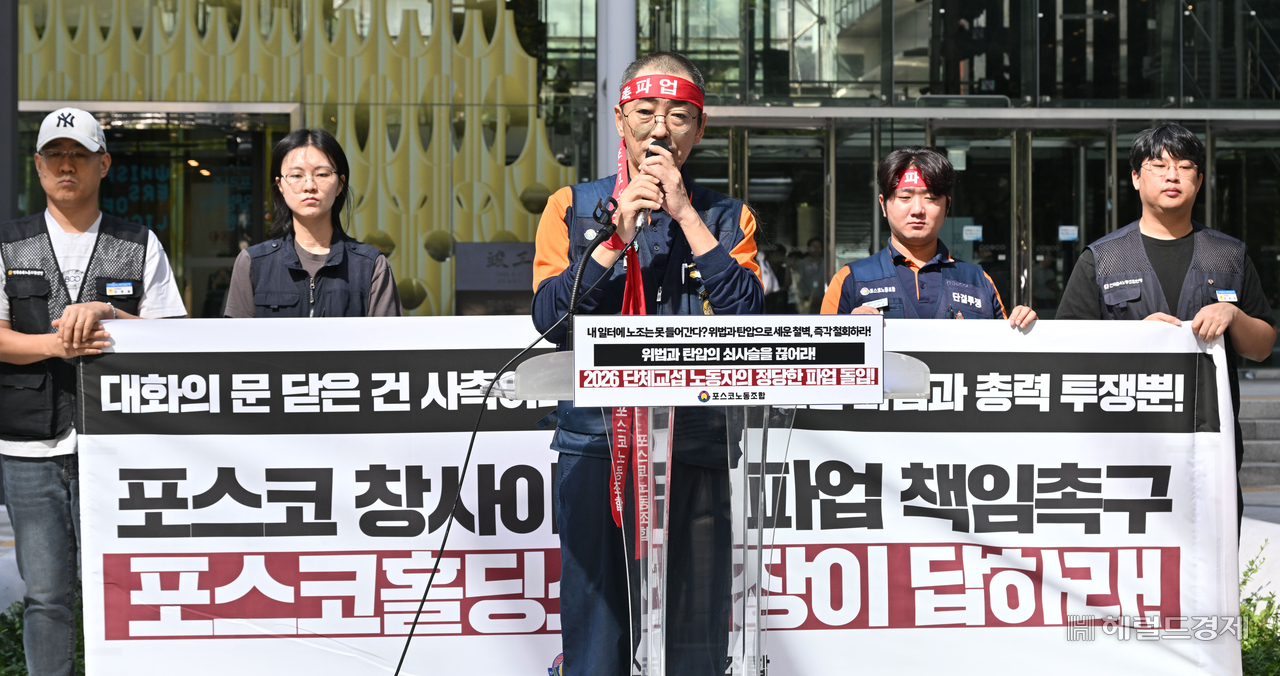
Posco has activated an emergency response system after facing the first strike in its history since its founding in 1968. Even as some production lines come to a halt, the steelmaker aims to keep the flame alive in its core processes — including blast furnaces — to prevent any disruption in supplies to key national industries such as automobiles, shipbuilding and construction.
According to industry sources Wednesday, Posco has activated an emergency operations response system that monitors production, equipment, sales and shipments in real time in response to the union's 48-hour partial strike. The company has also prepared a workforce management plan in advance so that even processes affected by the partial strike can continue to operate normally using available personnel.
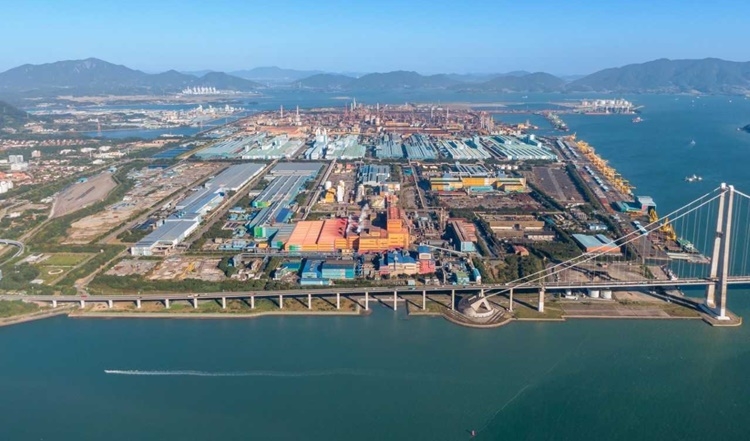
The first round of the partial strike is expected to have limited impact on production. The strike targets just two of Posco's production lines — the electrical steel sheet rolling line (3ZRM) at the Pohang Steelworks and the pickling plant at the Gwangyang Steelworks. The former thins steel sheets used for electric vehicle motors, while the latter cleans the surface of steel ahead of cold-rolled production.
Posco employs about 17,000 people in total — roughly 8,000 at the Pohang Steelworks and 7,000 at the Gwangyang Steelworks — of whom about 10,000 are union members. The union expects around 150 workers to join the strike, but since the two affected lines together employ only about 100 workers per shift, actual participation is expected to be limited to dozens per shift.
Most steelworks processes are automated, and the 3ZRM line in Pohang in particular is a relatively small facility centered on a control room — another factor that lowers the likelihood of significant production disruption.
Core production processes such as blast furnaces are, in effect, excluded from the strike. Under the collective agreement's strike-exempt work arrangement, designated personnel continue working as usual even during industrial action, keeping key facilities running. The arrangement is designed to secure the safety of equipment that requires round-the-clock operation and to prevent major accidents that could result from a sudden shutdown.
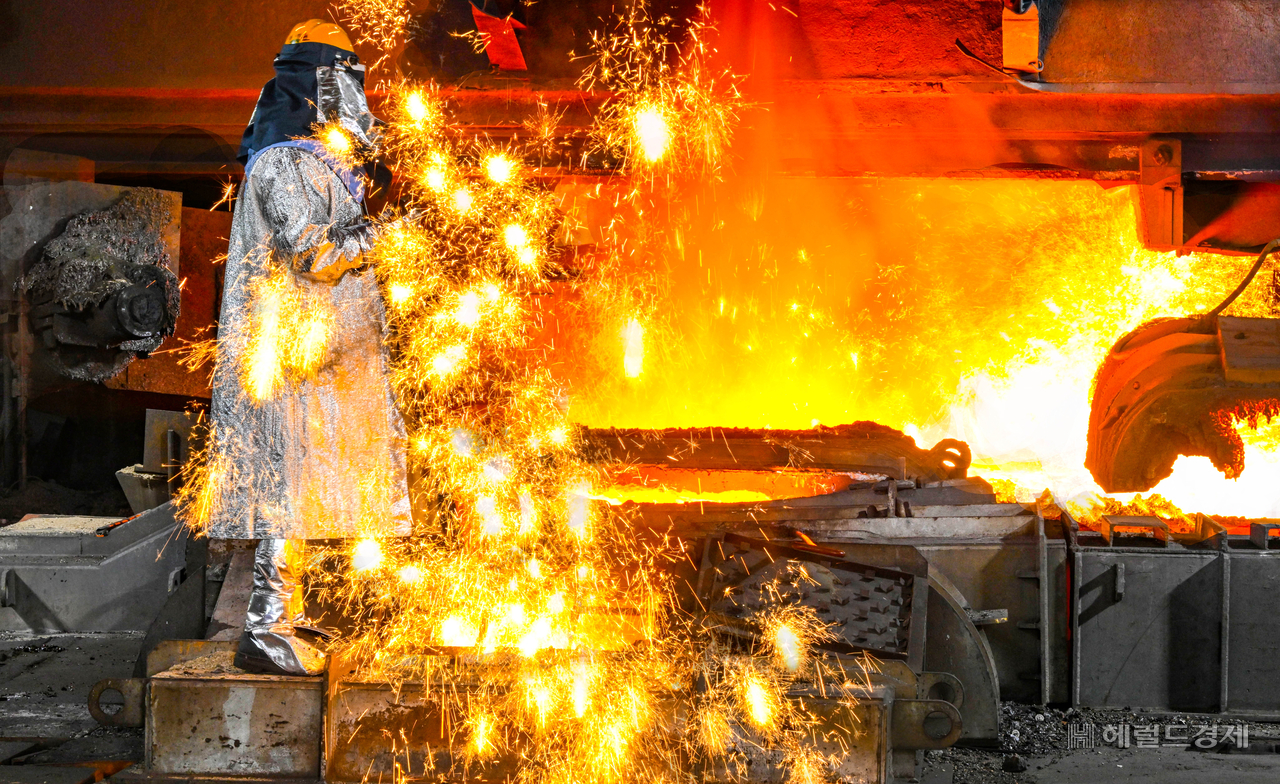
Blast furnaces are among the processes Posco manages most carefully. As the core facility that melts iron ore and coal at high temperatures to produce molten iron, a blast furnace normally runs around the clock, 365 days a year. An unexpected extended shutdown can cause the molten iron inside to solidify — a phenomenon known as a "freeze-up" — which, in severe cases, requires significant time and cost to repair and restart the facility.
Disruptions to blast furnace operations do not stop at the facility itself. If molten iron production halts, the effects ripple through downstream processes such as steelmaking and rolling, and if prolonged, they can cascade to customers that rely on Posco for automotive steel sheets, shipbuilding plate and construction steel.
Posco is emphasizing its "responsibility as a key industry" in its response to the strike. Steel is a basic material used across most of South Korea's major manufacturing sectors, including automobiles, shipbuilding, construction and home appliances. The company has decided to prioritize the production and shipment of materials and urgent supplies needed by its automotive, shipbuilding and construction customers so that their production plans are not disrupted under any circumstances.
Posco has also checked inventory levels by customer in advance to secure the volumes they need. For items at risk of shortage during the strike, the company is stockpiling supplies through advance production, while maintaining constant communication channels with major customers to minimize concerns over supply.
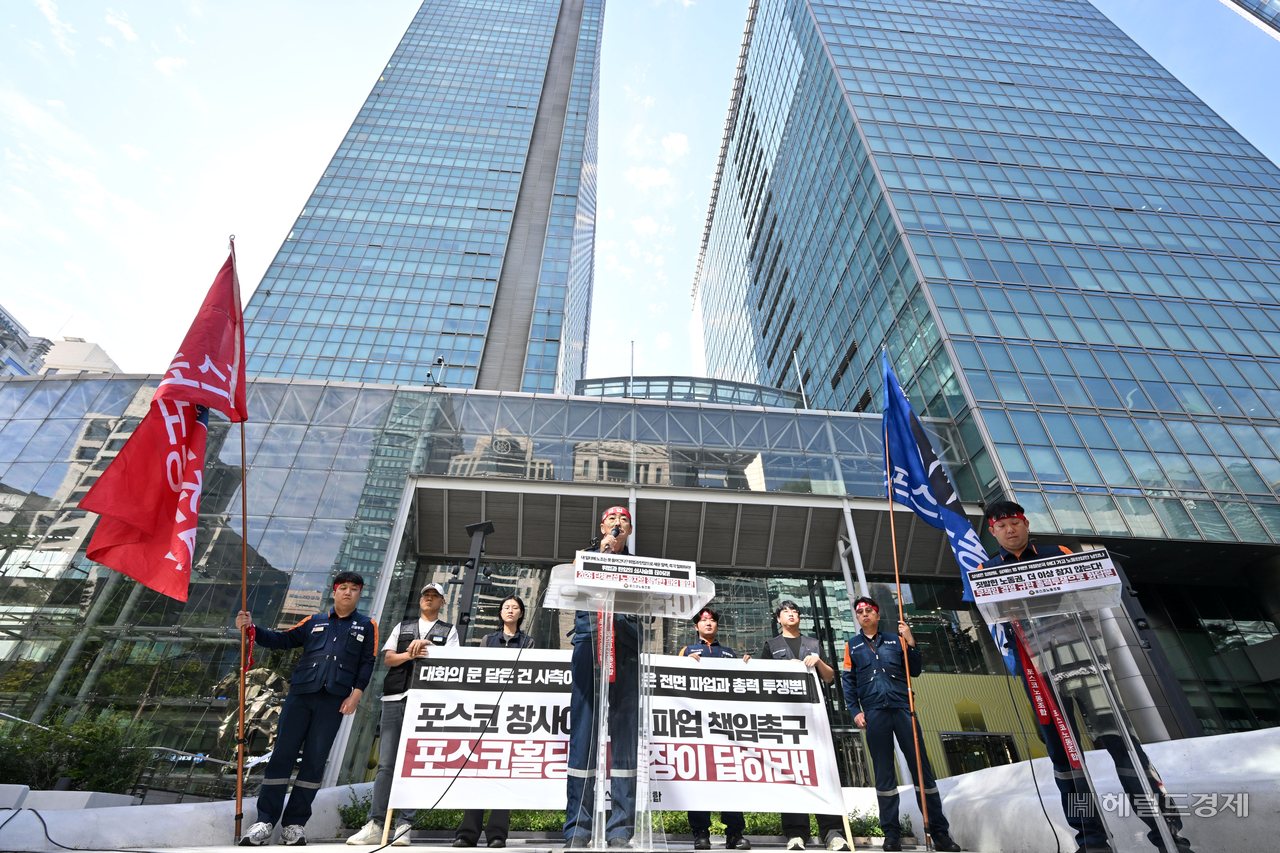
Posco has also set up a joint management system involving its sales and production departments. The system monitors operations, equipment conditions, sales and shipments at all times, and the company has prepared phased response plans tailored to scenarios involving the scale and duration of the strike. If unexpected situations arise, relevant departments share information in real time to respond immediately.
Within Posco, there is a sense that the labor dispute goes beyond a simple wage negotiation and marks a critical juncture that will determine the company's future competitiveness. The first strike in the company's history has become a reality just as it faces a combination of cheap Chinese steel, intensifying global protectionism and weak domestic steel demand.
Posco plans to respond firmly to the union in this round of negotiations. Fully accepting the union's demands is estimated to cost about 1.4 trillion won ($1.04 billion) — roughly equal to Posco's projected operating profit of 1.398 trillion won this year. That means the company would have to spend almost all of a year's operating profit on additional labor costs. With large-scale investments — including steelworks in the US and India, electric-arc furnaces and hydrogen-based steelmaking — lined up one after another, the company says it needs to preserve its capacity to invest in future competitiveness.
Posco's leadership has also placed the labor dispute at the top of its priorities. President Lee Hee-geun has canceled a significant portion of his external business schedule and is staying in Pohang to focus on communicating with union and on-site employees. He also called off a planned trip to the groundbreaking ceremony for Posco's integrated electric-arc furnace steelworks in Louisiana, US (HPLS), which he had been set to attend earlier this month.
Around the seventh round of negotiations on Thursday, Lee sent two memos to employees — on Sept. 2 and Sept. 4 — stressing the need to stabilize labor-management relations. He also visited the plant floor over the weekend to hear directly from employees, and on Monday, he visited the union office in Pohang for talks with Kim Seong-ho, chairman of the Posco labor union.
Posco's leadership has also returned part of their wages to help overcome the crisis: the president has given up 20 percent of his salary, division heads 15 percent and executives 10 percent.
"The impact of a strike would be a heavy burden for both the company and its employees," Posco President Lee Hee-geun said. "We are at a crossroads between becoming a third-rate company that has lost its leadership to China and India, or rising again — and this is a critical golden moment to protect both the company's sustainability and the future of our employees."
However, if the labor dispute escalates into an all-out strike, some impact on production is likely to be unavoidable. Posco has prepared contingency plans for different scenarios based on the scale and duration of a strike, but if the union expands its targets and significantly increases participation, the risk of disruption to production and shipments at some processes will grow. The union has said that if there is no progress in negotiations, it will expand the number of plants covered and hold a second 120-hour partial strike starting Sept. 16, and is considering an all-out strike in October involving about 10,000 union members.
kwater@heraldcorp.com