FKI submits '2026 tax reform opinion' to National Assembly
Domestic production tax credit limited to local sales, risking trade disputes
Exclusion of large firms from integrated employment tax credit needs review
Carryover period for chip, biotech tax credits should extend beyond 15 years
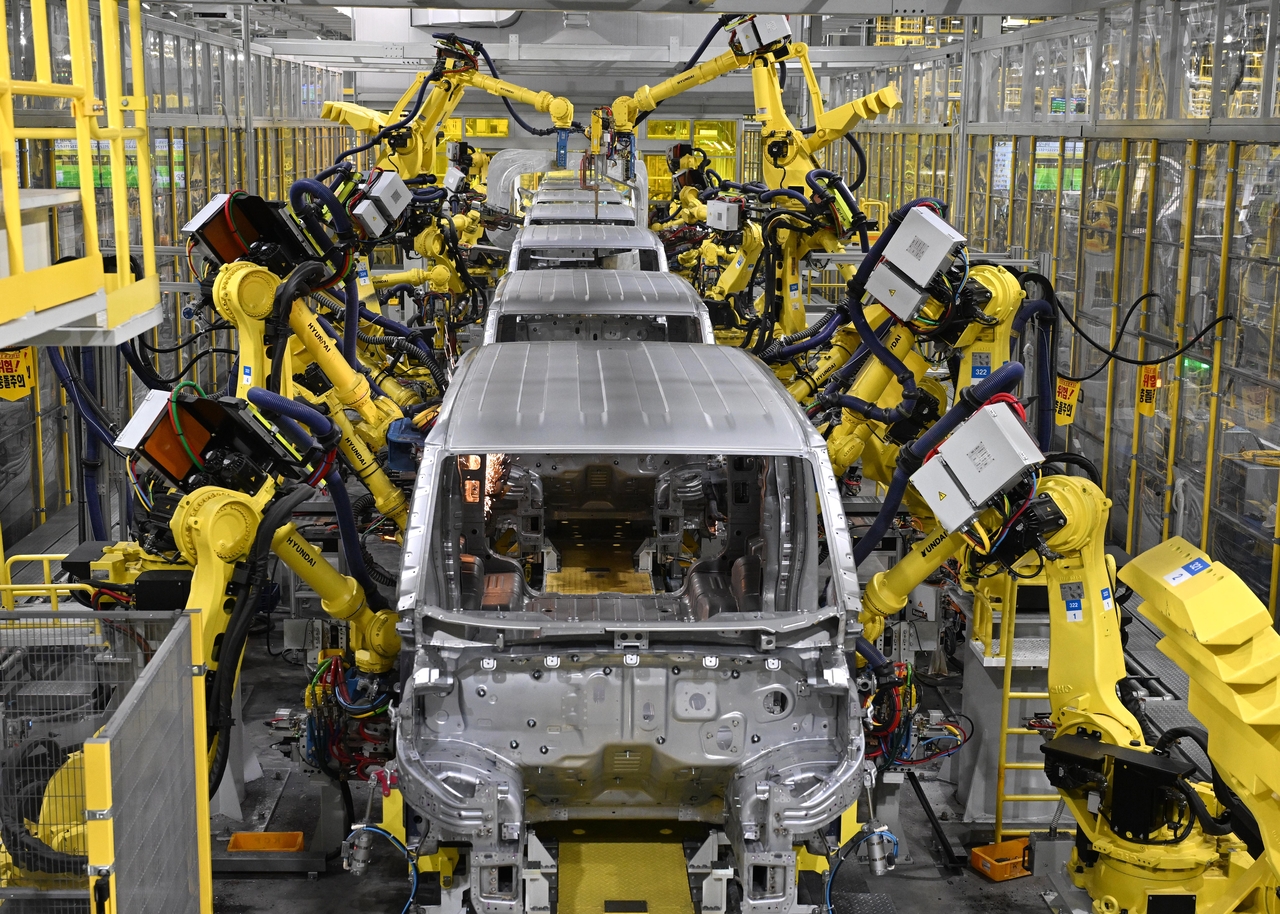
A business group has called for the government's planned "domestic production tax credit" -- a new incentive designed to bolster local manufacturing -- to be expanded to cover automobiles, biotech products and small modular reactors (SMRs).
It also urged the government to reconsider excluding large companies from the integrated employment tax credit, warning that doing so could hurt efforts to expand job opportunities for young people.
The Federation of Korean Industries (FKI) said Wednesday that it had submitted its "2026 Tax Reform Opinion" to the National Assembly. The opinion offers recommendations to improve and supplement the government's 2026 tax reform plan. The submission compiled input from major domestic companies into 51 proposals across 10 pieces of legislation.
Domestic production tax credit should widen scope, cover exports too
The government's tax reform plan designates six sectors for the domestic production tax credit: solar power, wind power, secondary batteries, semiconductors, core materials and AI robot components.
The FKI recommended adding future-oriented vehicles, where competition with China is intense, to the list of supported sectors. It also urged the addition of biopharmaceuticals and vaccines, which directly affect public health and safety, along with small modular reactors, seen as next-generation nuclear power plants.
It also said the government should consider including finished robots and liquefied hydrogen, a key element in expanding hydrogen vehicle adoption. It added that sustainable aviation fuel, which emits less carbon than conventional jet fuel, should be considered as well.
In addition, the group said the eligibility requirements for the tax credit need to be improved. Under the government's plan, only products manufactured and sold domestically qualify for the credit, while exported goods are excluded.
By contrast, the US Inflation Reduction Act and Japan's domestic production promotion tax system for strategic sectors provide support regardless of where the products are sold.
Limiting support to domestic sales could concentrate benefits in the local market and risk violating fair competition with imported products, potentially triggering trade disputes, according to the group. The FKI argued that including exported volumes would strengthen incentives for domestic production.
Highest preferential factor should apply to tax credits in industrial crisis zones

The FKI recommended applying the highest regional preference factor of 1.5 to R&D and integrated investment tax credits in government-designated industrial crisis zones. It also urged the same treatment for the domestic production tax credit in population-declining regions and areas of concern for population decline.
The government's reform plan divides the country into four regions -- the Greater Seoul area, metropolitan cities outside Greater Seoul, other non-metropolitan areas and preferential non-metropolitan areas. It plans to apply a regional preference factor of up to 1.5 to the R&D tax credit, integrated investment tax credit and domestic production tax credit.
"Tax incentives should be strengthened to encourage production efficiency and new investment in industrial crisis zones, and to help population-declining regions maintain their production base," the FKI said.
The group also called for maintaining the integrated employment tax credit for large companies, explaining that removing employment incentives for large firms could negatively affect the expansion of quality jobs.
It argued that the regime should remain in place for large companies. The requirements were already tightened last year, it noted, to limit the credit to employment increases exceeding 10 workers.
10-year carryover not enough for advanced industries, period should be extended
The FKI also recommended extending the carryover period for investment and R&D tax credits. Under current tax law, companies that cannot use a tax credit in a given year because they owe little or no corporate tax may carry it forward. This carryover is currently capped at 10 years.
However, advanced industries such as semiconductors and biotech often require large upfront investments and take a long time to turn a profit. Prolonged initial losses could prevent companies from using the credit within the 10-year window.
The FKI cited the US and Canada, which allow unused R&D tax credits to be carried forward for up to 20 years. It said South Korea should extend its carryover period to at least 15 years so that companies can fully make use of the tax credit benefits.
Lee Sang-ho, head of the FKI's Economic Affairs Division, said the government's tax reform plan would help bolster corporate competitiveness by supporting domestic production and investment. The plan includes the new domestic production tax credit and expanded regional investment tax incentives. "The regular session of the National Assembly needs to improve and supplement the scope and requirements of the support so that companies can actually make use of the tax benefits to increase production, investment and employment," he said.
joze@heraldcorp.com