Korea University edges up to 20.46-to-1
Jongno Hagwon says applicants played it safe
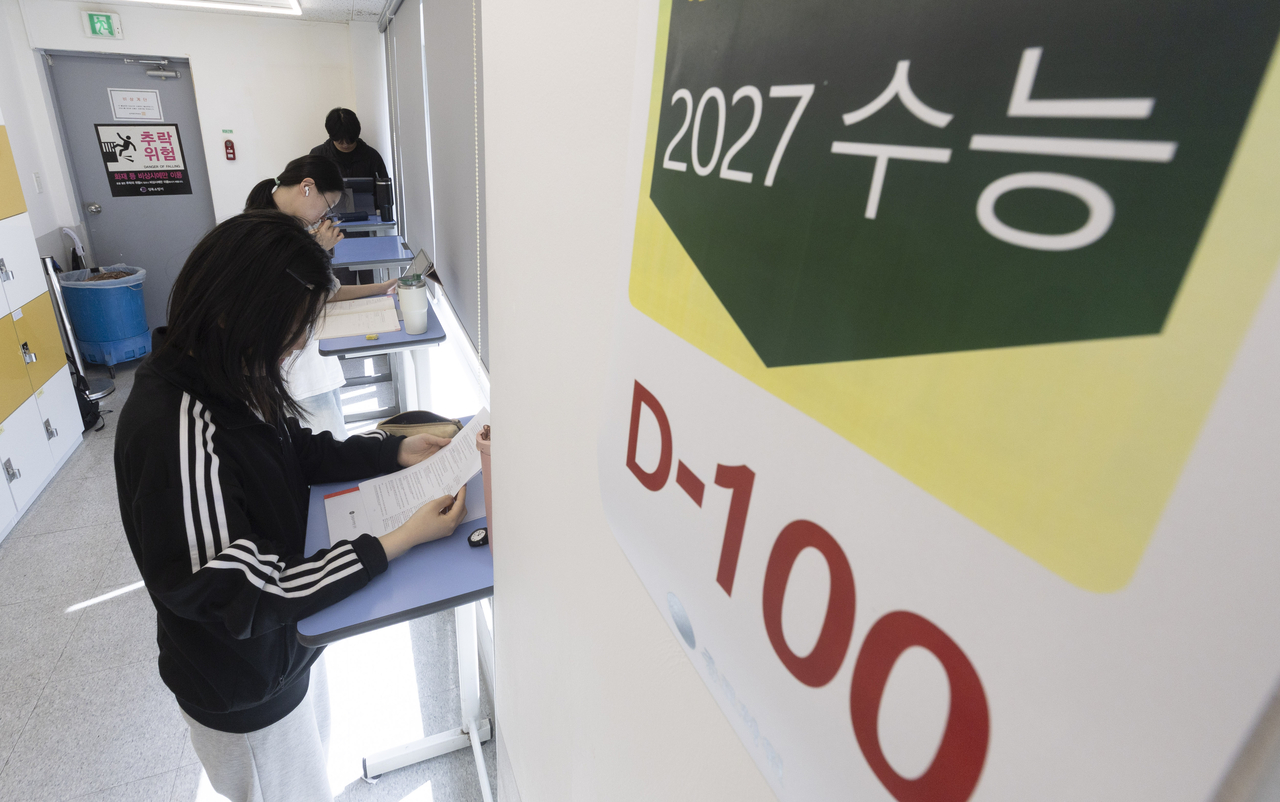
Early admission competition rates for the 2027 academic year fell at Seoul National University and Yonsei University compared with last year, while Korea University's rate edged up slightly. Competition for medical school seats at all three universities dropped.
Jongno Hagwon said the application period for early admission at Seoul National University, Korea University and Yonsei University closed Wednesday. A total of 103,014 students applied, down 3,363, or 3.2 percent, from 106,377 a year earlier.
As a result, the average early admission competition rate across the three universities fell to 14.40 to 1, down from 14.93 to 1 for the 2026 academic year.
Seoul National University drew 16,487 applicants, bringing its competition rate to 7.37 to 1, down from 8.12 to 1 the previous year.
Yonsei University attracted 30,652 applicants, with its rate slipping to 14.02 to 1 from 15.10 to 1 a year earlier. Korea University, by contrast, saw applications rise by 866 to 55,875, edging its competition rate up to 20.46 to 1 from 20.35 to 1 last year.
At Seoul National University, competition rates by department included 18.60 to 1 for the general admission track in sociology and 16.57 to 1 in social welfare. Applied biology and chemistry posted 15.80 to 1, and biosystems and biomaterials science posted 14.70 to 1.
At Yonsei University, the essay-based admission track posted the highest rate in business administration, at 100.20 to 1. It was followed by 88.50 to 1 for the Jinri-Jayu liberal arts program's humanities track and 87.00 to 1 in pharmacy. Media and communication posted 85.60 to 1, and astronomy and space science posted 43.00 to 1.
At Korea University, the essay-based track recorded 198.33 to 1 for the Business School and 114.20 to 1 for the College of Liberal Studies. Electrical and electronic engineering posted 110.30 to 1, and mechanical engineering posted 91.15 to 1.
Jongno Hagwon said the results point to students taking a more cautious approach to their applications. It also noted that the "local doctor" quota system at regional medical schools spread top-tier science-track applicants more widely rather than concentrating them at a handful of schools.
The institute speculated that many students avoided overreaching applications, aware that the 2027 academic year marks the last chance to apply under the current admissions system.
Starting with the 2028 academic year, the College Scholastic Ability Test will drop elective subjects in Korean, mathematics and exploratory subjects, and school grading will shift entirely to a five-tier system — part of a broader overhaul of the college admissions system.
Competition rates for the medical schools at Seoul National University, Yonsei University and Korea University all declined. According to Jinhaksa, the three universities kept their combined early admission quota for medicine unchanged at 210 seats. But applicants fell 12.2 percent, from 2,947 to 2,587, pulling the combined competition rate down from 14.03 to 1 to 12.32 to 1.
By school, Korea University's medical school rate fell from 22.93 to 1 to 19.90 to 1, Seoul National University's from 10.67 to 1 to 9.44 to 1, and Yonsei University's from 9.97 to 1 to 8.88 to 1.
Competition rates for semiconductor-industry contract departments were mixed. Korea University's Department of Semiconductor Engineering saw applications climb 21.1 percent, from 337 to 408, pushing its rate up from 12.04 to 1 to 14.57 to 1.
By contrast, Yonsei University's Department of System Semiconductor Engineering drew 778 applicants, excluding those admitted through the special equal-opportunity track, down 1.3 percent from 788 a year earlier. Its competition rate edged down slightly, from 11.26 to 1 to 11.11 to 1.
woo@heraldcorp.com