On delisting: "Direction is right, but speed and method matter"
Open to weighing venture firms' needs on treasury shares, working hours
Addresses gap investment allegations head-on: "I really wanted to talk about this"
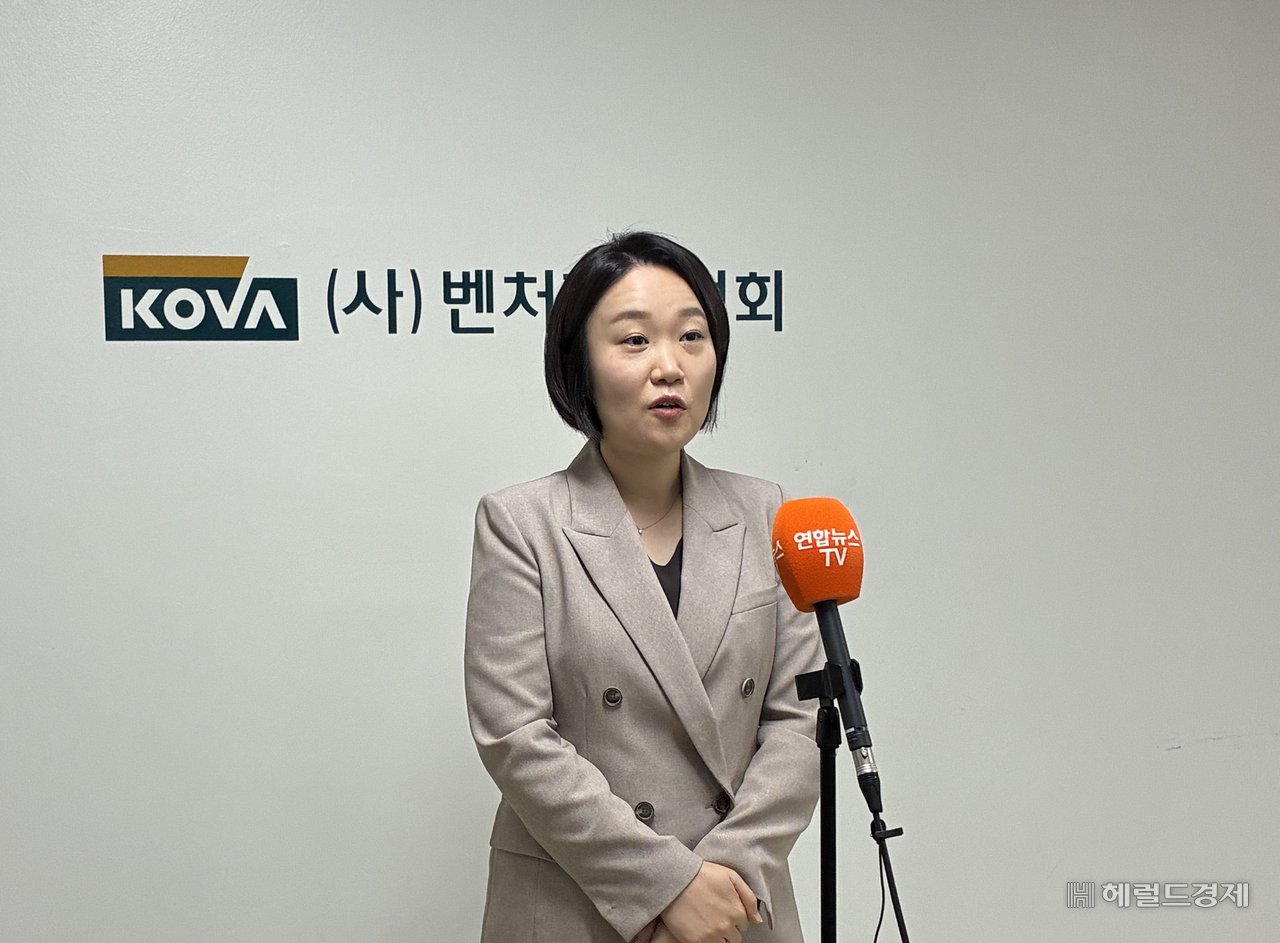
Lee So-young, the nominee for minister of SMEs and Startups, said she will actively reflect the ministry's voice in capital market policy. That policy has largely been shaped around the Financial Services Commission.
Regarding the tightening of Kosdaq delisting standards, she agreed on the need to weed out insolvent companies. She said the pace, method and protections for existing shareholders must be weighed together.
Lee met with startup and venture-related associations at the Korea Venture Business Association on Thursday morning and told reporters afterward, "If I serve as minister, I will be a minister who speaks up about the Kosdaq market -- a minister of SMEs and Startups who voices opinions on the capital markets. This will probably be the first time that has happened." Venture industry officials at the scene applauded after her remark.
"Kosdaq is such an important market for small and medium-sized venture businesses that policy cannot be designed solely from a financial market perspective," Lee said. "I will actively convey what small and medium-sized venture businesses and existing investors need, and if necessary, I will discuss this with the chairman of the FSC."
On the tightening of delisting standards, she agreed on the need to clear out insolvent companies but said the pace should be adjusted. "Even if the overall direction is right, the speed and specific method matter," Lee said. "We need to look at whether the market can handle it and whether protections for existing shareholders are sufficient."
On venture investment, she named the expansion of private risk capital as a key task. "Even though venture investment indicators look good, a significant part of that has been driven by government fiscal spending," she said. "We need to overhaul the system to increase the inflow of private capital."
Asked whether revising the Commercial Act conflicts with fostering ventures, she drew a line, saying the two move in "the same direction." She explained that making corporate governance more transparent would build trust in Kosdaq, which in turn would draw in institutional investors and private capital. However, on mandatory cancellation of treasury shares, she said the unique characteristics of venture companies -- which often use such shares for employee compensation -- need to be considered.
She also left open the possibility of easing working-hour regulations. "Among the industry's concerns, there are reasonable and valid points," Lee said. "I will look into whether there are aspects of working-hour regulation that should be rationalized, taking into account the nature of the work."
She presented regulatory innovation as a core task of venture and startup policy. "I have heard that what matters more than subsidies is an environment where businesses can operate," she said. "For ventures and startups, it is important to innovate regulations so they can go beyond protection and support and take on new ventures." On regulations under other ministries' jurisdiction, she said, "If necessary, I will discuss this and persuade the ministers in charge."
On conflicts of interest between new and existing industries, or between venture companies and small merchants, she set coordination as her guiding principle. She pointed to the recent controversy over Toss's "search mission" feature as an example of such friction. "We need to find a way for both sides to coexist in harmony, rather than one side winning and the other losing," Lee said.
Asked about allegations of real estate gap investment and conflicts of interest, Lee began, "Thank you so much for asking. I really wanted to talk about this."
Regarding allegations of gap investment tied to an apartment in Hongje-dong, she denied the claims, saying, "After marrying in 2016, I bought the apartment, replaced the wallpaper, flooring and windows, and moved in right away. I lived there for about four years. I took in a jeonse tenant in February 2022. This is not gap investment -- it is a non-resident, single-home case. I have tried several times since my first term to sell the home."
She also rebuffed allegations of conflicts of interest related to her work on the Power Market Monitoring Committee and with environmental groups. "Activities with civic groups for the public interest are naturally not classified as private interests under relevant laws and systems," Lee said. "I did not hold shares or receive a salary as a company employee -- these were public-interest activities. If such activities are considered conflicts of interest, then civil servants would have to make all the rules among themselves, which does not even make common sense."
hong@heraldcorp.com
snsd@heraldcorp.com