2026 Seoul International Writers' Festival 'Who Are You?'
Adding complexity to seek solidarity with others
Kim Ae-ran, Benjamin Labatut in opening dialogue
![(From left) Author Kim Ae-ran, author Benjamin Labatut, author Kim Yeon-su and poet Seo Hyo-in speak at a press conference for the "2026 Seoul International Writers' Festival" at the Korea Press Center in Jung-gu, Seoul, Thursday. [Literature Translation Institute of Korea]](https://wimg.heraldcorp.com/news/cms/2026/09/10/news-p.v1.20260910.48f8a8a09492419e8ac8e10b892ae089_P1.jpg)
"I think literature is completely safe from artificial intelligence. Large language models today cannot write great prose," said author Benjamin Labatut.
The "2026 Seoul International Writers' Festival" will explore human existence and the world through literature's slow rhythm. The festival arrives as artificial intelligence rapidly expands into the realm of human creativity. Running Sept. 11-16 at the Ara Art Center in Jongno-gu, Seoul, the festival will bring together 24 authors from eight countries to meet with readers.
This year's festival poses questions about the self, others and humanity under the theme "Who Are You?" Literature has long grappled with the question of who I am. But today, people tend to judge who they are through broader identities rather than understanding themselves with complexity. The theme was chosen to restore that complexity and seek solidarity with others.
Kim Yeon-su, a program committee member for the festival, spoke at a press conference for the festival at the Korea Press Center in Jung-gu, Seoul, on Thursday. "Others can ultimately be understood only through stories. Stories are necessary to understand humanity," he said. He added, "Through these sections, readers are more likely to encounter another question rather than an answer to the theme, 'Who are you?' That is what literature does."
Kim first served as a program committee member for the inaugural festival in 2006 and returned to the role 20 years later. He expressed particular emotion over the changed standing of Korean literature. "Even through AI, we cannot understand who I am, who others are, or how the world is structured. That is why literature is necessary," he said. "I am convinced that the tradition of explaining ourselves and others through stories has not collapsed to this day."
![Kim Yeon-su, a program committee member of the "2026 Seoul International Writers' Festival," speaks at a press conference at the Korea Press Center in Jung-gu, Seoul, Thursday. [Literature Translation Institute of Korea]](https://wimg.heraldcorp.com/news/cms/2026/09/10/news-p.v1.20260910.42329c9f935e4fc08ab3205dca534397_P1.jpg)
The opening dialogue will feature author Kim Ae-ran and Chilean author Benjamin Labatut discussing the theme "I Am a Person." Kim, in works such as "Run, Dad," "Vapor Trail" and "I Said Goodbye," captures the fractures of everyday life while exploring society and humanity. Labatut, in "The MANIAC" and other works, digs into nonfiction until he reaches the point where science fails to explain, then shifts into fiction. The two writers ultimately meet at the point where understanding is possible only through stories.
Kim Ae-ran said, "When I pay a visit or ask about a family's well-being, I feel humanity leaking through a tear in forgetfulness. Every animal has a will to self-preservation, but humans are almost uniquely capable of making choices against their own interest. I sometimes think about the beautiful inefficiency that tears through the body."
Labatut said, "I think what constitutes a human being is the diversity of human experience and the mysteries of the world we cannot solve. This is exactly where art emerges. Literature continues to explore what has no knowable ending."
AI is changing the basic relationship between reading and writing and even threatening the realm of creativity, but its limits remain clear. The authors observed that literature will not lose its unique power going forward.
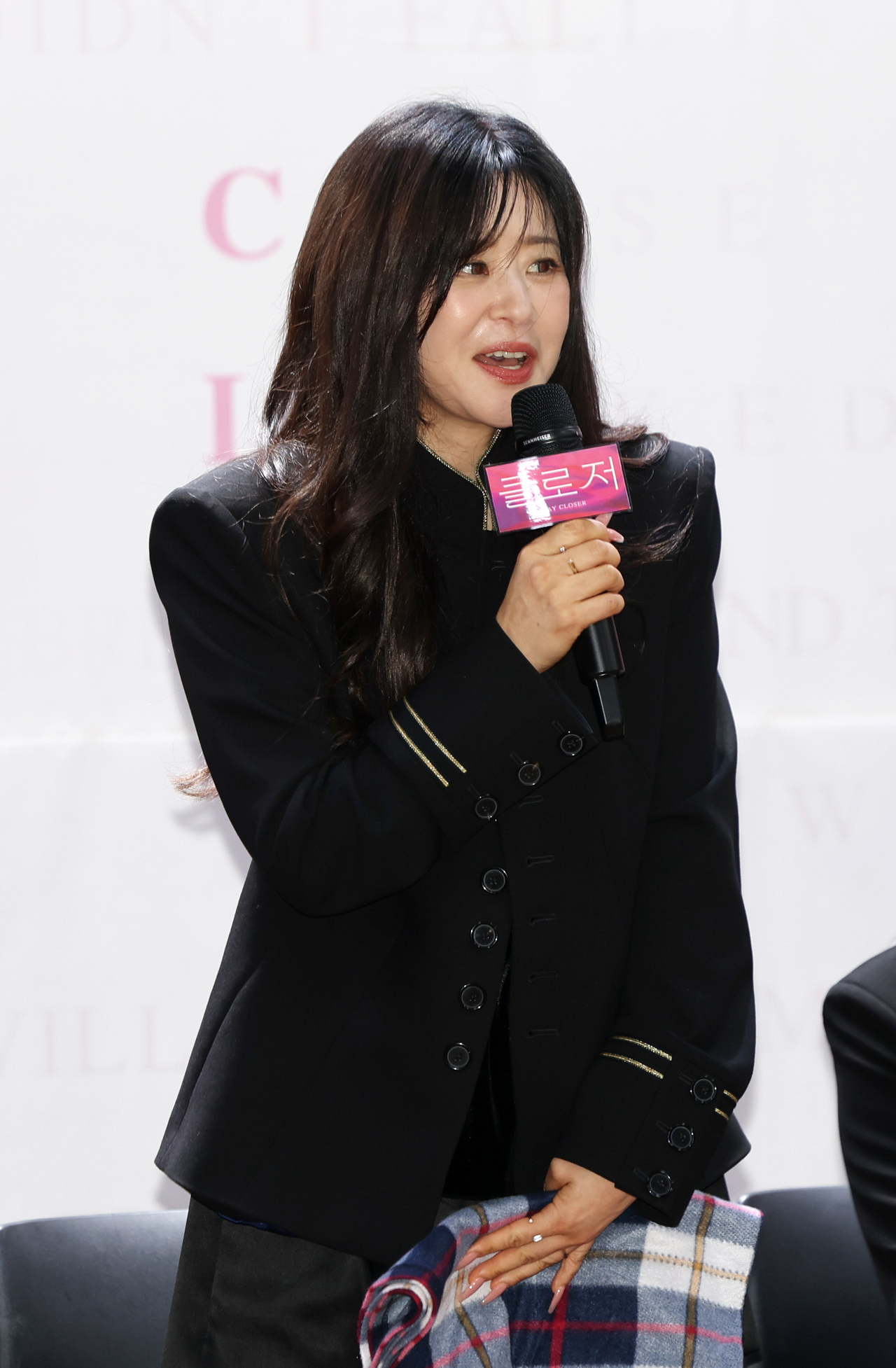
![Kim Ae-ran, who is participating in the "2026 Seoul International Writers' Festival," speaks at a press conference at the Korea Press Center in Jung-gu, Seoul, Thursday. [Literature Translation Institute of Korea]](https://wimg.heraldcorp.com/news/cms/2026/09/10/news-p.v1.20260910.4caee23fcbf240018865b53cd8474ba4_P1.jpg)
Kim Yeon-su said, "AI shows us results but offers only answers, without process. In art, the intermediate process matters enormously — the outcome emerges through the emotions felt along the way. There is a question of whether we should accept what AI produces as a work of art." He noted, "Gaining knowledge without any understanding of how you came to know it is no different from blind faith."
Kim Ae-ran said, "When real-time translation first appeared on SNS, there was hope that it would make communication richer and faster. But in practice, it has contributed more to conflict, hatred and war." She added, "One of literature's virtues is that it does not offer illusions about communication. It is a medium that shows how difficult and arduous communication truly is, rather than pretending that a quick exchange of words amounts to understanding. Literature is a genre that has confessed, in long and varied ways, humanity's ignorance of the world and of itself."
This year's festival brings together authors from a range of genres, including novels, poetry, picture books and graphic novels.
A range of dialogues will follow. They include "I Am a Child" with Kim Hyo-eun and Beatrice Alemagna, and "I Am One Who Chooses" with An Bo-yun and Silvia Moreno-Garcia. Other sessions include "I Am One Who Faces" with Lee Seung-u and Damon Galgut, and "I Am One Who Uses the Body" with Kim Mella and Chen Xue. The lineup also features "I Am Different/The Same" with Hwang Jung-eun and Keiichiro Hirano.
pink@heraldcorp.com