KOBC guaranteed about 75 billion won in debt to help build the Panstar Miracle
Switch from dollar to yen loan cuts costs by 1.7 billion won a year, 7 billion won over four years
914.6 billion won already committed to 65 vessels for small carriers — 1.1 trillion won more through 2031
For small and medium-sized shipping companies, acquiring a new vessel is a major hurdle in an industry where a single ship can cost hundreds of billions of won. The Korea Ocean Business Corporation (KOBC) has been helping smaller carriers secure ships by guaranteeing construction loans and then lowering financing costs once the vessels enter service. KOBC plans to expand this support for small shipping firms to 1.1 trillion won over the six years through 2031.
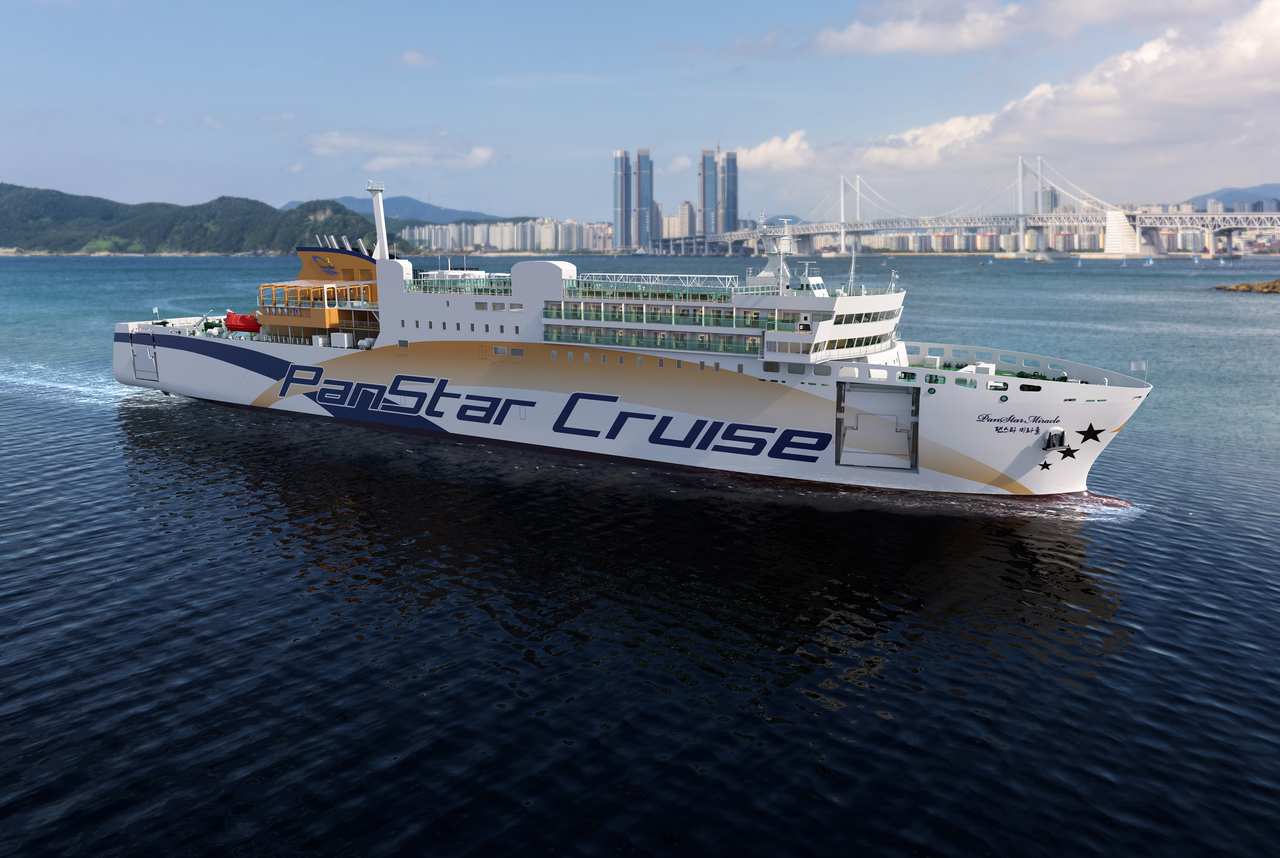
According to KOBC on Friday, the 22,000-ton cruise ferry Panstar Miracle, which sails between Busan and Osaka, Japan, cost $70.5 million to build. Panstar covered 20 percent of that cost, or $14.1 million, with its own capital and raised the remaining $56.4 million from financial institutions. KOBC guaranteed 95 percent of that loan — $53.58 million (about 75 billion won) — through its special support program for small shipping companies.
The Panstar Miracle is the first cruise ferry built at a South Korean shipyard. With no domestic precedent for building large cruise ferries, Panstar could not secure construction financing through private funding alone, KOBC said. KOBC provided the dollar-denominated debt guarantee in December 2022, and the vessel was delivered in April last year before entering service on the Busan-Osaka route.
After the ferry entered service, KOBC restructured its financing. In August, the corporation supported refinancing that converted the ship's dollar-denominated loan into a yen-denominated loan — KOBC's first yen debt guarantee.
As of Aug. 31, the benchmark interest rate on the dollar loan stood at 3.80 percent, compared with 1.56 percent for the yen loan. Based on the remaining loan balance of about 70 billion won, KOBC estimated that the more than 2.5-percentage-point drop in the funding rate would cut annual interest costs by about 1.7 billion won, saving roughly 7 billion won over the four remaining years of the guarantee.
The switch also lets Panstar use its yen revenue directly to repay the yen loan. By repaying the loan with yen earned from cargo and passenger transport on the Busan-Osaka route, the company can reduce both exchange-rate risk and currency-conversion costs.
According to KOBC figures on vessel financing support for small shipping firms, the corporation has backed 28 companies and 65 vessels with a cumulative 914.6 billion won: 27 ships worth 298.5 billion won between 2018 and 2021, and 38 ships worth 616.1 billion won from 2022 through May this year. Under KOBC's special support programs, the first round provided 388.7 billion won, while the second round is set to provide 1.1 trillion won.
Since its launch in 2018, KOBC has approved a cumulative 17.5 trillion won in financial support for about 150 shipping and logistics companies through the end of June this year. Of that total, 914.6 billion won went to 65 vessels operated by 28 small shipping companies.
In June, the Ministry of Oceans and Fisheries and KOBC launched the second special support program for small shipping companies, committing 1.1 trillion won over the six years from 2026 to 2031 — more than double the 388.7 billion won allocated under the first program.
The program also expands eligibility beyond small shipping firms to newly qualifying mid-sized carriers and, for the first time, covers tugboat and pilotage operators. The maximum recognized collateral value of a vessel will rise to as much as 80 percent, while the cap on interest support will increase from 2 billion won to 3 billion won of the loan principal. Shipping companies that jointly order two or more vessels will also receive preferential interest rates.
"Even excluding HMM, the corporation's support has reached 12.7 trillion won," said Bae Jong-yoon, head of KOBC's ESG performance team. "We will continue expanding support to grow the industry's pie, including for small and mid-sized shipping companies."

adastra@heraldcorp.com