Modi to hold bilateral talks with Putin and Xi; member states divided over Middle East war
'Expansion raised BRICS profile, but may hurt efficiency'
![Russian President Vladimir Putin waves upon arriving in New Delhi, India, for the BRICS summit on Friday (local time). [AP]](https://wimg.heraldcorp.com/news/cms/2026/09/11/rcv.YNA.20260911.PAP20260911207201009_P1.jpg)
The BRICS summit, the emerging-economy forum led by China and Russia, opens Saturday and Sunday in India.
Attention is focused on whether the bloc — which has grown by pushing back against a Western-dominated international order — can bridge divisions among its members over the Middle East war and agree on a joint statement.
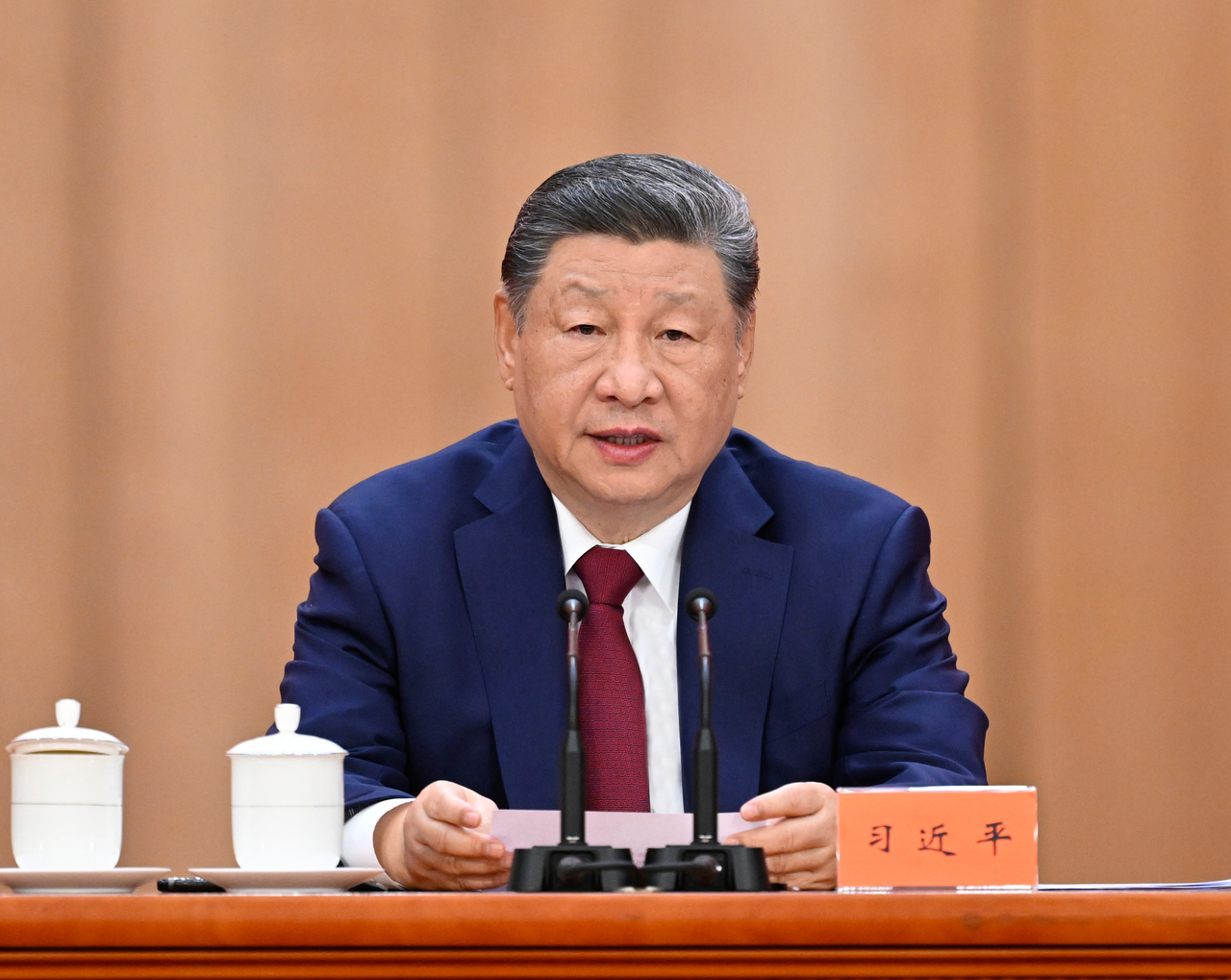
According to Reuters and other outlets, the 18th BRICS summit, held Saturday and Sunday in the Indian capital New Delhi, will bring together Chinese President Xi Jinping, Russian President Vladimir Putin and Iranian President Masoud Pezeshkian, among others.
South African President Cyril Ramaphosa, Egyptian President Abdel Fattah el-Sisi, Indonesian President Prabowo Subianto and UAE President Sheikh Mohamed bin Zayed Al Nahyan are also expected to attend. UN Secretary-General António Guterres will also travel to New Delhi.
Indian Prime Minister Narendra Modi, whose country holds the chair, is set to hold bilateral talks with Putin — who arrived in New Delhi on Friday ahead of the summit's opening — to discuss trade and economic cooperation between the two countries.
Modi is also expected to hold a separate summit with Xi, who is visiting India for the first time since 2019.
However, it has not yet been confirmed whether Xi — who is scheduled to visit the United States later this month — will hold a separate meeting with Putin on the sidelines of the summit.
The central question hanging over the summit is how far member states can narrow their differences over the Middle East war, which has dragged on for more than six months.
Foreign policy experts said the key challenge for BRICS is to craft a resolution to the Middle East crisis that both the UAE and Iran can accept, and to adopt a joint statement on that basis.
They added that while such a statement would not directly alter the geopolitical landscape of the current Middle East war, it could demonstrate BRICS solidarity against US-led economic sanctions.
Kremlin spokesperson Dmitry Peskov said recently that tensions between the UAE and Iran were creating obstacles to drafting a joint declaration, but expressed hope that language acceptable to both sides could be found.
Michael Kugelman, a senior fellow at the Atlantic Council, a US international policy think tank, warned that "some of the newer BRICS members — Iran, the UAE, Egypt and Ethiopia — are caught up in tensions and rarely see eye to eye," adding that "BRICS has grown in stature through expansion, but the diverging views of new members could undermine its effectiveness."
![Chinese President Xi Jinping shakes hands with Indian Prime Minister Narendra Modi at the BRICS summit in Kazan, Russia, in October 2024. [Reuters]](https://wimg.heraldcorp.com/news/cms/2026/09/11/rcv.YNA.20260910.PRU20260910302401009_P1.jpg)
BRICS foreign ministers convened in New Delhi in May but failed to adopt a joint statement due to disagreements over the Middle East war.
However, a joint declaration condemning the US attack on Iran and calling for a diplomatic resolution was adopted at the Shanghai Cooperation Organisation summit held earlier this month in Bishkek, the capital of Kyrgyzstan.
BRICS was founded in 2006 by Brazil, Russia, India and China, with South Africa joining in 2011, forming a grouping of emerging economies.
Between 2024 and 2025, Iran, the UAE, Egypt, Ethiopia and Indonesia joined in succession, transforming the bloc into a developing-country coalition seen as a counterweight to the Western G7.
BRICS has been working to expand its economic and geopolitical influence as a challenge to the US-led, Western-centered world order.
mokiya@heraldcorp.com