Interview with OP Labs CEO Jing Wang and CBO Kyle Jenke
Firm in talks with more than 200 financial institutions worldwide
Korean banks race toward commercialization next year
Tokenized fund subscriptions and redemptions automated, cutting processing times
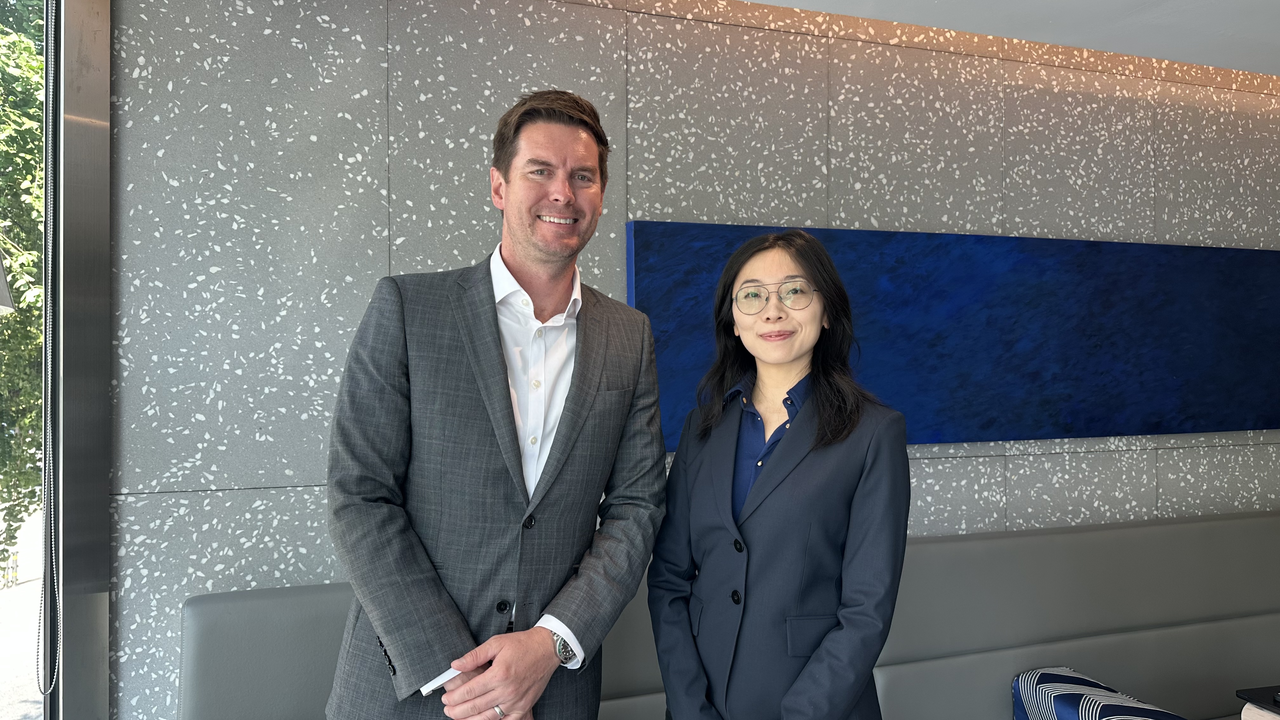
"Korea is one of the countries with the most financially literate populations in the world. You rarely see anywhere else where two-thirds of the population uses a financial app."
Jing Wang, CEO of OP Labs — the developer behind the layer-2 blockchain Optimism — explained his reason for visiting Korea in a recent interview. Wang said he had held a series of meetings with domestic fintech firms, securities companies and payment providers, and described Korea as a strategically important market.
Optimism offers two main products: OP Mainnet, a public blockchain, and OP Enterprise, which helps companies build their own blockchain networks. Underpinning both is the OP Stack, an open-source technology framework for building Ethereum-based layer-2 chains. Companies can also migrate from OP Mainnet to their own dedicated chain as their operations grow.
Optimism is currently in blockchain discussions with more than 200 financial institutions worldwide. Among those institutions, the pace of adoption varies depending on how each views the regulatory landscape for digital assets.
In Korea, Dunamu — the operator of the Upbit exchange — has built its own layer-2 blockchain called GIWA using the OP Stack. GIWA uses OP Enterprise's self-hosted model and has processed about 100 million transactions on its testnet.
"Every company ultimately needs to own its own blockchain," Wang said. "If you use someone else's chain, fees and recovery times after outages are all subject to that external operator's decisions. With your own chain, you control all of those factors directly."
Financial institutions are increasingly turning to blockchain to streamline existing payment and settlement processes and develop new investment products — automating multi-step workflows and bringing previously inaccessible assets to market. Optimism is pursuing a range of projects spanning payments to asset tokenization in partnership with Toss, KB Securities and DB Securities.
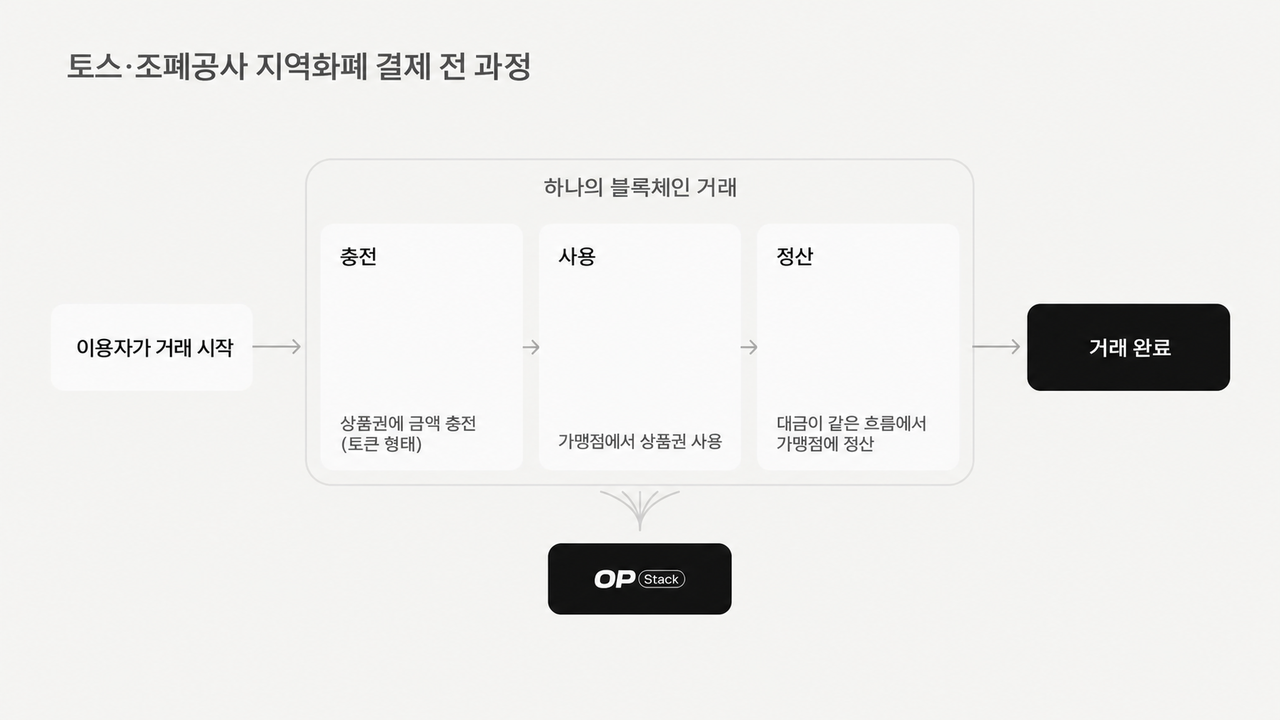
With Toss, Optimism ran a proof-of-concept project in September involving local gift vouchers issued by the Korea Minting and Security Printing Corp. The three parties tested technology that processes voucher payments and merchant settlements as a single simultaneous blockchain transaction, while keeping transaction details private and preserving the existing public payment infrastructure.
Optimism is also exploring the potential of a Korean won-denominated stablecoin with Toss. "Most fintech companies, not just Toss, see stablecoins as a way to make peer-to-peer fund transfers faster and more convenient," Wang said. "A won stablecoin project is not just an opportunity for the domestic market — it is an important opportunity for overseas investors as well."
Collaboration in the securities space is also taking shape. Together with global tokenization platform Securitize, Optimism and KB Securities are pursuing a tokenized fund business targeting institutional investors. The three parties signed an MOU in September and plan to tokenize money market funds first, later expanding to shares, American depositary receipts, corporate bonds and government bonds.
In that process, Optimism provides transaction and settlement infrastructure and system integration support through the OP Stack. "Different financial institutions handle subscriptions and redemptions in different ways, and some still do it manually, which causes delays," Wang said. "Automating that can reduce processes that used to take days to just seconds."
Wang also highlighted the ability to respond quickly to regulatory changes. "In the past, updating regulatory requirements could take weeks or months of development work, but on the OP Stack it can be done with a simple configuration change," he said. "Even in the United States, when the regulatory environment shifted — whether the Clarity Act failed to pass or the SEC issued new guidance — our partners were able to adapt quickly."
With DB Securities, Optimism is pursuing a project to tokenize real-world assets in Jeju. The two companies signed an MOU in July and agreed to build STO and real-world asset infrastructure in stages, drawing on smart farms, livestock operations and intellectual property.
Wang said blockchain would open up investment opportunities in smaller assets that have traditionally been difficult to trade in conventional financial markets. "In the United States, even frozen orange juice is traded as a futures product, but in traditional finance an asset needs substantial investor demand to be traded at all," he said. "Decentralized exchanges like Uniswap have shown that assets with relatively limited demand can still be traded."
Meanwhile, Optimism last month rolled out "Upgrade 20," which improved its Fault Proof system — a mechanism that verifies transaction states across multiple blockchains. The upgrade is designed to allow assets to move safely between blockchains without relying on external bridge services.
"Some of the biggest hacks in blockchain history happened through external bridge infrastructure," Wang said. "Korean financial institutions will want to avoid relying on those external services when moving assets to other blockchains."
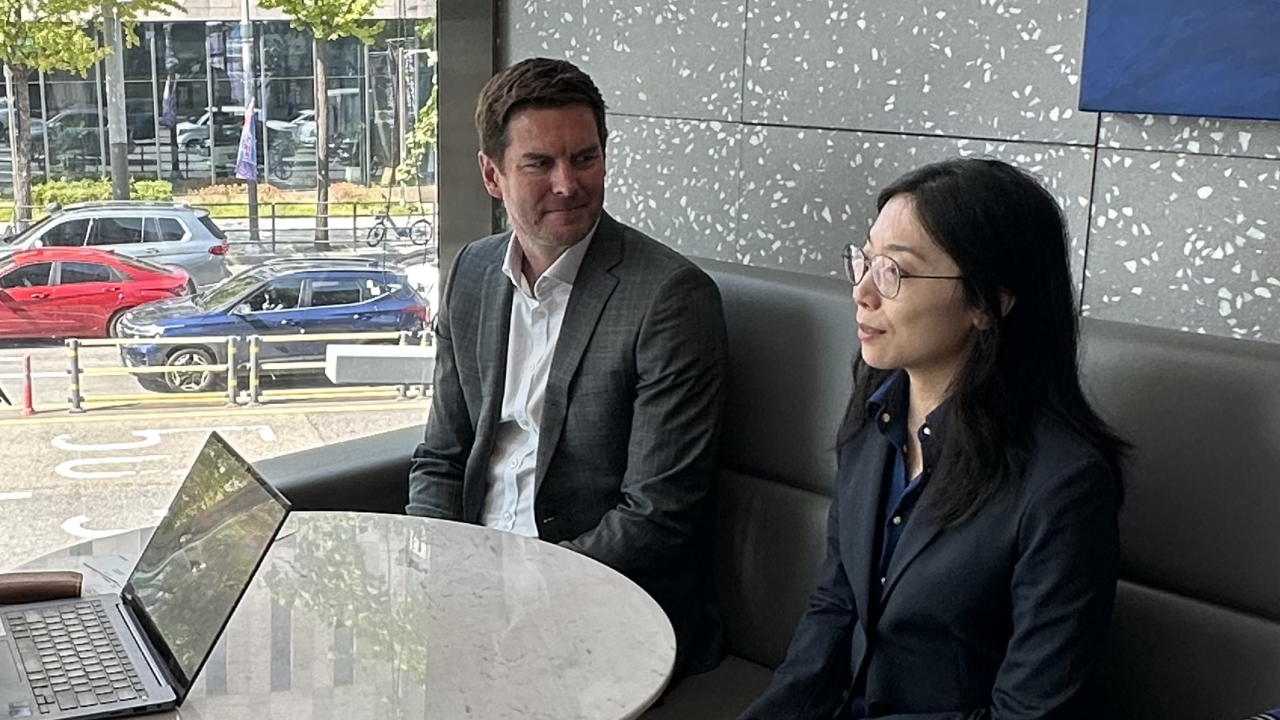
Optimism is also building out local support by hiring business and engineering staff in Korea and Japan. Kyle Jenke, the company's chief business officer, who joined the interview, said the firm's biggest investment has been in people. "We made sure customers can get technical support in their local language and time zone," he said. "If Korean companies don't limit themselves to the domestic market and instead distribute their financial products and services globally, there is a much bigger opportunity waiting for them."
kyoung@heraldcorp.com